Borrelia burgdorferi Activates Astrocytes: Implications for Neurologic Lyme Disease
Human astrocytes responded to Borrelia burgdorferi in culture
Changes in gene expression appeared within 48 hours
The findings may help explain neuroinflammation in Lyme disease
How do astrocytes respond to Borrelia burgdorferi? Laboratory researchers found that exposure to the Lyme disease bacterium altered gene expression in cultured human astrocytes within 48 hours. The findings provide insight into how these brain-supporting cells may participate in the inflammatory response associated with neuroborreliosis.
According to the authors, “If uncontrolled in the context of neuroborreliosis, the astrocyte response could lead to long-term injury in the CNS.”
What are astrocytes?
Astrocytes are star-shaped support cells found throughout the brain and spinal cord. They help maintain the environment surrounding neurons and perform several functions that are important to the central nervous system.
Astrocytes help support neurons, regulate communication between brain cells, maintain the blood-brain barrier, control inflammatory signaling, and participate in the response to infection or injury.
These cells can release inflammatory molecules when they recognize a threat. This response may initially help protect the central nervous system. However, excessive or prolonged astrocyte activation could potentially contribute to tissue injury.
How astrocytes respond to Borrelia burgdorferi
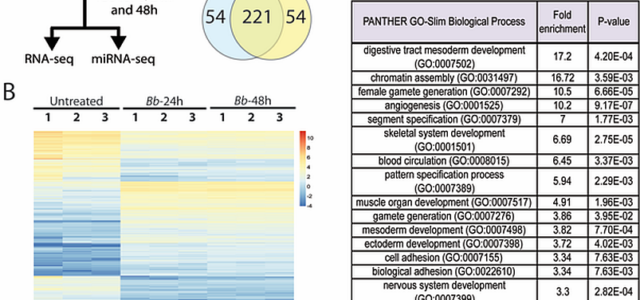
Casselli and colleagues examined changes in primary human astrocytes after the cells were exposed to Borrelia burgdorferi in culture. The researchers identified changes in both messenger RNA and microRNA expression within 48 hours.
Messenger RNA carries genetic instructions that cells use to produce proteins. MicroRNAs help regulate whether specific genes are activated or suppressed. Changes in these systems may influence inflammation, immune signaling, cellular stress, and other biologic responses.
The researchers identified widespread changes in messenger RNA and microRNA expression following exposure to Borrelia burgdorferi, highlighting the activation of pathways involved in immune and inflammatory responses.
“Understanding how these changes are maintained over time will be of great importance in developing effective treatments to Lyme disease,” wrote Casselli and colleagues from the Department of Biomedical Sciences at the University of North Dakota School of Medicine and Health Sciences.1
The study demonstrated that astrocytes do not remain passive when exposed to Borrelia burgdorferi. Instead, the cells altered the expression of genes involved in immune and inflammatory pathways.
Why the astrocyte response may matter in neuroborreliosis
The study offers further insight into the possible role of Borrelia burgdorferi in neurologic and cognitive changes associated with Lyme disease.
Astrocytes are increasingly recognized as active participants in the brain’s immune response rather than simply support cells.
“The pathophysiology behind the neurocognitive complaints of Lyme disease is unclear, but the inflammatory response to the bacterium or its components is likely to play a role,” wrote Casselli and colleagues.1
The astrocyte response described in this study represents one possible component of a more complex inflammatory process. For a broader discussion of neurologic mechanisms and symptoms, see neuroinflammation in Lyme disease and brain fog.
Previous research supports an inflammatory response
Casselli and colleagues cited other studies suggesting that immune activation may play a role in persistent cognitive symptoms and central nervous system injury associated with Lyme disease.
Jacek and colleagues reported increased serum interferon-alpha activity in patients with a history of Lyme disease and objectively measured persistent cognitive deficits.2 Interferon-alpha is an immune-signaling protein that can contribute to inflammatory responses.
Another laboratory study found that non-viable Borrelia burgdorferi stimulated inflammatory mediators and apoptosis in human oligodendrocytes.3 Oligodendrocytes produce and maintain myelin, the protective covering surrounding nerve fibers.
These findings raise questions about whether inflammation triggered by living bacteria, non-viable organisms, bacterial components, or the immune response may contribute to neurologic symptoms in some patients.
What did the astrocyte study establish?
The study established that cultured primary human astrocytes can respond rapidly to Borrelia burgdorferi. Changes in messenger RNA and microRNA expression were detected within 48 hours of exposure.
The results also identified inflammatory and immune pathways that may deserve further investigation in neuroborreliosis. They provide a possible biologic mechanism through which astrocytes could participate in central nervous system inflammation.
However, the study did not determine whether these changes persist indefinitely or whether the same degree of astrocyte activation occurs in every patient with neurologic Lyme disease.
What are the study’s limitations?
This was an in vitro laboratory study involving cultured human astrocytes rather than a clinical study involving patients. Laboratory findings can help investigators identify possible mechanisms, but they cannot independently establish what happens in a living human brain.
The study does not prove that astrocyte activation causes specific neurologic symptoms, permanent brain injury, or persistent illness following Lyme disease treatment.
Additional research is needed to determine how long the gene-expression changes last, whether they occur in patients with neuroborreliosis, and how they relate to symptom severity, treatment response, and recovery.
For a broader patient-focused review of cognitive and neurologic manifestations, see Does Lyme disease affect the brain?
Frequently Asked Questions
Can Borrelia burgdorferi affect astrocytes?
In this laboratory study, exposure to Borrelia burgdorferi altered messenger RNA and microRNA expression in cultured primary human astrocytes within 48 hours.
What role do astrocytes play in the brain?
Astrocytes support neurons, help maintain the blood-brain barrier, regulate the environment surrounding brain cells, and participate in inflammatory responses to infection and injury.
Does this study prove Lyme disease causes brain damage?
No. The study identified cellular responses in cultured human astrocytes. It did not prove that astrocyte activation causes permanent brain injury in patients with Lyme disease.
Why are astrocytes important in neuroborreliosis research?
Astrocytes can produce inflammatory signals and influence other cells within the central nervous system. An excessive or prolonged astrocyte response could potentially contribute to inflammation and neurologic injury.
Clinical Takeaway
This laboratory study found that Borrelia burgdorferi rapidly altered messenger RNA and microRNA expression in cultured primary human astrocytes.
The findings do not establish that astrocyte activation causes permanent neurologic injury in patients. However, they demonstrate that astrocytes can mount a measurable inflammatory and immune response after exposure to the Lyme disease bacterium.
This laboratory study demonstrates that astrocytes respond rapidly to Borrelia burgdorferi, providing one possible mechanism for neuroinflammation in Lyme disease.
Related Articles
These articles examine additional neurologic manifestations and mechanisms associated with Lyme disease.
Post-treatment Lyme disease syndrome
Persistent Lyme disease overview
Lyme disease symptoms guide
References
- Casselli T, Qureshi H, Peterson E, Perley D, Blake E, Jokinen B, Abbas A, Nechaev S, Watt JA, Dhasarathy A, et al. MicroRNA and mRNA Transcriptome Profiling in Primary Human Astrocytes Infected with Borrelia burgdorferi. PLOS ONE. 2017;12(1):e0170961.
- Jacek E, Fallon BA, Chandra A, Crow MK, Wormser GP, Alaedini A. Increased IFNalpha activity and differential antibody response in patients with a history of Lyme disease and persistent cognitive deficits. Journal of Neuroimmunology. 2012.
- Parthasarathy G, Fevrier HB, Philipp MT. Non-viable Borrelia burgdorferi induce inflammatory mediators and apoptosis in human oligodendrocytes. Neuroscience Letters. 2013;556:200-203.
Dr. Daniel Cameron, MD, MPH
Lyme disease clinician with over 30 years of experience and past president of ILADS.
Symptoms • Testing • Coinfections • Recovery • Pediatric • Prevention



Do you know of any studies that have linked CNS cancers, especially in the astrocytes, with lyme and / or other tick borned diseases?
I have not seen any.
I have not seen any.
Do you know of any studies that have linked CNS cancers, especially in the astrocytes, with lyme and / or other tick borned diseases?