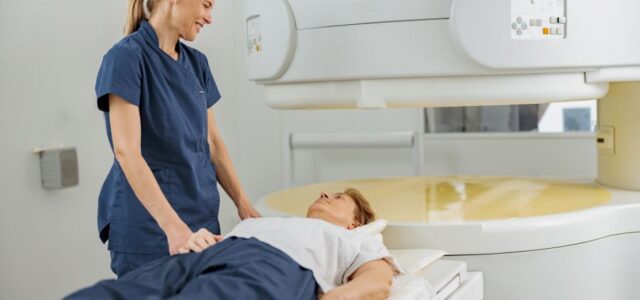
Cascade of Unnecessary Tests: When Lyme Goes Undiagnosed
Cascade of care in Lyme disease often occurs when the correct diagnosis is missed. Patients with fatigue, neurologic symptoms, joint pain, or cognitive dysfunction may undergo extensive testing across multiple specialties before Lyme disease is considered.
Instead of unnecessary tests triggering the cascade, the cascade begins because Lyme disease symptoms are not recognized early.
What Is a Cascade of Care?
Dr. Meredith Niess discussed a troubling case in an NPR story. A man was scheduled for hernia surgery. A preoperative X-ray was ordered despite limited evidence that it was necessary. The X-ray suggested a mass, raising concerns about cancer.
Cancer was ultimately ruled out. “In fact, a follow-up CT scan showed a clean lung but picked up another suspicious ‘something’ in the patient’s adrenal gland,” Niess stated. A second CT scan later proved negative.
Niess used this case “as an example of what researchers call a ‘cascade of care’—a seemingly unstoppable series of medical tests or procedures.”
The Classic Example: When a Routine X-Ray Triggers Unnecessary Tests
This cascade effect has been described previously. “With regard to medical technology, the term refers to a chain of events initiated by an unnecessary test, an unexpected result, or patient or physician anxiety, which results in ill-advised tests or treatments that may cause avoidable adverse effects and/or morbidity,” wrote Deyo.
Deyo cited an example originally described by Mold and Stein.
A patient admitted for elective repair of an inguinal hernia had mild coronary disease noted on a prior catheterization. Concerned about his cardiac status, surgeons requested a cardiology consultation.
The cardiologist recommended an exercise tolerance test. While waiting six hours outside the test room, the patient became anxious, agitated, and experienced mild chest discomfort. Because of the chest discomfort, the test was cancelled and the patient was transferred to telemetry.
There, further electrocardiogram changes were observed and medications were started. Another cardiac catheterization was performed, showing slight improvement from the previous test.
By this point the operating schedule was full, delaying the hernia repair for two weeks.
In this example, physician anxiety initiated the cascade, which was amplified by patient anxiety.
How Lyme Disease Triggers a Different Kind of Cascade
In some cases, Lyme disease goes undiagnosed and its broad range of symptoms triggers a cascade of costly medical tests.
Unlike traditional cascades caused by unnecessary initial tests, Lyme disease often produces cascades through missed diagnosis.
Patients present with fatigue, cognitive dysfunction, joint pain, neurologic symptoms, or autonomic disturbances. Without recognition of tick-borne illness, they undergo extensive workups for other conditions.
MRI scans are ordered for headaches and cognitive symptoms. Rheumatology consultations evaluate joint pain. Cardiology investigates palpitations and chest discomfort. Gastroenterology evaluates digestive symptoms. Psychiatric consultations address anxiety and depression.
Each specialist orders tests within their field. Results are negative or nonspecific. Yet symptoms persist.
More specialists are consulted. More tests are ordered. The cascade continues—not because of an unnecessary test, but because the correct diagnosis is never considered.
The Cost of Delayed Diagnosis
Misdiagnosis and delayed diagnosis have been described in large Lyme disease databases.
“More than half (51%) reported that it took them more than three years to be diagnosed and roughly the same proportion (54%) saw five or more clinicians before diagnosis,” wrote Johnson et al.
These delays occurred even though 45% of participants reported early symptoms soon after exposure.
Other patients with recurrent Lyme disease and Lyme encephalopathy have waited an average of two years before receiving treatment.
Delayed diagnosis has long-term consequences. Once Borrelia burgdorferi disseminates, symptoms can become more severe and treatment more difficult.
The financial burden can also be substantial. Multiple specialist visits, imaging studies, laboratory testing, and emergency department visits accumulate while the underlying infection remains undiagnosed.
The emotional toll compounds the cascade. Patients may be told their symptoms are psychosomatic or referred for psychiatric evaluation when organic illness goes unrecognized.
Why Lyme Disease Creates These Cascades
Several factors contribute to the diagnostic cascade associated with Lyme disease.
Symptom Diversity — Lyme disease affects multiple organ systems simultaneously, leading to consultations across specialties rather than integrated diagnosis.
Test Limitations — Standard Lyme disease testing may produce false negatives, particularly in early disease. When initial tests are negative, the diagnosis may be abandoned rather than pursued clinically.
Lack of Clinical Suspicion — Many clinicians do not consider Lyme disease without tick bite recall or outside endemic areas.
Specialist Silos — Each specialist evaluates symptoms within their own discipline without recognizing the broader pattern suggesting tick-borne illness.
The cascade continues until a clinician familiar with Lyme disease recognizes the pattern.
Clinical Insight
Traditional cascade-of-care models describe how unnecessary tests trigger chains of additional procedures. Lyme disease creates a different cascade—one driven by missed diagnosis.
Patients with multi-system symptoms often see multiple specialists. Each evaluates symptoms within their own field. When testing is negative or inconclusive, referrals continue rather than reconsidering the underlying cause.
Breaking this cascade requires clinical suspicion of tick-borne infections in patients with unexplained multi-system symptoms, particularly when repeated testing fails to explain the illness.
Early recognition remains the most effective intervention—before the cascade begins.
Frequently Asked Questions
What is a cascade of care in medicine?
A cascade of care describes a chain of tests or procedures triggered by an unnecessary test or unexpected finding. In Lyme disease, cascades occur when the diagnosis is missed and patients undergo extensive testing for other conditions.
How does Lyme disease trigger unnecessary tests?
Undiagnosed Lyme disease causes symptoms affecting multiple organ systems. Without recognizing tick-borne illness, patients are referred to multiple specialists who order tests within their field.
How long does it typically take to diagnose Lyme disease?
Studies report that 51% of patients wait more than three years for diagnosis and 54% see five or more clinicians before diagnosis.
Why is Lyme disease often missed?
Many clinicians do not suspect Lyme disease without tick bite recall. Standard testing may also produce false negatives.
How can these diagnostic cascades be prevented?
Earlier recognition of Lyme disease in patients with unexplained multi-system symptoms can prevent unnecessary testing and prolonged illness.
Related Reading
Dr. Daniel Cameron, MD, MPH
Lyme disease clinician with over 30 years of experience and past president of ILADS.
Symptoms • Testing • Coinfections • Recovery • Pediatric • Prevention



Me my disabled daughter got bit by a fly 5 years ago the start she lost her sight in one eye I think I’m at death stage now the sever headaches body tremors jerks loss of weight we don’t get out of bed no more I was told it was in my mind I had pycosis why do medical turn the back but the worst the last 2 years my daughter has to fight for her life being in hospital 6 months sepsis shock pheumonia RSV just had a stint back in hospital systemic sepsis shock she had multiple organ failure &for 5 years iv researched got to the truth myself I know i have parasites in my brain nose throat we still have not been medicated my daughter will carry on getting sick till someone believes us I’m having seizures as well loss control of mouth slobbering don’t know we’re to turn to except the lord id the only one to try keep my daughter safe i think mine to far gone
I advise anyone or there child with such a broad of issues to keep working with doctors.