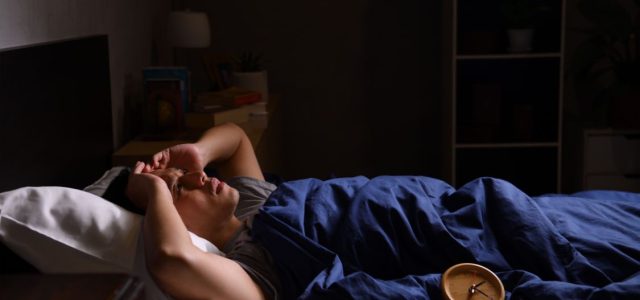
Why Lyme Disease Causes Vivid Dreams and Night Sweats
Disrupted sleep and thermoregulation
Autonomic and neuroimmune signaling changes
Possible overlap with Babesia coinfection
Many patients with Lyme disease experience disruptive sleep symptoms including vivid dreams, intense dream recall, or waking drenched in sweat.
These experiences are often attributed to stress or anxiety, particularly when routine testing is unrevealing. However, vivid dreams and night sweats in Lyme disease more accurately reflect disrupted sleep regulation driven by changes in nervous system signaling and immune activation rather than psychological causes alone.
Vivid dreams and night sweats in Lyme disease often reflect dysregulated autonomic and neuroimmune signaling rather than anxiety alone.
Sleep Is Actively Regulated, Not Passive Rest
Sleep is not a passive shutdown of consciousness. It is an active, tightly regulated neurologic and physiologic process involving coordinated signaling between the brain, autonomic nervous system, immune mediators, and temperature regulation systems.
When these systems fall out of balance, sleep can become fragmented, physiologically unstable, or unusually intense—even when total sleep time appears normal.
In Lyme disease, disrupted sleep often reflects altered autonomic and neurologic regulation rather than a primary sleep disorder.
Non-restorative sleep is common, and vivid dreams and night sweats reflect dysregulated autonomic and neuroimmune signaling rather than anxiety alone.
Why Vivid Dreams Occur
Vivid dreams are most often linked to changes in how REM sleep is regulated.
In Lyme disease, the brain may have difficulty transitioning smoothly between sleep stages. Nighttime brain activity can remain elevated, emotional processing may become amplified, and neurotransmitter signaling may shift.
As a result, the brain may linger in dream-dominant states or repeatedly re-enter them throughout the night, making dreams feel unusually detailed, emotional, repetitive, or persistent.
Patients frequently describe dreams that feel hyper-vivid or difficult to separate from waking thoughts.
Importantly, vivid dreams are not the same as nightmares and do not necessarily indicate psychological distress or trauma.
Why Night Sweats Occur
Night sweats in Lyme disease are commonly linked to instability in autonomic nervous system regulation.
Normal sleep depends on precise coordination of body temperature, sweating, heart rate, and blood pressure. When autonomic signaling becomes unstable, the body may inappropriately activate heat-dissipation responses during sleep, leading to sweating even without fever.
Inflammatory signaling can further interfere with temperature regulation, producing drenching sweats, cycles of chills followed by sweating, or sweating despite a cool sleep environment.
Patients may also wake suddenly from vivid dreams accompanied by sweating, palpitations, or a sense of internal activation.
In some patients—particularly those with co-infections such as Babesia—night sweats may also reflect infection-related immune activation.
At the same time, some patients experience night sweats in Lyme disease even when no co-infection is identified, underscoring that dysregulation alone can be sufficient to produce this symptom.
When night sweats are drenching and accompanied by air hunger, crushing fatigue, or temperature swings, Babesia coinfection deserves evaluation.
The Role of Immune Activation
The immune system communicates directly with the brain during sleep.
In Lyme disease, immune activation can alter sleep architecture, intensify REM sleep, disrupt thermoregulation, and increase nighttime arousal.
These effects help explain why vivid dreams and night sweats often occur together and why their severity may fluctuate over time.
Symptoms may worsen during flares and improve during periods of recovery, reflecting the dynamic nature of neuroimmune signaling.
Why Standard Tests Are Often Normal
Routine evaluations frequently fail to identify a cause for these symptoms.
Standard sleep studies focus primarily on breathing and oxygen levels, fever evaluations may be negative, and hormonal testing is often unrevealing.
Vivid dreams and night sweats in Lyme disease arise from regulatory dysfunction rather than structural disease detected on routine testing.
Importantly, night sweats occurring in this setting do not necessarily indicate active infection or fever.
As a result, patients are sometimes told that “everything looks normal” despite persistent and distressing sleep disruption.
Frequently Asked Questions
Can Lyme disease cause vivid dreams?
Yes. Lyme disease can disrupt REM sleep regulation and nighttime neurologic signaling, leading to unusually vivid or emotionally intense dreams.
Are night sweats in Lyme disease a sign of active infection?
Not necessarily. Night sweats may reflect autonomic or immune-related dysregulation during sleep even when routine testing shows no evidence of active infection.
Do vivid dreams and night sweats always indicate Babesia?
No. While Babesia can contribute to drenching sweats in some patients, others experience these symptoms because of nervous system and sleep dysregulation alone.
Can vivid dreams and night sweats improve with treatment?
Yes. Many patients improve as underlying inflammation, autonomic dysfunction, co-infections, and sleep regulation problems are addressed.
Why don’t sleep studies detect these problems?
Standard sleep studies primarily evaluate breathing and oxygen levels. Dysregulation involving REM sleep, autonomic signaling, and thermoregulation may not appear on routine testing.
Clinical Takeaway
Vivid dreams and night sweats in Lyme disease reflect disrupted regulation during sleep—not imagination, emotional instability, or poor coping.
These symptoms occur because sleep regulation, autonomic balance, immune signaling, and thermoregulation become disrupted during chronic illness.
Recognizing this pattern places these symptoms within known neuroimmune mechanisms and helps prevent misattribution to anxiety alone.
Standard sleep studies focus primarily on breathing and oxygen levels but may miss the regulatory dysfunction contributing to vivid dreams and night sweats in Lyme disease.
Understanding these symptoms within a neuroimmune framework may help explain why vivid dreams and night sweats often occur together and why routine testing is frequently unrevealing.
Related Articles
Night Sweats: An Overlooked Symptom of Babesia
Sweats May Be a Sign of Babesia
Lyme Disease Sleep Disorders
Brain Fog in Lyme Disease
Lyme Disease Recovery: What Patients Need to Know
References
- Irwin MR. Sleep and inflammation: partners in sickness and in health. Nat Rev Immunol. 2019;19(11):702-715.
- Saper CB, Fuller PM, Pedersen NP, Lu J, Scammell TE. Sleep state switching. Neuron. 2010;68(6):1023-1042.
- Tager FA, Fallon BA, Keilp J, et al. The neuropsychiatric manifestations of Lyme borreliosis. J Neuropsychiatry Clin Neurosci. 2001;13(4):500-507.
Dr. Daniel Cameron, MD, MPH
Lyme disease clinician with over 30 years of experience and past president of ILADS.
Symptoms • Testing • Coinfections • Recovery • Pediatric • Prevention

Hi Dr. Cameron. Thanks for this post which is one of your more insightful ones for me personally. I didn’t know some night sweats could be attributable to just Lyme. That’s a very important detail. Please keep the posts coming!
I would wake up and have to get a bath towel to put down because my sheets would be soaked with sweat. My dreams bordered on sleep paralysis, kind of awake but not. Dreams of past lives, dreams of falling to my death, dreams of just dying. So bad
Thank you for all your posts!
This post is very informative.
I have lymes for 6.5 years now. It is so unrecognized by anyone. (Drs). Im not crazy. Ab********@*****il.com
Good morning Dr. Cameron this is Carole Houle from VT. I used to be one of your patients long time ago. But the travel was too far. I have a question when I saw your podcast on vivid dreams and drenched night sweats. It’s exactly what I have my Dr. has been treating me but don’t seems to work. My babesia test FROM IGENEX IS NEGATIVE he’s treating me with atovaquone/ proguanil 250/100 2x 2xday also ninocyclin 100mg 1 2xday. For over 2 months no success. Any suggestions?? Been dealing with lyme since 1998 I’m at the end of my rope. So I decided to fax him your podcast on that subject.
Thank you very much.
Talk soon
Carole Houle
I’m sorry you’re dealing with this—it’s very exhausting. A negative Babesia test doesn’t always rule it out, and lack of improvement after treatment is a reason for your doctor to reassess the diagnosis and approach. Sharing the podcast with your physician was appropriate.