Contact us at 914-666-4665

Filter posts by category

Lyme Science Blog

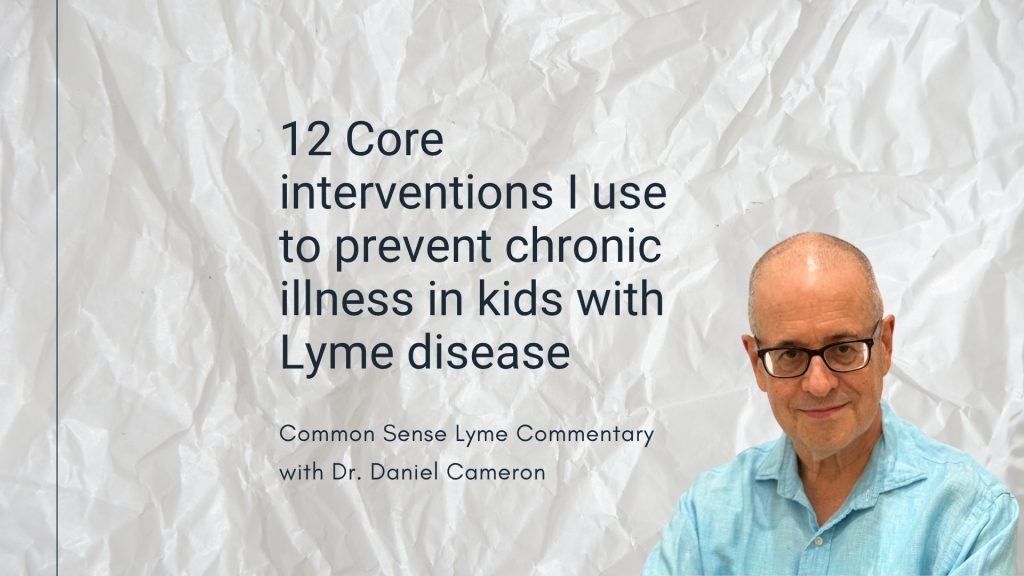
Managing Lyme in children: 12 interventions I use

Lyme Disease Treatment for Children: 12 Interventions I Use

Lyme Disease Treatment for Children: 12 Interventions I Use Treating Lyme disease in children requires more than antibiotics Early treatment may improve long-term outcomes School, sleep, cognition, and family support matter too Lyme disease treatment for children is often misunderstood. Some children recover quickly. Others require broader support beyond antibiotics. For children who remain ill […]

Lyme Disease Treatment for Children: 12 Interventions I Use Read More »

Why One-Size-Fits-All Lyme Treatment Fails

Why Standard Lyme Treatment Fails Some Patients

Why Standard Lyme Treatment Fails Some Patients Standard treatment works for some patients Others remain ill after therapy Care often needs to be individualized Many patients improve after standard Lyme treatment. Others continue to struggle with fatigue, cognitive problems, pain, autonomic symptoms, or persistent functional limitations. Why do some patients recover quickly while others remain

Why Standard Lyme Treatment Fails Some Patients Read More »

Pediatric Lyme Disease: Symptoms, Diagnosis, and Challenges

Pediatric Lyme Disease: Symptoms, Diagnosis, and Challenges

Pediatric Lyme Disease: Symptoms, Diagnosis, and Challenges Children with Lyme disease may not describe symptoms clearly Behavior changes, fatigue, headaches, or school decline may be early signs Pediatric Lyme disease is often mistaken for stress, anxiety, or ADHD Pediatric Lyme disease often presents with symptoms that look behavioral, emotional, or stress-related—making it easy to miss

Pediatric Lyme Disease: Symptoms, Diagnosis, and Challenges Read More »

WHY IS LYME DISEASE SO OFTEN MISSED (1)

Lyme Disease Symptoms: Why They Come and Go (A Complete Guide)

Lyme Disease Symptoms: Why They Come and Go (A Complete Guide) Many patients are told their symptoms are unrelated. But Lyme disease often presents as a pattern—symptoms that shift, fluctuate, and involve multiple systems over time. In clinical practice, these patterns are often recognized only after symptoms have evolved over time. This pattern is one

Lyme Disease Symptoms: Why They Come and Go (A Complete Guide) Read More »

Lyme disease not getting better

Why Lyme Disease Is Not Getting Better: Breaking the Chronic Illness Cycle

Why Lyme Disease Is Not Getting Better: Breaking the Chronic Illness Cycle Why symptoms can repeat despite treatment Why patients feel stuck in cycles of fatigue and setbacks How persistent symptoms may require a broader evaluation Patients often ask: Why am I not getting better after Lyme disease treatment? Others wonder why symptoms return after

Why Lyme Disease Is Not Getting Better: Breaking the Chronic Illness Cycle Read More »

Stopping Lyme treatment

The Ethics of Lyme Disease Treatment: Patient Rights and Physician Responsibility

Lyme Disease Treatment Guidelines: PTLDS and Clinical Decisions What happens when Lyme disease guidelines do not fit? Persistent symptoms create uncertainty Clinical judgment shapes real-world decisions Lyme disease treatment guidelines provide structure for care, but patients with persistent symptoms do not always fit predictable pathways. When symptoms continue or testing does not align with the

The Ethics of Lyme Disease Treatment: Patient Rights and Physician Responsibility Read More »

Lyme Disease Loneliness

Lyme Disease Co-infections: What You Need to Know

Lyme Disease Co-infections: What You Need to Know Lyme disease co-infections occur when a single tick bite transmits multiple pathogens. Up to 40% of Lyme patients in some regions also carry Babesia, Bartonella, Anaplasmosis, or Ehrlichia—yet these infections are frequently missed. When co-infections go unrecognized, patients don’t fully recover. Standard Lyme treatment won’t clear a

Lyme Disease Co-infections: What You Need to Know Read More »

Borrelia miyamotoi disease

Borrelia miyamotoi: What You Need to Know

Borrelia miyamotoi: What You Need to Know Hard tick relapsing fever illness spread by deer ticks Symptoms may overlap with Lyme disease Testing and diagnosis remain challenging Borrelia miyamotoi disease is a hard tick relapsing fever infection spread by the same deer ticks that transmit Lyme disease. Borrelia miyamotoi symptoms may include fever, fatigue, headaches,

Borrelia miyamotoi: What You Need to Know Read More »

long-term complications of Lyme disease

Powassan Virus: What You Need to Know

Powassan Virus: Symptoms, Encephalitis, and Neurologic Complications Powassan virus is a rare but serious tick-borne infection. It may cause meningitis, encephalitis, and long-term neurologic injury. Unlike Lyme disease, transmission may occur rapidly after a tick bite. Powassan virus is a rare but serious tick-borne illness that can cause inflammation of the brain (encephalitis) and the

Powassan Virus: What You Need to Know Read More »

Lyme disease missed diagnosis

When Lyme Disease Is Missed: A Case from My Practice

When Lyme Disease Is Missed: A Case from My Practice Symptoms were treated individually. The underlying infection was never fully evaluated. A missed Lyme disease diagnosis often begins with omission rather than refusal. A Lyme disease missed diagnosis often begins quietly—when key diagnoses are never considered. Just a couple of weeks ago, I had a

When Lyme Disease Is Missed: A Case from My Practice Read More »