Contact us at 914-666-4665

Filter posts by category

Pediatric Lyme

teen lyme disease

Lyme Disease in Teenagers: One Teen’s Story of Struggle and Strength

Lyme Disease in Teenagers: One Teen’s Story of Struggle and Strength Lyme disease in teenagers can affect mood, cognition, and physical health—often in ways that are misunderstood or dismissed. Quick Answer: Lyme disease in teenagers can cause fatigue, brain fog, mood changes, and autonomic symptoms such as POTS. These symptoms are often mistaken for stress […]

Lyme Disease in Teenagers: One Teen’s Story of Struggle and Strength Read More »

Brain Fog and Cognitive Symptoms in Children With Lyme Disease

Brain Fog and Cognitive Symptoms in Children With Lyme Disease

Brain Fog and Cognitive Symptoms in Children With Lyme Disease Brain fog in children may affect concentration, memory, learning, and emotional regulation. Parents often notice school struggles or behavior changes before a diagnosis is recognized. These symptoms are usually functional and potentially reversible. Brain fog in children with Lyme disease can affect concentration, learning, behavior,

Brain Fog and Cognitive Symptoms in Children With Lyme Disease Read More »

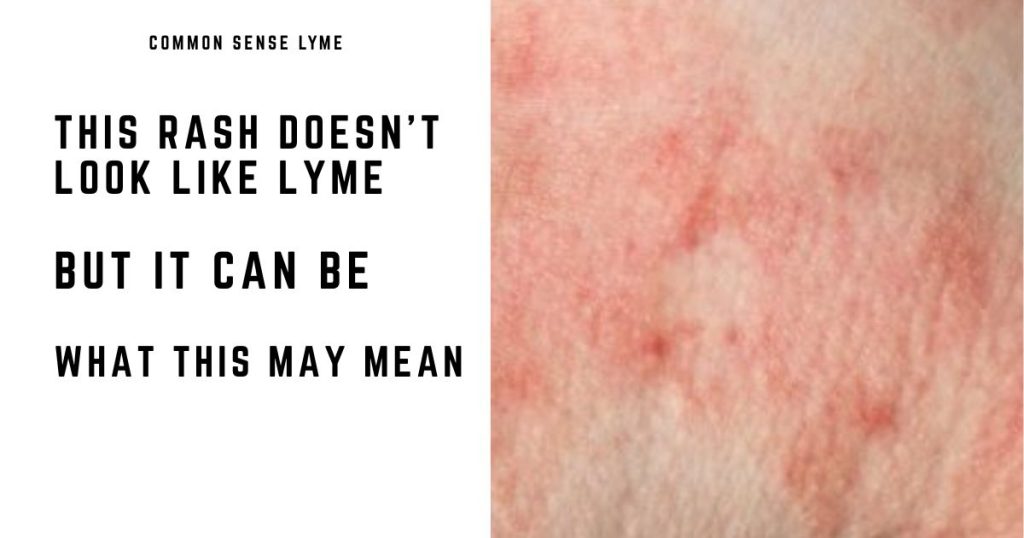
THIS RASH DOESN’T LOOK LIKE LYME

Unique presentation of Lyme disease skin rash

Atypical Erythema Migrans: What an Atypical Lyme Rash Looks Like NOT A BULL’S-EYE? LYME RASHES DON’T ALWAYS LOOK TYPICAL An atypical erythema migrans rash may not look like the classic bull’s-eye—and many patients never develop one at all, leading to missed or delayed diagnosis. Atypical erythema migrans refers to a Lyme disease rash that appears

Unique presentation of Lyme disease skin rash Read More »

What Happens to the Brain During Infection

Lyme Disease and Autism: Could Infections Worsen Neuropsychiatric Symptoms?

Lyme Disease and Autism: Could Infections Worsen Neuropsychiatric Symptoms? Can Lyme disease or Bartonella affect behavior? Could infections worsen neuropsychiatric symptoms? A case report raises important questions. Lyme disease and autism is a sensitive topic. Lyme disease has not been proven to cause autism. However, infection, inflammation, and immune activation may worsen neuropsychiatric symptoms in

Lyme Disease and Autism: Could Infections Worsen Neuropsychiatric Symptoms? Read More »

Symptoms and School Impact

Children With Lyme Disease: Symptoms and School Impact

Children With Lyme Disease: Symptoms, School, and Long-Term Impact Children with Lyme disease may struggle academically and socially Neurologic and cognitive symptoms can interfere with school performance Delayed diagnosis may worsen long-term outcomes in pediatric Lyme disease Children with Lyme disease may struggle academically, socially, and physically due to neurologic and cognitive symptoms. In this

Children With Lyme Disease: Symptoms and School Impact Read More »

PANDAS and Lyme Disease in Children

PANDAS and Lyme Disease in Children: A Pediatric Case Study

PANDAS and Lyme Disease in Children: A Pediatric Case Study PANDAS and Lyme disease can produce overlapping neuropsychiatric symptoms in children—making diagnosis challenging when symptoms do not respond to standard treatment. Quick Answer: PANDAS and Lyme disease can both cause sudden behavioral and cognitive changes in children. When symptoms persist despite standard PANDAS treatment, clinicians

PANDAS and Lyme Disease in Children: A Pediatric Case Study Read More »

IS DOXYCYCLINE SAFE FOR MY CHILD

Doxycycline for Children With Lyme Disease: Benefits and Risks

Doxycycline for Children With Lyme Disease: Benefits and Risks Doxycycline may help some children Tooth staining risk remains controversial Treatment decisions should be individualized Doxycycline in children with Lyme disease remains controversial because physicians must balance the benefits of treatment against the potential risk of permanent tooth staining. Doxycycline is commonly used to treat Lyme

Doxycycline for Children With Lyme Disease: Benefits and Risks Read More »

WHY DO I FEEL DIZZY WHEN I STAND UP

POTS in Lyme Disease: An Autonomic Disorder

POTS in Lyme Disease: Why Standing Causes Symptoms POTS in Lyme disease is a form of autonomic dysfunction that affects circulation and heart rate. Patients may experience dizziness, palpitations, fatigue, brain fog, and rapid heart rate when standing. These symptoms are frequently misdiagnosed as anxiety before autonomic dysfunction is recognized. Can Lyme disease cause POTS?

POTS in Lyme Disease: An Autonomic Disorder Read More »

Neuropsychiatric Lyme Disease: When Infection Mimics Mental Illness

Neuropsychiatric Lyme Disease: Symptoms and Cognitive Changes

Neuropsychiatric Lyme Disease: Symptoms and Cognitive Changes Lyme disease may affect mood and cognition. Brain fog, anxiety, and memory problems are common concerns. Careful medical evaluation remains important. Neuropsychiatric Lyme disease refers to mood, cognitive, and behavioral symptoms that may occur when Lyme disease affects neurologic, immune, or inflammatory pathways. Patients may present with depression,

Neuropsychiatric Lyme Disease: Symptoms and Cognitive Changes Read More »