Contact us at 914-666-4665

Filter posts by category

Lyme Disease Podcast

STARI OR LYME DISEASE (1)

STARI vs Lyme Disease: How to Tell the Difference After a Tick Bite

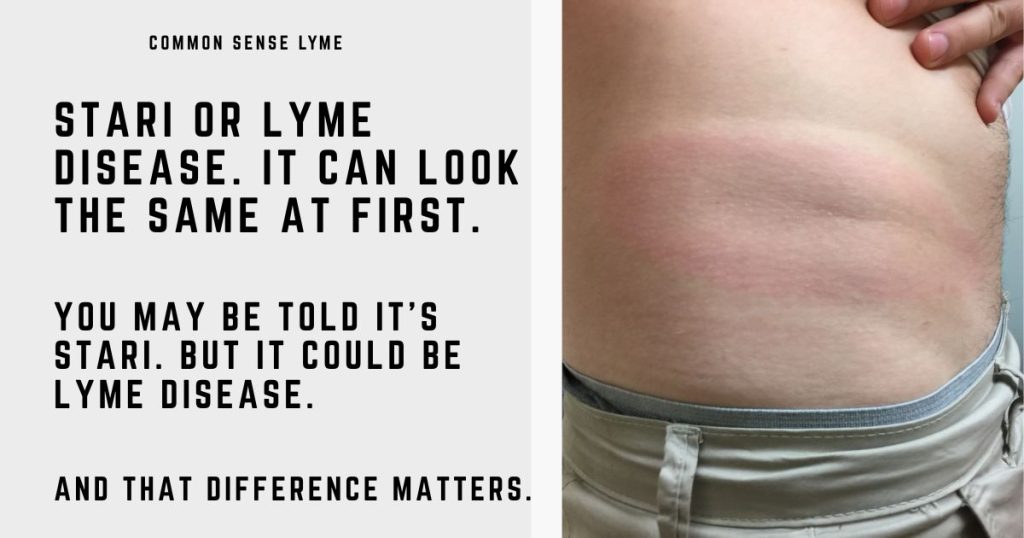
STARI vs Lyme Disease: How to Tell the Difference After a Tick Bite STARI vs Lyme disease can be difficult to tell apart after a tick bite. Both can cause a similar rash and flu-like symptoms—but they are not the same condition. This confusion can delay diagnosis and treatment. In some cases, patients are told […]

STARI vs Lyme Disease: How to Tell the Difference After a Tick Bite Read More »

injured toddler with Lyme disease and bandaid on arm

Lyme disease symptoms in toddler attributed to child abuse

Lyme disease symptoms in toddler attributed to child abuse Welcome to another Inside Lyme Podcast. I am your host Dr. Daniel Cameron. In this episode, I will be discussing a case involving a toddler with Lyme disease whose symptoms were mistakenly attributed to child abuse. By Dr. Daniel Cameron   The case was first described

Lyme disease symptoms in toddler attributed to child abuse Read More »

babesia microti in MS patient

Babesia microti Infection in a Multiple Sclerosis Patient on Ocrevus

Babesia microti Infection in a Multiple Sclerosis Patient on Ocrevus Welcome to another Inside Lyme Podcast. I am your host Dr. Daniel Cameron. In this episode, I discuss the case of a 54-year-old man with a 12-year history of multiple sclerosis who was diagnosed with Babesia microti while receiving ocrelizumab (Ocrevus). By Dr. Daniel Cameron

Babesia microti Infection in a Multiple Sclerosis Patient on Ocrevus Read More »

what does a lyme disease rash look like

What Does a Lyme Disease Rash Look Like? Symptoms and EM Rash Variations

What Does a Lyme Disease Rash Look Like? What does a Lyme disease rash look like? It is a question I am asked frequently in clinical practice. In this episode of the Inside Lyme Podcast, I discuss how the erythema migrans rash can appear differently depending on age, sex, duration of infection, and body location.

What Does a Lyme Disease Rash Look Like? Symptoms and EM Rash Variations Read More »

brain-lyme-disease

Lyme Disease Causing Pseudotumor Cerebri in a Child

Lyme Disease Causing Pseudotumor Cerebri in a Child Welcome to another Inside Lyme Podcast. I am your host Dr. Daniel Cameron. I find that the best way to get to know Lyme disease is through reviewing actual cases. In this episode, I’ll be discussing a case involving a 9-year-old boy with pseudotumor cerebri involving the

Lyme Disease Causing Pseudotumor Cerebri in a Child Read More »

lyme-disease-tinnitus

Lyme Disease Vertigo and Hearing Loss: Study Findings

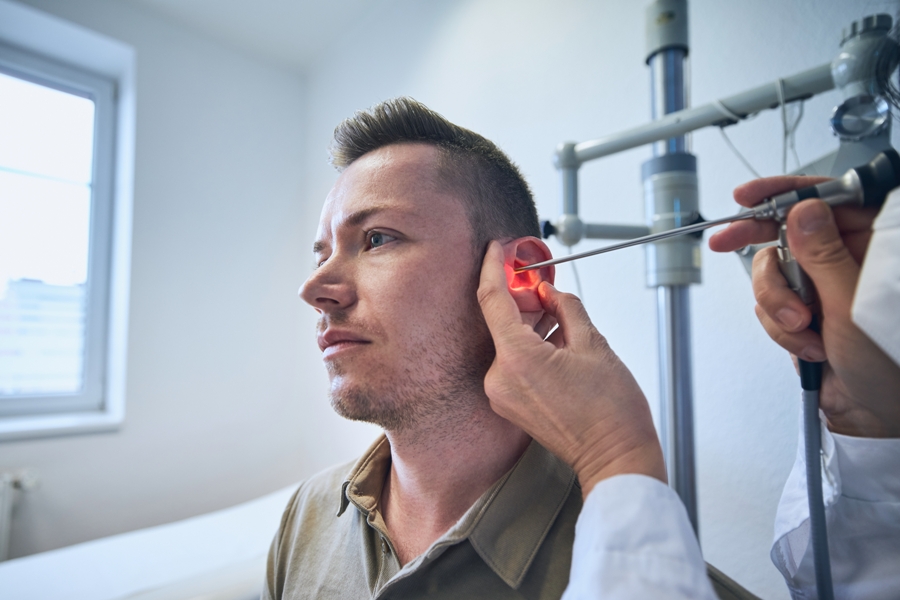
EAR SYMPTOMS THAT DON’T MAKE SENSE? LYME DISEASE MAY BE INVOLVED Lyme Disease Vertigo and Hearing Loss: Study Findings A recently published study by Sowula and colleagues provides further evidence that Lyme disease can trigger vertigo and hearing loss. In their article “Vertigo as one of the symptoms of Lyme disease,” the authors examine the

Lyme Disease Vertigo and Hearing Loss: Study Findings Read More »

lyme-disease-normal-pressure-hydrocephalus

Lyme Disease Causing Normal Pressure Hydrocephalus

Lyme Disease Causing Normal Pressure Hydrocephalus Hello, and welcome to another Inside Lyme Podcast. I am your host, Dr. Daniel Cameron. In this episode, I discuss a case involving a patient who gradually developed balance problems and was later diagnosed with Lyme disease with normal pressure hydrocephalus. By Dr. Daniel Cameron I first read about

Lyme Disease Causing Normal Pressure Hydrocephalus Read More »

Involuntary Movements in Lyme Disease: When Symptoms Are Dismissed as Psychosomatic Involuntary movements in Lyme disease can occur when the infection affects the nervous system. In some cases, these neurologic symptoms are mistakenly dismissed as psychosomatic or functional disorders. Patients may experience tremors, jerking motions, muscle twitching, or other uncontrolled movements involving the face, arms, or legs—symptoms that can be difficult to explain when standard testing is normal. This pattern reflects a broader issue of Lyme disease misdiagnosis, where neurologic symptoms are sometimes attributed to non-organic causes before infection is considered. When Neurologic Lyme Disease Is Misdiagnosed Because involuntary movements are often associated with psychiatric or functional disorders, clinicians may initially attribute these symptoms to stress, anxiety, or psychosomatic illness. However, infections affecting the nervous system can produce similar findings. Lyme disease is known to cause a wide range of neurologic manifestations, including: Tremors Muscle twitching Myoclonus (sudden muscle jerks) Balance problems Coordination difficulties These symptoms may occur when the infection involves the central nervous system, a condition known as neurologic Lyme disease. Diagnostic Challenges Patients with unusual neurologic symptoms may undergo extensive testing before Lyme disease is considered. Normal imaging studies or inconclusive laboratory results can lead clinicians to dismiss symptoms as psychosomatic. This creates a disconnect: symptoms are real and often disabling, yet standard tests may not provide clear answers. This helps explain why patients with neurologic Lyme disease are sometimes told that “everything looks normal” despite persistent symptoms. Recognizing Lyme disease as a possible cause of involuntary movements is important—particularly in patients with potential tick exposure or other symptoms consistent with tick-borne infection. Clinical Perspective Lyme disease can affect multiple parts of the nervous system and produce symptoms that resemble both neurologic and psychiatric conditions. Involuntary body movements are an uncommon but documented manifestation. When inflammation or immune activation disrupts normal signaling pathways, abnormal movements may occur without structural abnormalities on imaging. This overlap contributes to diagnostic uncertainty and reinforces the importance of clinical pattern recognition. Clinical Takeaway Involuntary movements in Lyme disease can be mistaken for psychosomatic illness. When unexplained neurologic symptoms occur—especially alongside other Lyme-related features—an infectious cause should be considered. Careful evaluation matters. Recognizing neurologic Lyme disease may help avoid delays in diagnosis and guide appropriate treatment. Frequently Asked Questions Can Lyme disease cause involuntary movements? Yes. Lyme disease affecting the nervous system can cause tremors, twitching, and jerking movements. Why are these symptoms dismissed as psychosomatic? When imaging and lab tests are normal, symptoms may be attributed to functional or psychiatric causes rather than infection. What is myoclonus in Lyme disease? Myoclonus refers to sudden, involuntary muscle jerks that can occur when neurologic pathways are disrupted. Can these symptoms improve with treatment? In some cases, yes. When symptoms are related to infection or inflammation, appropriate treatment may lead to improvement.

Involuntary Movements From Lyme Disease Misdiagnosed as Psychosomatic

Involuntary Movements in Lyme Disease: When Symptoms Are Dismissed as Psychosomatic Involuntary movements in Lyme disease can occur when the infection affects the nervous system. In some cases, these neurologic symptoms are mistakenly dismissed as psychosomatic or functional disorders. Patients may experience tremors, jerking motions, muscle twitching, or other uncontrolled movements involving the face, arms,

Involuntary Movements From Lyme Disease Misdiagnosed as Psychosomatic Read More »