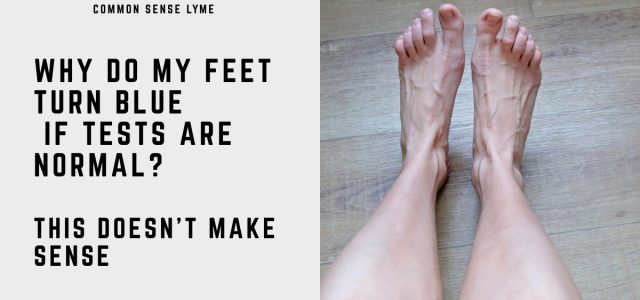
Blue Hands and Feet in Lyme Disease: Why They Turn Cold and Change Color
Blue hands and feet may reflect autonomic dysfunction
Blood flow regulation can become unstable in Lyme disease
Symptoms often fluctuate despite normal vascular testing
Blue or discolored hands and feet in Lyme disease are a common but frequently missed symptom, often accompanied by coldness, numbness, tingling, or mottling.
These symptoms are often described simply as “cold hands” or “poor circulation,” but the key clinical feature is abnormal color change—pale, bluish, purple, or mottled skin caused by dysregulation of blood flow.
A man with Lyme disease described episodes where his hands would become cold and turn pale or bluish, even while sitting indoors. Some days his fingers looked mottled and felt numb; other days they appeared completely normal.
Vascular studies and circulation tests were reassuring, yet the symptoms persisted.
He noticed the color changes worsened with standing, stress, and fatigue—patterns consistent with autonomic dysfunction reported in Lyme disease.
Patient details have been modified to protect privacy.
Despite normal vascular testing, his symptoms reflected dysregulation of blood flow rather than structural vascular disease or blocked circulation.
After treatment for Lyme disease, these symptoms gradually improved.
For a broader overview, see the Lyme disease symptoms guide.
Why Hands and Feet Turn Blue or Cold in Lyme Disease
Blue, cold, mottled, or discolored hands and feet in Lyme disease are most often related to autonomic nervous system dysfunction, not primary vascular disease.
The autonomic nervous system controls blood vessel tone, skin temperature, and blood flow distribution. When it is disrupted, blood vessels may constrict or dilate inappropriately.
When these symptoms appear alongside fatigue, dizziness, brain fog, or palpitations, they often reflect a broader autonomic pattern rather than an isolated vascular issue.
In Lyme disease, infection and immune activation can interfere with autonomic signaling. Blood vessels may constrict excessively in the hands and feet, leading to coldness, pallor, or bluish discoloration.
At other times, uneven dilation can produce a mottled or marbled appearance of the skin.
These vascular and autonomic changes may reflect broader persistent Lyme disease mechanisms.
How Patients Describe These Symptoms
Patients often describe hands or feet that feel cold to the touch, appear pale, purple, or bluish, or change color with temperature, posture, or stress.
These symptoms often overlap with POTS, where blood flow regulation is impaired.
Symptoms may worsen when standing still, during illness, dehydration, poor sleep, or after physical or mental exertion.
Some notice associated numbness, tingling, lightheadedness, or palpitations, suggesting broader autonomic involvement.
Because these symptoms fluctuate, they can be confusing and distressing, particularly when medical tests fail to provide an explanation.
The Lyme-Specific Connection
These color changes are sometimes referred to as acrocyanosis, a term describing bluish discoloration caused by abnormal blood vessel regulation rather than blocked circulation.
Lyme disease is known to affect both autonomic and small sensory nerve fibers, contributing to abnormal vascular regulation and temperature control.
Ongoing immune activation, neuroinflammation, or residual infection can disrupt vascular signaling and autonomic balance.
Some patients with neuropathy symptoms also develop cold or discolored extremities. Learn more about neuropathy and Lyme disease.
In clinical practice, treatment directed at Lyme disease and associated co-infections is sometimes followed by improvement in temperature regulation and skin color changes.
Not all patients improve at the same pace, and in some, these symptoms persist as part of a longer recovery.
Importantly, these symptoms do not necessarily indicate permanent damage.
Why Reassurance Alone Isn’t Enough
Being told that tests are normal can feel invalidating when symptoms persist.
Cold, discolored, or blue hands and feet are not imagined—they reflect real physiologic changes in blood flow regulation.
Understanding the autonomic and post-infectious mechanisms involved helps restore trust, prevents unnecessary testing, and supports more appropriate care.
Clinical Takeaway
Blue, cold, or mottled hands and feet in Lyme disease usually reflect autonomic nervous system dysfunction rather than blocked circulation or structural vascular disease.
Recognizing these symptoms as part of neurologic and autonomic dysregulation can reduce unnecessary testing, validate patient experiences, and support more targeted recovery strategies.
Frequently Asked Questions
Can Lyme disease cause blue hands and feet?
Yes. Lyme disease can disrupt autonomic nervous system regulation, leading to abnormal blood vessel constriction and color changes in the hands and feet.
Is this a circulation problem?
Usually not. In many patients, these symptoms reflect dysregulation of blood flow rather than blocked arteries or structural vascular disease.
Is this Raynaud’s phenomenon?
Symptoms may overlap, but Lyme-related changes often fluctuate more broadly and occur alongside fatigue, dizziness, neuropathy, or autonomic symptoms.
Can these symptoms come and go?
Yes. Symptoms often fluctuate with stress, fatigue, illness, dehydration, temperature changes, and activity.
Can treatment help?
Many patients improve as underlying Lyme disease, autonomic dysfunction, inflammation, and associated co-infections are addressed.
Related Articles
- Autonomic Dysfunction in Lyme Disease
- POTS and Lyme Disease
- Persistent Lyme Disease Mechanisms
- Neuropathy and Lyme Disease
- Lyme Disease Symptoms Guide
References
- Vernino S, Bourne KM, Stiles LE, et al. Postural orthostatic tachycardia syndrome (POTS): State of the science and clinical care from a 2019 NIH expert consensus meeting. Auton Neurosci. 2021;235:102828.
- Adler BL, Vernino S. Dysautonomia following Lyme disease: A key component of post-treatment Lyme disease syndrome?. Front Neurol. 2024;15:1344862.
- Fallon BA, Levin ES, Schweitzer PJ, Hardesty D. Inflammation and central nervous system Lyme disease. J Neuropsychiatry Clin Neurosci. 2008;20(2):123-135.
- Oaklander AL, Klein MM. Objective evidence that small-fiber polyneuropathy underlies some chronic pain syndromes. Neurology. 2013;81(21):1968-1976.
- Freeman R. Autonomic peripheral neuropathy. Clin Auton Res. 2005;15(1):1-7.
Dr. Daniel Cameron, MD, MPH
Lyme disease clinician with over 30 years of experience and past president of ILADS.
Symptoms • Testing • Coinfections • Recovery • Pediatric • Prevention


I am a Lyme patient of yours. I have this experience of cold in my feet (most often) and hands as well as my my face quite a bit, nothing I do helps to get them warmed back up. I also have the opposite where my feet feel HOT. My feet and the joints in my feet get hot and swollen and will also get discolored and greyish or blue. It’s awful and debilitating and painful. I can experience this to some degree throughout my entire body at times. It does feel like sometimes weather temperature can play a part but sometimes it’s very hot and feet are cold or very cold weather and feet are very hot. This has been ongoing and seems to be increasing in amount of time and severity when feet get very hot. Is this a similar or the same thing that you’re talking about?
There are typically a broad range of symptoms in my patients beyond the intermittent discolored or blue colors in my patients who have been overlooked
I have this problem with cold extremities but I also have HOT Extremities that discolor and are swollen and painful. As time goes on the severity is worse and feet and toes/joints staying swollen and painful. Is this the same or similar thing?
What do we know about lyme disease and shingles vaccine 9 thank you
Should I get tested for Lyme disease because I experience cold hands and cold feet tingling and burning?
Many people are unfamiliar with how important the midfoot is until discomfort develops. The cuneiform bone helps connect the arch to the front of the foot, and even minor stress in this area can gradually affect balance and movement patterns over time.
Thanks for shareing.