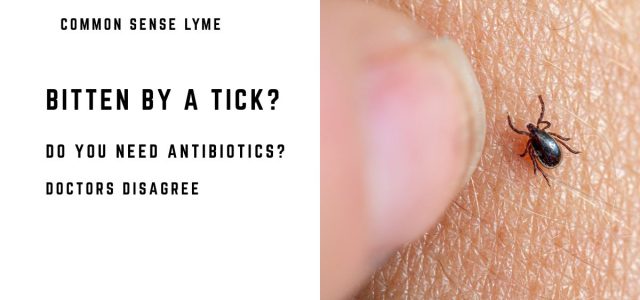
Do You Need Antibiotics After a Tick Bite? Why Doctors Disagree
Tick bite antibiotics remain one of the most debated decisions in Lyme disease prevention.
Depending on which doctor you see, you may receive a full course of doxycycline, a single preventive dose, or instructions to simply monitor for symptoms.
For patients, these differing recommendations can create uncertainty about risk, prevention, and follow-up.
This disagreement reflects broader questions about diagnosis, prevention, and medical uncertainty—questions that can directly affect patient care decisions.
Two Different Approaches to Tick Bite Antibiotics
The Infectious Diseases Society of America (IDSA) recommends a single 200 mg dose of doxycycline after a tick bite only under specific circumstances:
- The tick is identified as a deer tick (Ixodes scapularis)
- The tick was attached for at least 36 hours
- The bite occurred in a high-risk region
- Treatment can begin within 72 hours of tick removal
If one or more criteria are not met, prophylactic antibiotics are often not recommended.
The International Lyme and Associated Diseases Society (ILADS), however, recommends a longer antibiotic course—often 10 to 20 days—after higher-risk bites, particularly in endemic areas.
The difference reflects varying interpretations of the available evidence and differing views on prevention versus overtreatment.
Why Doctors Disagree
Supporters of single-dose prophylaxis cite studies suggesting that one dose of doxycycline may reduce the likelihood of Lyme disease after a high-risk tick bite.
Clinicians who favor longer treatment approaches point to several unresolved concerns:
- The possibility of additional tick-borne infections such as Babesia or Anaplasma
- Reports of Lyme disease developing despite single-dose treatment
- Difficulty determining how long a tick was truly attached
- The possibility that early infection may already be established before tick removal
These evidence gaps contribute to continued disagreement about the best preventive strategy.
Different Recommendations, Different Outcomes
Because physicians follow different guidelines, patients may receive very different recommendations after similar tick bites.
Some patients receive:
- A full 10–20 day antibiotic course
- A single preventive dose of doxycycline
- No antibiotics, with instructions to monitor for symptoms
Regardless of the initial strategy, close follow-up remains important.
Symptoms such as rash, fever, fatigue, headache, joint pain, or neurologic complaints may emerge days to weeks after exposure and should prompt reevaluation.
“Early decisions after a tick bite may influence symptom burden, treatment complexity, and recovery patterns.”
Shared Decision-Making Matters
Until larger and more definitive studies clarify the best approach, treatment decisions often depend on individualized risk assessment.
Important considerations include:
- Geographic risk and local Lyme prevalence
- Tick identification and estimated attachment time
- Patient age, health history, and medication tolerance
- Likelihood of co-infections in the local tick population
- Ability to monitor closely for evolving symptoms
Shared decision-making allows patients and clinicians to balance the potential benefits and risks of preventive antibiotics in the context of individual circumstances.
What Symptoms Should Be Monitored After a Tick Bite?
Even after prophylactic treatment, patients should continue monitoring for symptoms that could suggest early Lyme disease or another tick-borne infection.
Symptoms may include:
- Expanding rash
- Fever or chills
- Fatigue
- Headache or neck pain
- Muscle or joint pain
- Brain fog or neurologic symptoms
- Night sweats or air hunger
For more on early symptom recognition, see Lyme Disease Symptoms Guide.
Can You Still Develop Lyme Disease After Antibiotics?
Yes. Preventive antibiotics may reduce risk, but no approach completely eliminates the possibility of Lyme disease or co-infection.
Patients should not assume that a single dose—or even a longer preventive course—guarantees protection.
Ongoing monitoring and reassessment remain important when symptoms persist or evolve.
Clinical Takeaway
Doctors disagree about the best antibiotic strategy after a tick bite because the evidence remains incomplete.
Some clinicians favor single-dose prophylaxis under strict criteria, while others support longer preventive treatment in higher-risk situations.
Regardless of the approach chosen, early recognition, close follow-up, and individualized clinical judgment remain essential.
For more on prevention strategies, see Preventing Chronic Lyme Disease: Why Early Care Matters.
Frequently Asked Questions
Should everyone take antibiotics after a tick bite?
No. Recommendations vary depending on tick type, attachment duration, geographic risk, and clinical judgment.
What if the tick was attached less than 36 hours?
Some guidelines do not recommend prophylaxis in that situation, although clinicians may still individualize decisions based on overall risk.
Can Lyme disease occur even after a single dose of doxycycline?
Yes. Preventive treatment may reduce risk but does not completely eliminate the possibility of Lyme disease or co-infections.
How soon can symptoms appear after a tick bite?
Symptoms may appear within days to weeks after exposure.
What symptoms should prompt reevaluation?
Rash, fever, fatigue, headache, neurologic symptoms, joint pain, night sweats, or air hunger should all prompt reassessment.
Related Articles
Tick Bite Treatment Options: Wait or Treat?
Tick Bite Ethical Concerns: Rethinking the Single Dose of Doxycycline
Single Dose Doxycycline for Tick Bite – Ethical Concerns
References
- Centers for Disease Control and Prevention. Lyme Disease. Accessed 2026.
- Lantos PM, et al. Clinical Practice Guidelines by the Infectious Diseases Society of America (IDSA), American Academy of Neurology (AAN), and American College of Rheumatology (ACR): 2020 Guidelines for the Prevention, Diagnosis and Treatment of Lyme Disease. Clin Infect Dis. 2021;72(1):e1-e48.
- Cameron DJ, Johnson LB, Maloney EL. Evidence assessments and guideline recommendations in Lyme disease: the clinical management of known tick bites, erythema migrans rashes and persistent disease. Expert Rev Anti Infect Ther. 2014;12(9):1103-1135.
Dr. Daniel Cameron, MD, MPH
Lyme disease clinician with over 30 years of experience and past president of ILADS.
Symptoms • Testing • Coinfections • Recovery • Pediatric • Prevention

I received very different responses in two states this summer: in Maine, upon going to urgent care with flu-like symptoms after a tick-bite, there were no Qs about duration of attachment, etc. They immediately started talking about testing for the full tick-borne panel. (As it turned out, one of my symptoms conflicted with a Lyme diagnosis so they did other testing instead.) Ten days later, in Ohio, when I experienced increasingly unpleasant inflammation symptoms and went to urgent care, they cited the very strict criteria mentioned in the post above, would only consider a Lyme disease test and said they did not have access to a full tick-borne panel. I was quite surprised at the difference – I know tick-borne illness is a big deal in the Northeast but it’s present – and increasing! – in the Midwest too. It’s disturbing that patient self-advocacy is so critical, especially when we don’t usually learn about the need to be until we are suffering with something.