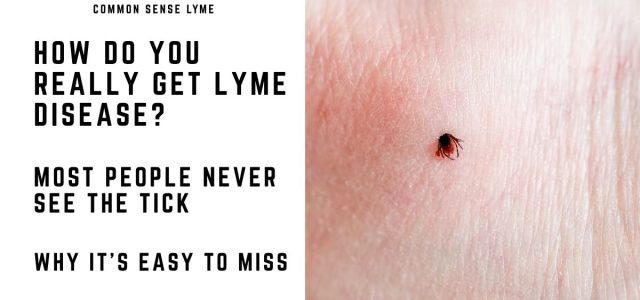
How Do You Get Lyme Disease? Ticks, Transmission, and Hidden Risks
How do you get Lyme disease? Lyme disease is transmitted through the bite of an infected blacklegged tick. These ticks can also carry other pathogens, meaning a single bite may transmit multiple infections.
You get Lyme disease from the bite of an infected tick, typically after it has been attached for 36–48 hours, although shorter transmission times may occur.
One of the most common questions patients ask is: how do you get Lyme disease? Many are surprised to learn that Lyme is caused not just by one pathogen, but often involves multiple infections transmitted by the same tick.
A teacher came to me after two years of fatigue and joint pain. She’d never seen a tick, never had a rash, and lived in the suburbs. “I didn’t think I could get Lyme disease,” she told me. “I’m not a hiker.” But she had Lyme—and Babesia. Understanding how transmission actually works might have saved her two years.
Lyme disease is transmitted through the bite of an infected blacklegged tick, which carries the bacterium Borrelia burgdorferi. However, these same ticks can also carry other pathogens like Babesia, Bartonella, and Anaplasma—making “Lyme disease” a shorthand for a complex set of tick-borne infections.
Understanding how transmission works—and how to reduce exposure—is the first step toward prevention and early treatment.
How Is Lyme Disease Transmitted?
Lyme disease is transmitted through the bite of an infected blacklegged tick carrying Borrelia burgdorferi. Transmission generally requires prolonged feeding, although shorter transmission times may occur.
Ticks may also carry other pathogens, meaning a single bite can expose an individual to multiple tick-borne infections.
Who This Page Is For
This resource is for anyone wondering how Lyme disease is transmitted—whether you’ve just found a tick, are experiencing unexplained symptoms, or want to protect your family.
If you’ve been told “you can’t have Lyme” because you don’t fit the stereotype, this page is especially for you.
The Tick That Spreads Lyme and Co-Infections
In the United States, Lyme disease is primarily spread by the blacklegged tick (Ixodes scapularis) in the Northeast, Midwest, and Mid-Atlantic regions, and by the western blacklegged tick (Ixodes pacificus) on the Pacific Coast.
Ticks go through three life stages: larva, nymph, and adult. Most human infections occur during the nymphal stage, when ticks are tiny, hard to spot, and most active in the warmer months.
Nymphs are roughly the size of a poppy seed—small enough to feed undetected for days.
Nymph ticks are active during months when many people spend more time outdoors, increasing unnoticed exposure risk.
How Ticks Become Infected
Ticks become infected when they feed on animals like white-footed mice that carry Borrelia and other pathogens. They can then transmit these infections to humans during later feedings.
This is Lyme transmission at its most basic: an infected tick bites you, feeds long enough to transmit bacteria, and the infection begins.
How Do Ticks Get Lyme Disease?
Ticks are not born carrying Lyme disease. Instead, they become infected after feeding on animals such as white-footed mice and certain birds that harbor Borrelia burgdorferi.
Once infected, ticks may transmit Lyme disease and other pathogens during later feedings. Understanding these animal reservoirs helps explain why Lyme disease persists in nature and why preventing tick bites remains so important.
How Long Does a Tick Need to Be Attached?
The CDC notes that the risk of Lyme disease increases significantly when a tick has been attached for 36–48 hours or more.
That said, this timeline is based on typical patterns—not an absolute rule. Some animal studies suggest that transmission might occur in less than 24 hours, especially if the tick was already partially fed or if removal is delayed.
I’ve discussed this further in The 24–36 Hour Tick Bite Myth.
Co-Infections May Transmit Faster
Co-infections such as Babesia or Anaplasma may be transmitted more quickly, sometimes within just a few hours.
It’s also important to recognize that many patients are not dealing with a single infection. Overlapping tick-borne infections can complicate symptoms, testing, and treatment decisions.
This is one reason Lyme disease often involves multiple pathogens requiring different treatment approaches.
Can You Get Lyme Disease Without Knowing?
Yes. Many people infected with Lyme disease do not remember a tick bite.
Nymph-stage ticks can feed undetected in hidden areas like the scalp, groin, or behind the knees. Children are especially vulnerable because they can’t inspect these areas themselves.
“Most patients with Lyme disease never saw the tick that bit them.”
The classic bull’s-eye rash (erythema migrans) appears in about 70–80% of cases according to the CDC, but not always in an obvious location. Some patients never develop a rash at all.
This is one reason Lyme disease is often misdiagnosed or dismissed. A negative answer to “Did you see a tick?” should never rule out Lyme disease—especially when symptoms fit the clinical picture.
Can You Get Lyme Disease Without a Tick Bite?
Most patients acquire Lyme disease through the bite of an infected blacklegged tick. However, many people never notice the tick because nymph-stage ticks are extremely small and may feed in hidden areas.
At present, ticks remain the only confirmed vector for Lyme disease in the United States. Casual contact with another person does not spread Lyme disease.
Symptoms to Watch For
- Bull’s-eye rash
- Fever and chills
- Fatigue
- Headache
- Muscle and joint pain
- Swollen lymph nodes
How Do People Get Lyme Disease?
People get Lyme disease after being bitten by infected blacklegged ticks. Exposure often occurs during outdoor activities, but many cases arise in suburban backyards and everyday settings.
Most people who develop Lyme disease never saw the tick that bit them, which can make diagnosis more challenging.
How Do You Get Lyme Disease From the Environment?
Ticks thrive in specific habitats. You’re most likely to encounter them in:
- Tall grass and brush
- Leaf litter
- Wooded trails and forest edges
- Stone walls and logs
- Suburban yards with landscaping that creates tick habitat
How Ticks Find You
Ticks don’t jump or fly but “quest”—waiting on blades of grass or low vegetation with their legs extended to grab onto a passing host.
- Hiking, gardening, or walking through wooded areas
- Sitting on logs, stone walls, or leaf piles
- Spending time outdoors when ticks are most active (spring through fall)
Geographic Expansion
Lyme disease is also expanding geographically. Cases are now reported in states previously considered low-risk, including areas of the South, Midwest, and parts of California.
Climate change, shifting deer populations, and suburban development have all contributed to this spread. If you live in a region where Lyme “didn’t used to exist,” that may no longer be true.
Understanding your environment helps you take targeted prevention steps. Lyme isn’t just a rural problem—suburban backyards can harbor significant tick populations.
Are Other Insects Involved?
There have been reports that other insects—such as mosquitoes, fleas, mites, or biting flies—might transmit Borrelia. To date, these claims have not been confirmed in peer-reviewed studies, but the question deserves more research than it has received.
Currently, the blacklegged tick remains the only confirmed vector of Lyme disease in the United States.
Other Vectors for Co-Infections
Bartonella can be spread by fleas and lice. Babesia has been transmitted through blood transfusion.
What Are the Chances of Getting Lyme Disease From a Tick?
The risk depends on several factors, including the species of tick, how long it has been attached, geographic location, and whether the tick carries Borrelia burgdorferi.
The likelihood of infection varies widely. Factors include whether the tick is an Ixodes species, whether it carries Borrelia burgdorferi, how long it has been attached, and where the exposure occurred.
Many tick bites do not result in Lyme disease. Prompt removal lowers risk, although no specific duration completely eliminates the possibility of transmission.
Is Lyme Disease Contagious?
No. Lyme disease is not considered a contagious disease and is not spread through person-to-person contact.
You cannot catch Lyme disease by hugging, kissing, coughing, sneezing, or sharing food or drinks.
You cannot catch it by:
- Hugging or kissing
- Sharing food or drinks
- Coughing or sneezing
- Sexual contact (no conclusive evidence exists for sexual transmission)
Some blood banks restrict donations from individuals with current or past Lyme disease due to theoretical concerns, particularly regarding Babesia, which has been documented in transfusion-related cases. But casual contact poses no risk.
Who Is Most at Risk?
You may be more likely to contract Lyme disease if you:
- Spend time outdoors in tick-endemic areas
- Have pets that go outside and may carry ticks indoors
- Live near wooded areas or grassy fields
- Don’t regularly perform tick checks
- Are active outdoors during spring, summer, or fall
Children, outdoor workers, gardeners, hikers, and anyone with pets are especially at risk.
How to Prevent Lyme and Co-Infections
Preventing chronic Lyme disease starts with reducing tick exposure and catching bites early.
CDC-Recommended Strategies
The CDC recommends several strategies, including:
- EPA-registered tick repellents containing DEET or picaridin
- Permethrin-treated clothing
- Wearing long sleeves and pants in tick-prone areas
- Performing full-body tick checks after outdoor activity
- Showering within two hours of coming indoors
- Removing attached ticks promptly using fine-tipped tweezers
- Managing vegetation around the home
A Note on Chemical Repellents
That said, the long-term risks and benefits of chemical repellents and yard sprays remain an area where reasonable people may have questions. Some families prefer to minimize chemical exposure, and more independent research on safety would be welcome.
What’s not in question: tick checks, prompt removal, and awareness of your environment are safe, effective, and within everyone’s control.
If You’ve Been Exposed
Seek medical care promptly if symptoms develop.
Testing may be negative early—clinical evaluation is critical.
Frequently Asked Questions
How do you get Lyme disease?
You get Lyme disease through the bite of an infected blacklegged tick.
How is Lyme disease transmitted?
Lyme disease is transmitted through the bite of an infected blacklegged tick. Transmission usually requires prolonged attachment, although shorter transmission times may occur.
How do ticks get Lyme disease?
Ticks become infected after feeding on animals such as mice and birds that carry Borrelia burgdorferi.
Can you get Lyme disease without seeing a tick?
Yes. Most patients with Lyme disease never saw the tick that bit them.
Can you get Lyme disease without a tick bite?
Ticks remain the only confirmed vector for Lyme disease in the United States. Many people who acquire Lyme disease simply never noticed the tick.
What are the chances of getting Lyme disease from a tick?
The risk depends on the species of tick, how long it has been attached, geographic location, and whether the tick carries Borrelia burgdorferi.
Can you get Lyme disease from someone else?
No. Lyme disease is not spread through casual contact and is not considered a contagious disease.
Can you get Lyme disease from mosquitoes or other insects?
Currently, the only confirmed vector for Lyme disease in the U.S. is the blacklegged tick. More research is needed regarding other insects and transmission.
Is Lyme disease contagious?
No. Lyme disease cannot be spread through casual contact.
How long does a tick need to be attached to transmit Lyme?
The CDC estimates 36–48 hours for significant transmission risk, although shorter transmission times may occur.
Clinical Takeaway
Lyme disease is transmitted through the bite of an infected blacklegged tick, often without the person ever seeing the tick.
Understanding how ticks become infected, how transmission occurs, and how to reduce exposure offers the best opportunity for prevention and early treatment.
Related Articles
Lyme Disease Symptoms Guide
Tick-Borne Co-Infections
Persistent Lyme Disease Overview
Common Lyme Disease Misconceptions
Recovery From Lyme Disease
Dr. Daniel Cameron, MD, MPH
Lyme disease clinician with over 30 years of experience and past president of ILADS.
Symptoms • Testing • Coinfections • Recovery • Pediatric • Prevention



Dr. Cameron,
I was tested for Alzheimer’s almost 2 years ago. Recognized the symptoms and visited a neurologist 2 years ago. Proved positive with blood test, spinal tap and MRI.
He prescribed donepezil to begin with. I started taking just prior a business trip to Sweden and Estonia. By 3rd day, I was totally disoriented and incapable of working, including waking middle of night in a complete daze. Guessed it was the pills, and tossed them in toilet. Took two days to “recover”.
Went home and switched to Memantine. It worked almost immediately to greatly clear issues of “brain fog”.
However, I wondered if I had longterm Lyme’s disease. Why? Because I live in thick woods with countless ticks, and have taken that old drug to kill it. On more than once case, taking doxycycline. But after having Lyme’s 2 or 3 times, I had to go to 21 days of docycycline. Had Lyme’s maybe 6-8 times the following 20 years.
The past 5 years, I have not “had” Lymes. And I should have, because it is super common in the woods of NW Wisconsin.
Therefore, I wonder if I have Lyme’s and not Alzheimer’s. Because those friends who now Azheimer’s from family members – say my ability to talk, reason and remember history is way above normal. Took 3 IQ tests a few weeks ago and scored top 97% scores and 98% fastest finish.
I have looked for doctors around MN with no interested parties.
Thus my reach out to you – who I noticed researching Lyme’s vs Alzheimer’s.
Best regards, and thanks for the work you do.