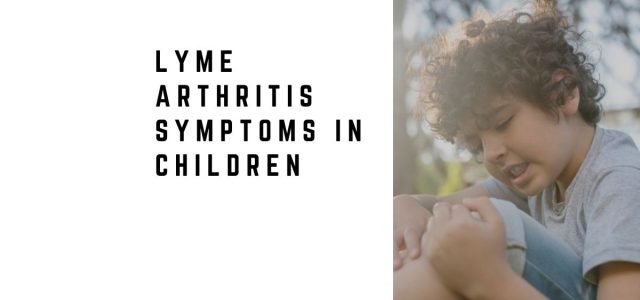
Lyme Arthritis Symptoms in Children: Knee Swelling and Limping
Knee swelling may be the first sign
Pain may be minimal or absent
Symptoms often appear weeks later
Lyme arthritis symptoms in children most often present as swelling of a single large joint—especially the knee. This late manifestation may appear weeks to months after infection and is frequently missed early.
Because symptoms develop long after the initial infection, Lyme arthritis can be mistaken for other joint conditions. A swollen knee without injury or a sudden limp may be the first clue.
Some children present with a sudden swollen knee without injury, while others develop limping or reduced activity before arthritis is recognized.
For a broader overview, see the Pediatric Lyme Disease guide.
Unexplained swelling of a single large joint—especially the knee—should prompt consideration of Lyme disease in children, even without a known tick bite or rash.
Common Lyme Arthritis Symptoms in Children
Lyme arthritis symptoms in children typically involve one or more large joints.
- Swelling of a single knee
- Joint stiffness
- Limping
- Reduced activity or difficulty walking
- Occasional joint pain
- Swollen knee without clear injury
In many children, swelling is more noticeable than pain.
Sometimes, the first sign parents notice is a sudden limp rather than discomfort.
When Lyme Arthritis Appears
Lyme arthritis usually develops weeks to months after infection.
By the time joint swelling occurs, earlier symptoms—such as fever, fatigue, or rash—may have resolved.
This delay often obscures the connection to a tick bite.
Large Joint Involvement Is Typical
The knee is involved in the majority of pediatric Lyme arthritis cases.
Other joints may include:
- Ankle
- Elbow
- Wrist
Single-joint involvement—especially the knee—is a key clinical clue.
Clinical Clues That Suggest Lyme Arthritis
- Swelling of a single large joint
- Knee swelling without clear injury
- Swelling greater than pain
- Sudden limp in an otherwise healthy child
- Outdoor exposure in tick-endemic areas
- Minimal fever compared with septic arthritis
Can Lyme Arthritis Symptoms Come and Go?
Lyme arthritis may follow a fluctuating course.
Joint swelling may improve and then recur in the same joint or appear in another joint.
This intermittent pattern can complicate diagnosis.
Why Lyme Arthritis Is Often Missed
Lyme arthritis symptoms in children are frequently overlooked because:
- No tick bite was remembered
- A rash was absent or unnoticed
- Symptoms appear long after infection
- Joint swelling resembles other conditions
Because of this, Lyme disease may not be considered initially.
For diagnostic challenges, see Lyme disease testing and diagnosis.
Evidence From Pediatric Studies
A pediatric rheumatology study in Nova Scotia examined children with Lyme arthritis:
- 17 children were identified
- 94% had knee involvement
- Only 3 had a history of rash
- Only 4 recalled a tick bite
Lyme disease was suspected initially in only about one-third of cases.
This highlights the limitations of relying on rash or tick exposure history.
MRI Findings in Pediatric Lyme Arthritis
MRI may be used when clinicians need to distinguish Lyme arthritis from septic arthritis or other causes of a swollen knee.
In one pediatric knee study, MRI findings including myositis, popliteal lymphadenopathy, and lack of subcutaneous edema helped differentiate Lyme arthritis from septic arthritis.
A 2025 study of 87 pediatric and adolescent patients with Lyme arthritis found that 16% had meniscal changes on MRI. Despite these MRI abnormalities, only one patient required surgery, while most improved with antibiotics alone.
These findings suggest that MRI abnormalities may coexist with Lyme arthritis and should be interpreted in the broader clinical context to avoid unnecessary surgical intervention.
Conditions That May Mimic Lyme Arthritis
Several conditions may resemble Lyme arthritis:
- Septic arthritis
- Juvenile idiopathic arthritis
- Reactive arthritis
- Joint injury
- Meniscal injury or other internal knee abnormalities
Careful evaluation is required to distinguish among these diagnoses.
When Parents Should Seek Medical Evaluation
Medical evaluation is recommended if a child develops:
- Unexplained knee swelling
- Limping without injury
- Persistent joint swelling
- Reduced activity or difficulty walking
These symptoms warrant attention—especially in endemic areas.
Most Children Recover With Treatment
Most children respond well to antibiotic therapy.
Joint swelling typically resolves, although recovery may take time.
A small number develop antibiotic-refractory Lyme arthritis, where inflammation persists despite treatment.
For recovery expectations, see Lyme disease recovery timeline.
Frequently Asked Questions
Can Lyme arthritis cause knee swelling without pain?
Yes. Many children develop significant swelling with surprisingly little pain.
Can Lyme arthritis occur without a known tick bite?
Yes. Many children with Lyme arthritis do not remember a tick bite.
What joint is most commonly affected?
The knee is affected most often.
Can Lyme arthritis cause limping?
Yes. Limping may be one of the first signs parents notice.
Can symptoms come and go?
Yes. Joint swelling may improve and later return.
Clinical Takeaway
Children with Lyme arthritis often present with a swollen knee and relatively little pain. Parents may notice a sudden limp or reduced participation in normal activities.
When unexplained knee swelling occurs, Lyme disease should remain part of the differential diagnosis because delayed recognition may prolong illness.
Related Articles
Related articles for parents and clinicians interested in pediatric Lyme arthritis, diagnosis, and recovery:
Lyme arthritis
Lyme disease misdiagnosis
Delayed Lyme disease diagnosis
Recovery from Lyme disease
Lyme disease symptoms guide
References
- Glaude PD, Huber AM, Mailman T, Ramsey S, Lang B, Stringer E. Clinical characteristics, treatment and outcome of children with Lyme arthritis in Nova Scotia. Paediatr Child Health. 2015;20(7):377-380.
- Yen YM, Sanborn RM, Donohue K, Miller PE, Milewski MD, Ecklund K. Lyme arthritis in the pediatric knee: Clinical and magnetic resonance imaging differentiators. JBJS Open Access. 2022;7(4):e22.00067.
- Milewski MD, Ecklund K, Lee SW, et al. Knee Lyme arthritis in pediatric and adolescent patients may be associated with meniscal changes on MRI. JBJS Open Access. 2025;10(2):e24.00080.
Dr. Daniel Cameron, MD, MPH
Lyme disease clinician with over 30 years of experience and past president of ILADS.
Symptoms • Testing • Coinfections • Recovery • Pediatric • Prevention