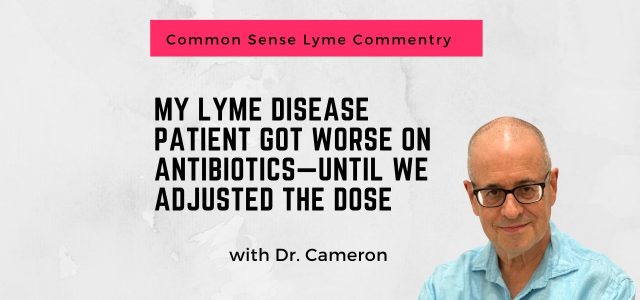
Feeling Worse After Antibiotics? A Lyme Disease Treatment Adjustment
FEELING WORSE
AFTER ANTIBIOTICS?
WHEN LESS MAY HELP
Some Lyme disease patients feel worse after starting antibiotics—not better. In certain cases, adjusting the dose rather than stopping treatment altogether may help patients tolerate therapy and continue improving.
He was ready to quit treatment.
The antibiotics were making him feel worse, not better—nausea, fatigue, and a sense that his body was shutting down. He told me, “Doc, I don’t think I can keep doing this.”
I knew we needed a new approach—but not necessarily a new medication. Instead, I asked:
What if we adjusted the dose?
When Less Is More
Instead of the standard full dose, we lowered it—just enough to reduce the burden on his system while still targeting the infection.
It was a small tweak, but the impact was significant:
- His side effects eased within days
- His energy improved
- Most importantly, his Lyme symptoms began to resolve
Watch the short video discussion here:
YouTube Short: Feeling Worse After Antibiotics?
Why Individualized Treatment Matters
This case reminded me that Lyme disease treatment is not about pushing patients to the edge—it is about meeting them where they are.
If a full dose overwhelms the system, patients may struggle to continue treatment. But the right adjustment can sometimes unlock progress.
Every patient’s journey is different. Sometimes, it is not about starting over—it is about finding the dose that works.
💡 A Gentle Nudge, Not a Full Detour
This patient did not need a brand-new protocol. He needed someone to recognize the bigger picture and make a targeted adjustment.
That single change helped him stay the course—and ultimately improve.
Learn more about persistent Lyme disease symptoms and the challenges of recovery from Lyme disease.
Dr. Daniel Cameron, MD, MPH
Lyme disease clinician with over 30 years of experience and past president of ILADS.
Symptoms • Testing • Coinfections • Recovery • Pediatric • Prevention