
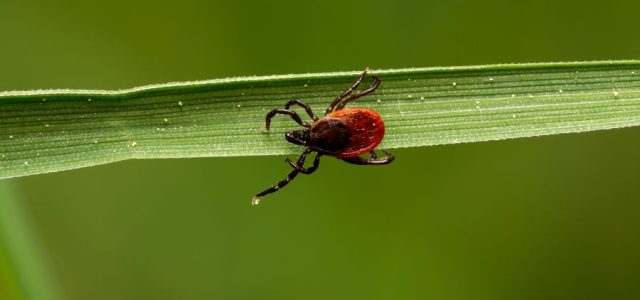
Lyme Disease Is Expanding Even Where You Didn’t See Ticks
Lyme disease risk is increasing in areas where it was once uncommon.
I grew up on a farm in western Minnesota. At the time, we did not see ticks.
At the time, Lyme disease was not part of everyday clinical thinking in this region—and that assumption can still influence how symptoms are interpreted today.
That has changed.
Today, patients in the same region face a very different reality—one that reflects a broader shift in tick exposure and disease risk.
Tick Exposure Is Expanding
Ticks are no longer limited to historically high-risk regions.
Changes in climate, wildlife patterns, and land use have contributed to the expansion of tick populations into new geographic areas.
This shift means that areas once considered low risk are now seeing increasing exposure to tick-borne diseases.
As exposure increases, understanding how to prevent Lyme disease becomes even more important.
What the Research Shows
Recent research in Minnesota highlights how significant this change has become.
In a study of outdoor workers, nearly half of collected ticks were infected with Borrelia burgdorferi, the bacteria that causes Lyme disease.
Individual workers had an estimated weekly probability of encountering infected ticks ranging from approximately 5% to 65%, depending on exposure and location.
These findings suggest that exposure risk is not only present—but substantial.
Ticks may also carry additional pathogens, as described in Lyme disease coinfections, further increasing the complexity of exposure risk.
Why This Matters for Diagnosis
But here’s the problem: many clinical assumptions have not kept up with this shift in risk.
Many clinicians still rely on older geographic assumptions when evaluating patients.
If Lyme disease was historically uncommon in a region, it may not be considered early in the diagnostic process.
This can contribute to delays in diagnosis, especially when symptoms are nonspecific.
This pattern is discussed further in delayed Lyme disease diagnosis.
Changing Risk—But Not Awareness
One of the challenges is that awareness has not always kept pace with changing risk.
Patients may not recognize tick exposure. Clinicians may not initially suspect Lyme disease.
This gap between risk and recognition can lead to missed or delayed diagnoses.
A Broader Public Health Shift
Lyme disease is part of a larger trend.
Vector-borne diseases are increasing globally, driven in part by environmental and ecological changes.
Ticks now represent a growing source of human disease exposure in the United States.
Clinical Takeaway
Lyme disease risk is increasing—even in areas where it was once uncommon.
Past experience may not reflect current risk.
Understanding this shift is critical for both patients and clinicians when evaluating symptoms and exposure.
References
Cassens, J., Larson, S., Keller, K., Alexander, B. H., Bender, J. B., & Oliver, J. D. (2025). Estimating infected blacklegged tick encounters among outdoor workers in Minnesota. EcoHealth, 23(1), 137–152.
Dr. Daniel Cameron, MD, MPH
Lyme disease clinician with over 30 years of experience and past president of ILADS.
Symptoms • Testing • Coinfections • Recovery • Pediatric • Prevention
Related Posts