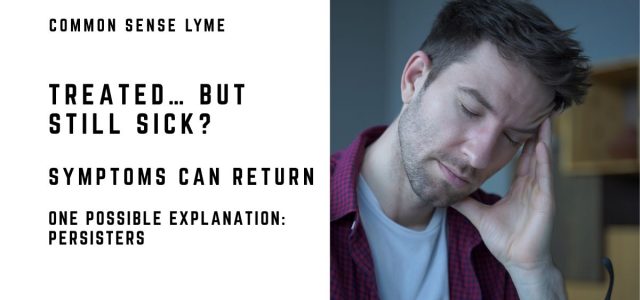
Lyme Persisters: Why Symptoms Can Return After Treatment
You finished treatment. The antibiotics are done. Your doctor says you’re cured.
So why do you still feel terrible?
For some patients, the answer may involve Lyme persisters—dormant or slow-growing forms of Borrelia burgdorferi that may survive antibiotic exposure and contribute to lingering symptoms after treatment.
Can Lyme Disease Be Dormant?
Some researchers believe that dormant or slow-growing forms of Borrelia burgdorferi, often called persisters, may contribute to symptom recurrence in some patients.
Laboratory studies have demonstrated bacterial forms capable of surviving antibiotic exposure, although the clinical significance in humans remains under investigation.
Persistence biology does not necessarily imply active infection in every patient with ongoing symptoms. Multiple mechanisms may contribute to delayed recovery.
The Role of Lyme Persisters
For many Lyme disease patients, fatigue creeps back. Joint pain returns. Brain fog clouds daily life.
Researchers studying Lyme disease have identified bacterial forms that can survive antibiotics by slowing their metabolism or changing form.
These persister forms may:
- Enter dormant metabolic states
- Hide within tissues
- Cluster within biofilms
- Tolerate antibiotics designed for actively dividing bacteria
Biofilms are protective bacterial communities surrounded by a matrix that may reduce antibiotic penetration and immune system recognition.
When antibiotic pressure is removed, dormant bacteria may reactivate, potentially contributing to symptom recurrence in some patients.
What Tuberculosis Taught Us About Persistence
The concept of bacterial persistence is not unique to Lyme disease.
Decades ago, researchers studying tuberculosis discovered that a small number of bacteria could remain alive but dormant despite prolonged antibiotic therapy.
These persister bacteria were not genetically antibiotic-resistant. Instead, they survived by slowing their metabolism and entering inactive states that made antibiotics less effective.
When treatment stopped, dormant bacteria sometimes reactivated and caused relapse.
Eventually, tuberculosis treatment evolved into longer multidrug regimens targeting bacteria in different metabolic states—not just actively growing organisms.
TB research demonstrated that some infections require understanding bacterial behavior under stress—not simply extending treatment duration.
Researchers are now exploring whether similar persistence biology may occur in Lyme disease.
This does not mean Lyme disease behaves identically to tuberculosis. However, it highlights that bacterial dormancy and relapse are recognized biologic phenomena in infectious disease.
Can Lyme Disease Come Back Years Later?
Some patients report symptom recurrence months or years after treatment.
Whether these episodes represent bacterial persistence, immune dysregulation, tissue injury, autonomic dysfunction, or other mechanisms remains an area of active investigation.
Different mechanisms may contribute in different individuals, which helps explain why recovery patterns vary.
Why Lyme Persisters Matter
Understanding Lyme persisters may help explain why some patients continue to experience symptoms after treatment.
The persister concept also informs broader discussions regarding Lyme disease treatment options and persistent symptoms after Lyme disease.
Persistent bacteria may continue to provoke:
- Inflammation
- Immune dysregulation
- Neurologic symptoms
- Fluctuating symptom patterns
Important context: Research into Lyme persisters remains ongoing. Laboratory studies have demonstrated persister forms of Borrelia burgdorferi in culture and animal models, but the clinical significance in human patients continues to be investigated.
The relationship between persister bacteria and persistent Lyme symptoms remains an active area of scientific inquiry and debate.
What Triggers Dormant Lyme Disease?
Patients often ask what causes symptoms to flare after apparent recovery.
Physical stress, infections, surgery, sleep disruption, and other illnesses are commonly reported triggers, although scientific understanding remains incomplete.
Fluctuating symptoms do not necessarily indicate active infection, and multiple biologic mechanisms may be involved.
Why Do Lyme Disease Flare-Ups Occur?
Many patients describe periods when fatigue, pain, or cognitive symptoms temporarily worsen after months of relative stability.
These flare-ups may reflect inflammation, autonomic dysfunction, immune responses, tissue repair, or persistence biology. Researchers continue to investigate why symptoms fluctuate over time.
Rethinking Recovery After Lyme Disease
Persistent symptoms do not necessarily mean treatment failed.
Recovery may also involve:
- Resolution of inflammation
- Immune system recovery
- Repair of neurologic dysfunction
- Healing after infection-related injury
The long arc of tuberculosis research reminds us that persistence biology is complex and may require years of investigation before optimal treatment approaches emerge.
Lyme disease research may still be early in that process.
Do Lyme Persisters Explain PTLDS?
Persisters represent one possible explanation for persistent symptoms after Lyme treatment.
Other proposed mechanisms include:
- Immune dysregulation
- Inflammatory responses
- Tissue damage from initial infection
- Autonomic dysfunction
Different mechanisms may contribute in different patients.
Learn more about persistent Lyme disease mechanisms and why recovery patterns vary.
Frequently Asked Questions
What are Lyme persisters?
Lyme persisters are dormant or slow-growing forms of Borrelia burgdorferi that may survive antibiotic treatment by entering metabolically inactive states.
Can Lyme disease be dormant?
Laboratory studies suggest that dormant or slow-growing bacterial forms may exist, although their significance in human disease remains under investigation.
Can Lyme disease come back years later?
Some patients report symptom recurrence months or years after treatment. Multiple mechanisms may contribute to these episodes.
What triggers dormant Lyme disease?
Stress, infections, surgery, sleep disruption, and other illnesses are commonly reported triggers, although scientific understanding remains incomplete.
Why do Lyme symptoms flare up?
Flare-ups may reflect inflammation, immune responses, autonomic dysfunction, tissue repair, or persistence biology.
Are Lyme persisters antibiotic-resistant?
No. Persisters tolerate antibiotics because they are metabolically inactive or slow-growing rather than genetically resistant.
Is there scientific evidence for Lyme persisters?
Yes. Laboratory and animal studies have demonstrated persister forms of Borrelia burgdorferi, although their clinical significance in humans continues to be investigated.
Do persisters explain all persistent Lyme symptoms?
No. Persistent symptoms may involve inflammation, immune dysregulation, tissue injury, autonomic dysfunction, or multiple mechanisms acting together.
Clinical Takeaway
Lyme persisters are dormant or slow-growing bacterial forms that may survive antibiotic exposure and contribute to persistent symptoms in some patients.
Research into Lyme persisters remains ongoing, and multiple mechanisms—including immune dysregulation and inflammation—may contribute to post-treatment symptoms after Lyme disease.
Persistence biology offers one possible explanation for symptom recurrence, but recovery patterns likely differ among patients and remain an active area of investigation.
Related Articles
Post-Treatment Lyme Disease Syndrome (PTLDS)
Persistent Lyme Disease Mechanisms
Recovery From Lyme Disease
Why Lyme Disease Symptoms Come and Go
References
- Stricker RB, Middelveen MJ. Metamorphoses of Lyme disease spirochetes: phenomenon of Borrelia persisters. Discov Med. 2019;27(148):183-190.
- Embers ME, Barthold SW, Borda JT, et al. Persistence of Borrelia burgdorferi in rhesus macaques following antibiotic treatment. PLoS One. 2012;7(1):e29914.
- Lewis K. Persister cells. Annu Rev Microbiol. 2010;64:357-372.
Dr. Daniel Cameron, MD, MPH
Lyme disease clinician with over 30 years of experience and past president of ILADS.
Symptoms • Testing • Coinfections • Recovery • Pediatric • Prevention


Lyme Disease has damaged my speech. It’s really tiring to talk properly. I went through intravenous antibiotics and this did not help. I guess it could be persistors, auto immune etc.. but I can’t afford any more tests or treatment so I’ll have to live with it.
I have patients who were not informed that there were oral antibiotic treatments that have been overlooked ie treatment for Babesia
Yes, I have chronic Lyme (Borrelia no co-infections). After many years taking different antibiotics then Samento/Banderol I am now in a state where I have continuous die-off, which worsens with more exercise. My hypothesis is that, with a lot less stress and more exercise in the last few years my immune system has ‘woken up’ and is clearing the bacteria which is slowly emerging from biofilm/cysts. I can’t find others (patients nor LLMDs) talking about this state that I refer to ‘biofilm clearing. I read Biological Sciences at university and refer to myself as a living petri dish! I wish I could find relevant information/others who are experiencing this. So Dr Cameron – if you have any thoughts they would be gratefully received. Thank you, Nina
Daniel I entirely agree and went through my GP saying “once you have antibiotics all the bacteria is dead”, as well I had two doctors in the tropical disease section of a very large hospital say exactly the same thing. I also agree our body can react to dead bacteria or there can be other reasons however persistent borrelia or other bacteria have ways to avoid antibiotics or they are resistant to antibiotics so some bacteria survive and repopulate.
“once you have antibiotics all the bacteria is dead“
I wonder about that, too. Doxycycline is a “bacteriostatic”, according to wikipedia, while an antibiotic like Amoxicillin is a “bactericide”. A bacteriostatic prevents replication and growth of bacteria, but relies on the immune system for eradication. If your immunity is low for some reason I wonder what happens.
I had a “pulse” prednison treatment for optic nerve inflammation, and 200 mg/d doxycycline 3wks, 7 months ago. (Prednison works by lowering your immune response.) Lyme symptoms returned. Doxycycline repeated 3wk 400 mg/d, 2 months ago, now awaiting improvement.
I was finally diagnosed with Ehrlichia with a strong suspicion for Lyme in July 2024, after over 3 years of symptoms. I was put on a 3 month antibiotic treatment and after initially feeling absolutely horrible I felt totally myself within a month. It was life changing that I finally felt better and finally knew I wasn’t crazy because of all these years I was doubting myself.
After the 3 months I went off and I absolutely plummeted worse then before. Symptoms increased to a point I was bedridden.
My doctors decided to put me back on antibiotics for a year. I’m currently 7 months in and feel fantastic. I’ve been diligently following a Lyme “routine” of supplements and detox on top of the antibiotics but I’m terrified of going back off.
I’m in Canada with no LLMDs. I have two wonderful doctors who both admit to not knowing much about the disease, but are both good with me bringing well thought out research to my appointments and going over it and applying it if they feel it’s worth the risk. They say they are willing to put me back on antibiotics after the year if needed, but I’ve also been looking into treatments like double dapsone because I feel that if we need a next round we’ll need a different approach.
Sorry for the long story but this article really spoke to me and the ask of making sure others knew this happens by commenting brought tears to my eyes. One of the hardest things about chronic Lyme is not being believed and in turn thinking you are crazy.
I have not treated with Dapsone. I rely on other antibiotics