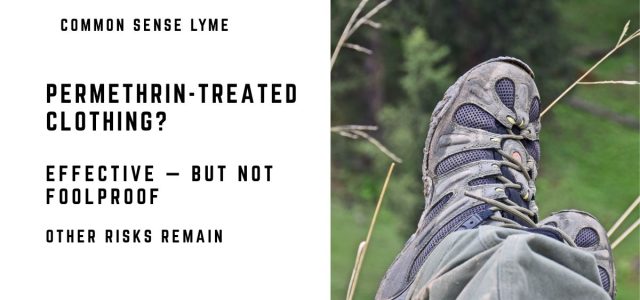
Does Permethrin-Treated Clothing Really Work?
Permethrin-treated clothing is one of the most effective ways to reduce tick bites and lower the risk of tick-borne disease.
As more individuals spend time outdoors during warmer weather, concerns about tick exposure increase.
Researchers have examined not only the effectiveness of tick repellents and protective clothing, but also the behaviors of people most likely to encounter ticks.
Tick Prevention Behaviors Among Hikers
Researchers in Indiana studied protective behaviors among recreational hikers.
Surprisingly, they found that only:
- 9.5% of hikers used tick repellent
- 3.4% wore protective clothing
- Only two individuals reported showering after recreation and checking for ticks
These findings suggest that many outdoor enthusiasts do not consistently use simple strategies that could reduce tick exposure.
Does Permethrin-Treated Clothing Really Work?
Several studies have evaluated the effectiveness of
permethrin-treated clothing
in reducing tick bites.
Sullivan and colleagues recruited state and county park employees in North Carolina to wear long-lasting permethrin-impregnated clothing.
The study found that the clothing retained permethrin and remained biologically active against ticks even after three months of real-world use.
A separate Rhode Island study examining permethrin-treated footwear found that individuals wearing treated socks and sneakers were dramatically less likely to experience tick bites.
Researchers found that people wearing permethrin-treated socks and sneakers were 73.6 times less likely to have a tick bite than those wearing untreated footwear.
How Ticks React to Permethrin
Another study examined tick behavior when exposed to permethrin-treated textiles using a laboratory model designed to mimic pant legs or sleeves.
Unlike DEET, permethrin does not primarily function as a spatial repellent.
Instead, ticks often walk onto treated fabrics but rapidly become irritated after contact.
Ticks exposed to permethrin-treated clothing displayed a “hot-foot” effect and quickly dislodged themselves from the fabric.
Laboratory-reared ticks became visibly agitated and tumbled off the treated textile.
Within 1 to 24 hours after exposure, most ticks showed little or no movement.
Field-collected ticks were somewhat more resilient, possibly due to adaptation to variable environmental conditions. However, even these ticks demonstrated significant impairment following contact.
Researchers also noted that prolonged immobility after exposure likely increases tick mortality from dehydration or predation.
Permethrin Compared With DEET
Researchers from the CDC’s Division of Vector-Borne Diseases compared permethrin-treated fabrics with DEET-treated textiles.
They found that ticks approaching DEET-treated materials rarely made direct contact with the fabric, suggesting that DEET primarily acts as a repellent.
Permethrin-treated fabrics behaved differently: ticks frequently made contact but became incapacitated shortly afterward.
After exposure, many ticks were unable to move normally, reducing their ability to attach and bite.
Ultrasonic Tick Repellents Appear Ineffective
Investigators in Australia studied ultrasonic pest repellent devices against the Australian paralysis tick (Ixodes holocyclus).
More than 80% of ticks were not repelled by the device.
The authors concluded that ultrasonic repellents provide insufficient protection from tick bites.
Safety Considerations
Permethrin can be toxic in high doses.
According to a National Research Council review of permethrin exposure from military uniforms, acute toxicity may affect the central nervous system.
Symptoms of high-dose toxicity may include:
- Incoordination
- Ataxia
- Hyperactivity
- Convulsions
- Paralysis
Permethrin should not be inhaled while treating clothing and should never be applied directly to the skin.
When used appropriately on clothing and outdoor gear, permethrin-treated products are generally considered safe and remain an important part of tick-bite prevention strategies.
Frequently Asked Questions
Is permethrin-treated clothing safe?
When used as directed on clothing and gear, permethrin-treated products are generally considered safe. Permethrin should not be inhaled during application and should never be applied directly to the skin.
Does permethrin kill ticks or repel them?
Permethrin primarily works through contact. Ticks often climb onto treated fabric but rapidly become impaired and dislodge themselves.
How long does permethrin-treated clothing remain effective?
Studies suggest that treated clothing may remain biologically active for weeks to months depending on use and washing frequency.
Are ultrasonic tick repellents effective?
Current evidence suggests ultrasonic devices do not provide reliable protection against ticks.
Clinical Takeaway
Permethrin-treated clothing is one of the most effective evidence-based methods for reducing tick bites.
- Permethrin works through contact rather than simple repellency
- Treated clothing remains active even after extended use
- Permethrin-treated footwear may significantly reduce tick attachment risk
- Ultrasonic tick repellents do not appear reliable
- Proper handling and application remain important for safety
For a broader look at strategies to reduce tick exposure and prevent Lyme disease, see
Preventing Chronic Lyme Disease: Why Early Care Matters.
Related Articles:
How Effective Is Permethrin-Treated Clothing After Washing?
Only a Minority of Children With Lyme Disease Recall a Tick Bite
Are Lyme Disease Prevention Methods Really Working?
How Concerned Are People About Tick Bites and Tick-Borne Diseases?
References:
- Anderson KR, Blekking J, Omodior O. Tick trails: the role of online recreational trail reviews in identifying risk factors and behavioral recommendations associated with tick encounters in Indiana. BMC Public Health. 2021;21(1):908.
- Panthawong A, Doggett SL, Chareonviriyaphap T. The efficacy of ultrasonic pest repellent devices against the Australian paralysis tick, Ixodes holocyclus. Insects. 2021;12(5):400.
- Sullivan KM, Poffley A, Funkhouser S, et al. Bioabsorption and effectiveness of long-lasting permethrin-treated uniforms over three months among North Carolina outdoor workers. Parasit Vectors. 2019;12(1):52.
- Eisen L, Rose D, Prose R, et al. Bioassays to evaluate non-contact spatial repellency, contact irritancy, and acute toxicity of permethrin-treated clothing against nymphal Ixodes scapularis ticks. Ticks Tick Borne Dis. 2017;8(5):739-744.
- National Research Council. Health Effects of Permethrin-Impregnated Army Battle-Dress Uniforms. Washington, DC: National Academies Press; 1994.
Dr. Daniel Cameron, MD, MPH
Lyme disease clinician with over 30 years of experience and past president of ILADS.
Symptoms • Testing • Coinfections • Recovery • Pediatric • Prevention



Very helpful research article that clarifies how permethrin works. Given this, and that on the one hand permethrin kills ticks better than does Deet… given that the ticks can crawl up under the treated clothes, do you recommend Permethrin treated sneakers and clothes or DEET? And, for women (or men) needing to be in sandles or leather/synthetic material shoes while on the grass (e.g., outdoor parties), do you think Permethrin has any effect sprayed on a hard sole sandle, unlike the material of sneakers? Was faced with this dilemma this past weekend! A 6-hr lawn party… Yikes! Thank you!
It took up to 10 seconds for the permethin impregnated cloth to cause the tick to drop off. The tick would appear to do well if it could contact skin in less than 10 seconds. It is also not clear if the permethrin protection would hold up after washing cloths. I am not convinced that ticks would stay on a sandals long enough to fall off when the skin is there.
Permethrin kills ticks deet does not.
Treat clothing with Permethrin and exposed skin with deet as a repellent.
Studies show deet is still the best as a repellent, Picaridin second to deet and dies not soak into your skin as deet does.
Picaridin can also be used in clothing.
Better yet wear snug fitting treated clothing or with elastic bands to keep them from crawling up and under.
Permethrin also looses it’s quality as days and washing pass especially if exposed to harsh sun.
I’ve started asking party hosts if they have treated their property…
If wearing a dress or skirt a snug pair of exercise short that have been treated under for some added protection, but the best is to do tick checks often. The longer they are in the more chance of contracting one of the tbd’s.So when you’re at a lawn party, do your tick check every time you use the rest room.
Enjoy your summer!
Avid Northern NH hiker here. We’ve been treating our clothing with permithrin for the past 2 years and have been very happy with the results. We also treat our dog with Vectra 3D which also contains permethrin and other chemicals. Also successful. Please be advised, it is extremely toxic to cats.
Permethrin is a derivative of oil of the chrysanthemum flower. The NRC statement on the toxicity of permethrin (1994) is woefully out of date. The EPA summary of evidence (2009 https://www.epa.gov/insect-repellents/repellent-treated-clothing ) concludes when used as directed it is safe for children and pregnant mothers. All 5 major species of ticks in the US are disabled or dead within 30 seconds. Armies around the world using permethrin-treated uniforms and DEET have eliminated 99% of tick-borne diseases, including Lyme.
Adult ticks can more amazingly fast. If they are hungry I’ve seen them run across permethrin treated clothing for 4-6″, towards skin, before I stopped them. You have to be covered head to toe with tight closures at wrists, ankles, and neck to stop them and then they’ll be on your head. The only guarantee of no tick bites is a hazmat suit so I recommend having the best known herbs for treating Lyme (Cat’s Claw, Otoba bark, Cystus incanus, cryptolepsis, Andrographis, etc) on hand and using one of them daily if the ground isn’t covered with snow and Cat’s Claw/Otoba for 10days after every bite. This has worked for myself and my dog for 5 years. My dog tested positive for Anaplasmosis but never had symptoms and I haven’t tested positive for Lyme despite getting bitten by ticks that have tested positive. Be safe!
Thank you for the helpful article, I’ve been searching for info on Permethrin and this is helpful. Something I’ve been pondering is whether doing a tick drag with a permethrin treated cloth in an enclosed yard would work as a method to lower tick numbers? Wondering if ticks would still grab onto the fabric if it was treated, and remain on there long enough to kill them. If so might it be a worthwhile technique to try, if it was repeated weekly during tick season might it lower numbers enough to make a difference? Thoughts?