
Do Lyme Disease Prevention Methods Really Work?
Researchers reviewed common Lyme disease prevention methods.
Many strategies were supported by limited or mixed evidence.
Tick bite prevention remains an important public health challenge.
In the article “Interventions to prevent Lyme disease in humans: A systematic review,” Richardson and colleagues evaluated studies examining strategies used to prevent Lyme disease and reduce tick bites.
After reviewing the available studies, the authors concluded:
“In general the quality of evidence was low. There were typically only 1 to 3 studies and these had mixed results.” [1]
The findings highlight how little research has rigorously evaluated many commonly recommended Lyme disease prevention methods.
Personal Protective Measures for Lyme Disease Prevention
The review examined several personal protective measures promoted to prevent Lyme disease.
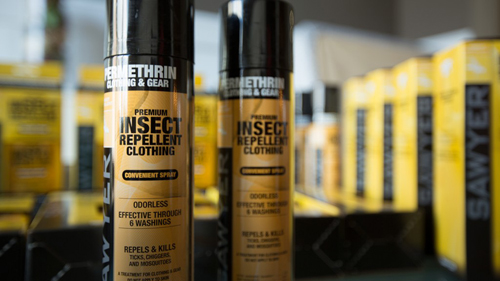
- Tick repellents and protective clothing: “Tick repellents and protective clothing may be associated with a lower incidence of Lyme disease (LD) (2 studies).”
- Tick checks: “Effects were mixed for the association between tick checks and incidence of LD (2 studies).”
- Showering after outdoor exposure: “Bathing within 2 hours of being outside may be associated with a lower incidence of LD (1 study).”
- Permethrin-treated clothing: “Permethrin-treated battle dress uniform (1 study) and Citriodiol insect repellent (1 study) may reduce the number of ticks crawling or bites.”
Environmental Tick Bite Prevention Strategies
The authors also reviewed environmental interventions intended to reduce tick exposure around homes and properties.
- “Having a fence or stone wall, trimming overhanging branches, having a dry barrier, spraying the yard, and killing other pests may be associated with a lower incidence of LD (1 study).”
- “Mowing the lawn frequently, and having a vegetable garden, bird feeder, woods near the property, log pile and clearing leaves may be associated with a higher incidence of LD (1 study).”
- “Spraying properties reduces the frequency of ticks crawling or attached (1 study).”
- “Effects were mixed for spraying property on the incidence of LD (3 studies).”
What Do These Findings Mean?
Richardson and colleagues’ findings reveal the limitations of the current evidence supporting many Lyme disease prevention methods.
Several commonly promoted strategies were supported by only a small number of studies, and many produced inconsistent findings.
For example:
- Tick repellents and protective clothing may reduce Lyme disease risk
- Tick checks showed mixed effectiveness
- Property spraying reduced attached ticks in some studies, but effects on Lyme disease incidence were inconsistent
Meanwhile, Lyme disease incidence continues to increase in many regions.
As prevention strategies continue to be promoted, additional research is needed to better understand which interventions meaningfully reduce tick bites and Lyme disease transmission.
To learn more, visit preventing Lyme disease, Lyme disease symptoms guide, and tick-borne coinfections.
Related Articles:
Tick bite prevention methods are failing our children
How effective is permethrin-treated clothing in preventing tick bites?
Permethrin-treated clothing causes “hot foot” effect in ticks
References:
- Richardson M, Khouja C, Sutcliffe K. Interventions to prevent Lyme disease in humans: A systematic review. Prev Med Rep. 2019;13:16-22.
Dr. Daniel Cameron, MD, MPH
Lyme disease clinician with over 30 years of experience and past president of ILADS.
Symptoms • Testing • Coinfections • Recovery • Pediatric • Prevention


I truly feel this article is too early. For most of the population, ticks are a “new” thing. Education efforts are really just starting. Do most people use bug spray, tuck in their pants, wear treated clothing and take a shower after being outside? No.
Do most people think it is something they should worry about? No.
To say that these measures may not be working is misleading. It should be focussed on whether or not people even think that ticks and Lyme are a risk to them.
Well stated.
In looking at the studies cited regarding vaccination (3.5), three of the authors including Wressnigg are employed by Baxter Bioscience, a research and development group for vaccine development. Isn’t that akin to putting a fox in the hen house?
i have started taking a garlic supplement, in order to repel ticks. Has anyone else tried this. I have had Lyme disease and do not wish to get it again.
Armed forces have used permethrin to prevent tick bites since 1991. The peak incidence of Lyme is age 5-15 and our children don’t put on DEET, won’t do tick checks, and walk anywhere they please. But they do wear clothing, which can be treated to disable/kill a tick within a minute. See how well it works – https://www.agemanagementboston.com/permethrin-kills-ticks-prevents-lyme-disease-summer-2018/
I got a tick bite in Highlands,NC. I had no caution. Very bad outcome.
So, yes, tick danger awareness is quite low.