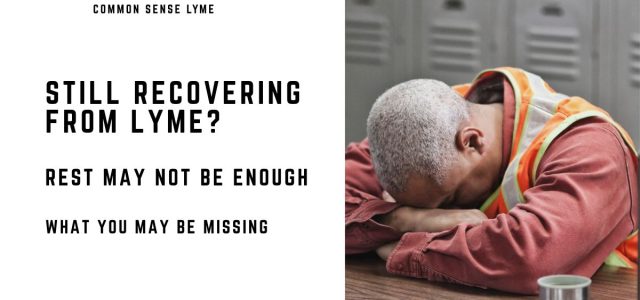
Lyme Recovery Takes More Than Just Rest
Lyme recovery takes more than just rest is a message many patients need to hear when exhaustion, pain, and brain fog make inactivity feel like the safest option.
Many patients searching for how to recover from Lyme disease are really asking how to rebuild function safely without making symptoms worse.
Patients recovering from Lyme disease often ask when they should start moving again and how much activity is too much.
Rest is sometimes necessary. But for many patients, too much inactivity can deepen fatigue, worsen deconditioning, disrupt sleep, and leave them feeling even further from recovery.
For a complete overview of recovery, see our Lyme disease recovery guide.
When symptoms are severe, patients may assume the best strategy is to stop moving altogether. But prolonged inactivity can come at a cost. It may increase stiffness, weaken conditioning, worsen pain perception, and contribute to discouragement over time.
Why Too Much Rest May Hinder Lyme Recovery
The idea that rest alone will heal Lyme disease does not reflect what many patients experience. In recovery, the goal is often not complete inactivity, but the right balance between strategic rest and carefully paced activity.
Prolonged inactivity can:
- Disrupt circadian rhythms
- Worsen sleep quality
- Reduce cardiovascular fitness
- Increase pain perception
- Feed a cycle of isolation and low mood
Rest has an important role, especially during flares or more difficult stretches, but it should not become a permanent state.
For many patients, recovery begins to improve when they gradually reintroduce small amounts of structure and activity.
The Role of Movement in Healing From Lyme
For many patients beyond the most acute phase, gentle movement may support recovery. This does not mean pushing through symptoms. It means reintroducing activity thoughtfully and within limits.
This may include:
- Short walks in fresh air
- Stretching or yoga
- Light physical therapy
- Deep breathing exercises
These strategies may improve circulation, help with pain management, and support nervous system regulation.
For a deeper discussion, see exercise in Lyme disease recovery.
How to Pace Without Crashing
Pacing is essential. The goal is not overexertion. The goal is to restore function gradually without triggering setbacks.
- Start with low-impact movement for 1 to 5 minutes
- Rest before fatigue fully sets in
- Track activity and symptoms in a journal or app
- Adjust based on daily tolerance
For some patients, the first goal may be sitting upright, standing briefly, or walking around the room. Progress does not have to begin with formal exercise.
More is not always better. Trying to push through exhaustion may trigger setbacks in some patients. Recovery often depends on finding a sustainable level of activity rather than maximizing it.
This is not about ignoring the body’s limits. It is about respecting those limits while avoiding the downward spiral that can come with doing too little for too long.
For patients who crash after activity, it may also help to review post-exertional malaise in Lyme disease.
When Rest Is Still Necessary
There are times when rest should remain the priority. During acute illness or severe flares, patients may need to temporarily scale back activity.
Examples include:
- Fever or acute infection symptoms
- Severe post-exertional malaise
- Chest pain or shortness of breath
- Fainting or severe autonomic symptoms
- New or worsening neurologic symptoms
In these situations, activity plans may need to be adjusted until symptoms stabilize.
Recovery Is Often Not Linear
Many patients experience good days and bad days during recovery. Temporary setbacks do not necessarily mean treatment has failed or that progress has stopped.
Improvement often occurs gradually, with periods of advancement followed by plateaus or flares.
Recovery Often Requires More Than Rest Alone
Rest has its place, but it is rarely the whole answer. Lyme recovery often requires a broader approach that may include treatment, nutritional support, sleep optimization, emotional connection, and movement at a level the patient can tolerate.
- Active treatment when appropriate
- Nutritional support
- Sleep optimization
- Emotional connection
- Movement, even if minimal
Rest is one tool, not the whole toolbox.
Frequently Asked Questions
Can too much rest slow Lyme recovery?
Too much inactivity may contribute to deconditioning, poor sleep, stiffness, pain sensitivity, and reduced function. Rest is important during flares, but prolonged inactivity may make recovery harder for some patients.
Should you exercise during Lyme recovery?
Some patients may benefit from gentle, carefully paced movement. This may include short walks, stretching, breathing exercises, or light physical therapy. The goal is not to push through symptoms, but to rebuild tolerance gradually.
What if activity causes a crash?
If activity triggers a symptom crash, the activity level may be too high. Patients may need to reduce duration, intensity, or frequency and use a pacing approach that stays within their current limits.
How long does recovery from Lyme disease take?
Recovery varies widely. Some patients improve within weeks, while others with neurologic symptoms, autonomic dysfunction, or prolonged illness may require months or longer. Progress is often gradual rather than linear.
What helps recovery from Lyme disease?
Recovery may involve more than rest alone. Depending on the patient, it may include appropriate treatment, sleep support, nutrition, emotional connection, pacing, and gradual movement.
Clinical Takeaway
Fatigue and exercise intolerance may reflect inflammation, autonomic dysfunction, poor sleep, deconditioning, or post-exertional symptom worsening rather than lack of motivation.
Although rest is important, prolonged inactivity may contribute to deconditioning and functional decline.
For many patients, Lyme recovery requires balancing strategic rest with carefully paced activity and a broader recovery plan.
Related Articles
Lyme disease fatigue
Lyme disease and sleep disorders
Autonomic dysfunction in Lyme disease
Post-treatment Lyme disease syndrome
References
- Centers for Disease Control and Prevention. Lyme Disease Treatment.
Dr. Daniel Cameron, MD, MPH
Lyme disease clinician with over 30 years of experience and past president of ILADS.
Symptoms • Testing • Coinfections • Recovery • Pediatric • Prevention


Interesting