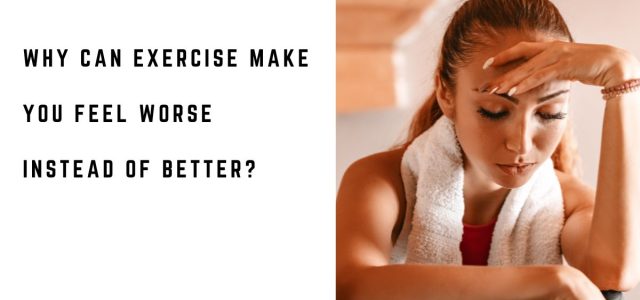
Why Can Exercise Make You Feel Worse Instead of Better?
Exercise normally helps the body adapt and become stronger
But some people develop disproportionate or delayed symptoms after activity
The pattern can help distinguish deconditioning from exercise intolerance and post-exertional worsening
Exercise is supposed to make you healthier. It can improve cardiovascular fitness, muscle strength, mood, metabolic health, and physical function. So it can be confusing when exercise makes you feel worse instead of better.
Some people become tired, sore, or winded because they are starting an exercise program after being inactive. With appropriate training and recovery, their exercise tolerance usually improves.
Other people experience something quite different. Walking, climbing stairs, exercising, or even completing ordinary daily activities may trigger dizziness, rapid heart rate, unusual shortness of breath, weakness, pain, brain fog, profound fatigue, or a delayed worsening of symptoms that lasts well beyond the activity itself.
These patterns should not automatically be treated as the same problem. Deconditioning is one possible explanation, but cardiovascular disease, pulmonary disease, anemia, autonomic dysfunction, neuromuscular problems, metabolic conditions, post-infectious illness, and post-exertional symptom exacerbation can also interfere with the body’s response to activity.
Feeling tired after exercise is not always exercise intolerance
Exercise places temporary demands on the body. Your muscles require more oxygen and energy, your heart rate rises, breathing increases, blood flow is redistributed, and numerous metabolic and neurologic adjustments occur.
If you have been inactive for weeks or months, an activity that was once easy may initially feel difficult. Muscles may become sore, heart rate may rise more quickly, and endurance may be reduced.
This is ordinary deconditioning in many people. Appropriate, progressive activity generally leads to adaptation: the same amount of activity becomes easier as fitness improves.
Exercise intolerance is different. It refers to a reduced ability to perform physical activity because the body cannot adequately meet or tolerate the physiologic demands of exertion. The Cleveland Clinic notes that problems involving the heart, lungs, muscles, and other conditions can contribute to exercise intolerance.
The distinction matters because the answer to deconditioning is often appropriately progressive activity. The answer to unexplained exercise intolerance depends on what is causing it.
What does exercise intolerance feel like?
Exercise intolerance does not feel exactly the same in everyone.
Some people primarily become unusually short of breath. Others develop heavy or weak legs, profound fatigue, dizziness, palpitations, rapid heart rate, chest discomfort, headache, nausea, tremulousness, or difficulty thinking clearly.
The timing also matters.
Symptoms that develop while someone is exercising may suggest a different physiologic problem from symptoms that appear several hours later. Asking what happens during activity, immediately afterward, later that evening, and the following day can provide useful clinical information.
Deconditioning can make exercise difficult
Deconditioning is real and common. Illness, injury, hospitalization, pain, prolonged bed rest, or simply months of reduced activity can decrease cardiovascular fitness and muscle strength.
Someone who previously walked several miles may become winded after a much shorter distance. Heart rate may rise more rapidly, muscles may fatigue sooner, and recovery may initially take longer.
In this situation, carefully progressive exercise can help restore conditioning.
But deconditioning should not automatically be assumed whenever an inactive person has difficulty exercising. Sometimes inactivity is the result of exercise intolerance rather than its original cause.
A person may have stopped exercising because activity repeatedly caused dizziness, tachycardia, shortness of breath, pain, weakness, or prolonged symptom flares. Labeling that entire pattern as deconditioning can reverse the clinical sequence.
Heart and lung problems can limit exercise
Exercise requires the cardiovascular and respiratory systems to increase oxygen delivery to working muscles.
Conditions that interfere with cardiac output, heart rhythm, pulmonary function, oxygen exchange, or circulation can therefore become much more noticeable during exertion than at rest.
Exercise intolerance can occur with heart failure, some rhythm disorders, congenital heart disease, pulmonary disease, pulmonary vascular disease, anemia, and other conditions.
This is one reason a normal resting examination or normal resting measurements do not necessarily explain what happens during physical activity.
Depending on the symptoms and clinical circumstances, evaluation may include an electrocardiogram, laboratory testing, pulmonary testing, an exercise stress test, a six-minute walk test, or cardiopulmonary exercise testing (CPET). CPET simultaneously evaluates aspects of cardiovascular and respiratory responses while a person exercises and can be particularly useful when the cause of exertional limitation remains uncertain.
Autonomic dysfunction can make activity unusually difficult
The autonomic nervous system helps regulate heart rate, blood pressure, vascular tone, sweating, temperature, digestion, and other automatic functions. Exercise requires this system to make rapid adjustments as the body’s metabolic demands increase.
When autonomic regulation is impaired, activity may provoke symptoms such as rapid heart rate, palpitations, dizziness, weakness, nausea, excessive sweating, temperature intolerance, brain fog, or near-fainting.
This can be particularly noticeable in people with orthostatic intolerance or postural orthostatic tachycardia syndrome (POTS). Standing itself creates a cardiovascular challenge, so upright exercise can add exertional stress to the physiologic stress already created by being upright.
Research on POTS confirms that exercise intolerance is common, although the mechanisms are complex and are not explained by deconditioning alone. Abnormal heart-rate and ventilatory responses, reduced stroke volume, sympathetic activation, and altered cerebral perfusion have all been investigated.
For a broader discussion of these mechanisms, see autonomic dysfunction and symptoms such as dizziness, tachycardia, and exercise intolerance.
Post-exertional symptom exacerbation is different from ordinary fatigue
One of the most important distinctions is between feeling tired immediately after activity and developing a disproportionate worsening of illness after exertion.
Post-exertional malaise (PEM), also described more broadly as post-exertional symptom exacerbation, is characterized by worsening symptoms after physical, cognitive, or sometimes emotional exertion.
The worsening may be delayed. A person might complete an activity and initially think it went well, only to develop substantially worse fatigue, pain, cognitive problems, dizziness, sleep disturbance, or other symptoms later that day or the following day.
The Centers for Disease Control and Prevention describes PEM in ME/CFS as worsening symptoms after even minor exertion, often with a delayed response. NIH has also specifically studied exercise intolerance and PEM in Long COVID.
This delayed pattern is clinically important because it can be missed if the only question is, “How did you feel while you were exercising?”
Why “just exercise more” does not always solve the problem
Exercise is an important part of health, and prolonged inactivity has consequences. But the advice to “just exercise more” assumes that the person’s physiology responds to exercise in the expected way.
That assumption may be reasonable for straightforward deconditioning. It becomes more problematic when small amounts of activity repeatedly produce disproportionate symptoms or delayed crashes.
For people with PEM, simply increasing activity without regard to symptom thresholds may worsen symptoms. CDC guidance for ME/CFS emphasizes staying within tolerable energy limits and individualizing activity rather than pushing through PEM.
This does not mean that everyone who feels worse after exercise should stop moving. It means that the pattern and cause of the exercise intolerance matter.
Some patients benefit from progressive conditioning. Others may need an underlying cardiac, pulmonary, hematologic, neurologic, metabolic, autonomic, or infectious problem addressed first. Some require a much more cautious approach to activity while their condition is being evaluated or treated.
Exercise intolerance can occur after an infection
Some people notice that their ability to exercise changes dramatically during or after an illness.
They may previously have exercised normally but subsequently develop unusual fatigue, tachycardia, dizziness, shortness of breath, weakness, pain, cognitive symptoms, or delayed worsening following exertion.
This pattern has received considerable attention in Long COVID and ME/CFS, but exercise intolerance is not specific to either condition. Infection may also uncover or contribute to anemia, cardiac complications, pulmonary problems, autonomic dysfunction, prolonged inflammation, or other conditions that affect exercise capacity.
That means “exercise intolerance after an infection” describes a clinical pattern, not a single diagnosis or mechanism.
Can Lyme disease make exercise harder to tolerate?
Lyme disease can be associated with fatigue, musculoskeletal pain, neurologic symptoms, cardiac manifestations, and other problems that may interfere with activity. Some patients with persistent symptoms also report dizziness, palpitations, orthostatic symptoms, and difficulty tolerating exercise.
These symptoms are not specific to Lyme disease and should not be used by themselves to diagnose it. Other causes of exercise intolerance still need to be considered.
In my clinical practice, an important question is whether the patient became inactive and then deconditioned, or whether illness-related symptoms first made activity difficult and the deconditioning developed afterward. Both can eventually be present at the same time.
I am also cautious about assuming that persistent exercise intolerance following Lyme disease necessarily establishes why symptoms remain. There is no single test that can determine in every patient whether persistent symptoms reflect ongoing infection, consequences of prior infection, immune or autonomic dysfunction, another condition, or a combination of factors.
For a Lyme-specific discussion of this problem, see exercise intolerance in Lyme disease.
The timing of the crash can provide an important clue
When evaluating exercise-related symptoms, it can be useful to reconstruct what happens over time.
Does dizziness begin within minutes of standing or walking? Does heart rate become unusually rapid? Does shortness of breath force the person to stop? Do the legs become weak? Does the person recover normally after resting?
Or does the person finish the activity successfully and then become substantially worse six, twelve, or twenty-four hours later?
A symptom and activity diary can sometimes make these relationships easier to recognize. CDC guidance on PEM specifically suggests tracking activities and subsequent symptoms to identify an individual’s tolerable limits and delayed responses.
The same amount of activity may also have different effects depending on sleep, hydration, heat, concurrent illness, medications, nutritional status, and the person’s baseline symptoms that day.
When should feeling worse with exercise be evaluated?
A new or substantial decline in exercise tolerance deserves attention, particularly when the change cannot be explained by a clear period of inactivity.
Evaluation becomes especially important when exercise causes unusual shortness of breath, chest discomfort, fainting or near-fainting, significant palpitations, marked dizziness, neurologic symptoms, unexplained weakness, or a major decline from previous physical capacity.
The American Heart Association advises stopping exercise and contacting a healthcare professional for warning symptoms including angina, lightheadedness or confusion, extreme fatigue, unusual or extreme shortness of breath, or a fast or irregular heartbeat. Emergency symptoms such as persistent chest pressure, severe breathing difficulty, or loss of consciousness require urgent medical evaluation.
The goal is not to prove that exercise is harmful. It is to determine why a normally beneficial physiologic stress has become difficult to tolerate.
Frequently Asked Questions
Why do I feel worse after exercising?
You may feel worse after exercise because of ordinary deconditioning, excessive intensity, inadequate recovery, or an underlying problem affecting cardiovascular, pulmonary, metabolic, neurologic, muscular, or autonomic function. A delayed and disproportionate worsening of multiple symptoms may represent post-exertional symptom exacerbation rather than ordinary exercise fatigue.
What are the early signs of exercise intolerance?
Possible signs include becoming unusually short of breath, fatigued, dizzy, weak, or lightheaded with activity; developing palpitations or an abnormal heart-rate response; having to stop activities that were previously manageable; or requiring unusually long periods to recover afterward.
How is post-exertional malaise different from being tired after exercise?
Normal exercise fatigue generally improves with rest and appropriate recovery. Post-exertional malaise involves a disproportionate worsening of symptoms following exertion, may be delayed for hours or longer, and can affect fatigue, cognition, pain, sleep, dizziness, and other symptoms.
Can deconditioning make exercise feel worse?
Yes. Reduced activity can decrease cardiovascular fitness and muscle strength, making exercise more difficult. However, deconditioning should not automatically be assumed when activity causes severe, unusual, or delayed symptoms because an underlying illness may have caused the reduction in activity in the first place.
Can POTS make exercise difficult?
Yes. POTS and other forms of orthostatic intolerance can interfere with the body’s cardiovascular and autonomic adjustments to upright activity. Some people develop excessive tachycardia, dizziness, weakness, brain fog, nausea, or near-fainting during standing and exercise.
Should you exercise if exercise makes your symptoms worse?
It depends on why symptoms are worsening. Progressive activity can be beneficial for ordinary deconditioning and many medical conditions, but unexplained exercise intolerance or post-exertional symptom exacerbation may require a different approach. Significant or new symptoms should be evaluated rather than automatically pushed through.
Clinical Takeaway
Exercise normally challenges the body in ways that lead to adaptation and improved fitness. But not every person who struggles with exercise is simply out of shape.
The clinical pattern matters. Symptoms that occur during upright activity may point toward autonomic, cardiovascular, or pulmonary limitations. A delayed crash hours after exertion may suggest post-exertional symptom exacerbation. Deconditioning may contribute to either pattern, particularly after prolonged illness, without necessarily explaining the entire problem.
For patients recovering from Lyme disease or another infection, exercise intolerance should be considered in the context of the complete clinical picture rather than automatically attributed to inactivity or to the prior infection.
When exercise repeatedly makes someone substantially worse instead of gradually stronger, the important question is not simply how to exercise more—it is why the body is having difficulty tolerating exertion.
Related Articles
These articles explore related patterns involving exertion, autonomic regulation, and recovery:
Post-Exertional Malaise in Lyme Disease Explained
Lyme Disease and Exercise: How to Start Safely
What Long COVID Means for Chronic Lyme Disease
References
- Cleveland Clinic. Exercise Intolerance: Symptoms and Causes. Cleveland Clinic. 2024.
- Centers for Disease Control and Prevention. Managing Post-Exertional Malaise (PEM) in ME/CFS. CDC. 2024.
- National Institutes of Health. NIH to Open Long COVID Clinical Trials to Study Sleep Disturbances, Exercise Intolerance, and Post Exertional Malaise. NIH. 2024.
- Fedorowski A, et al. Determinants of Exercise Intolerance in Postural Orthostatic Tachycardia Syndrome: A Systematic Review. 2025.
- American Heart Association. Develop a Physical Activity Plan for You. American Heart Association. 2024.
Dr. Daniel Cameron, MD, MPH
Lyme disease clinician with over 30 years of experience and past president of ILADS.
Symptoms • Testing • Coinfections • Recovery • Pediatric • Prevention