Babesia Early Lyme: When Co-infection Appears During Treatment
Babesia early Lyme co-infection is more common than many clinicians realize. In a study of 52 patients with early Lyme disease, 4 (7.7%) had convincing evidence of Babesia microti co-infection, writes Wormser. These patients, along with 2 additional suspected cases, highlight why Babesia should be considered during Lyme disease treatment.
Babesia Early Lyme: Six Cases
Patient 1: 69-year-old with fever on day 4 of amoxicillin therapy. Positive for B. microti by blood smear and DNA by PCR.
Patient 2: 58-year-old with fever before development of a single erythema migrans lesion. Positive for B. microti DNA by PCR.
Patient 3: 61-year-old without fever with thrombocytopenia and anemia. Two days after starting treatment for Lyme disease, the patient was positive for B. microti DNA by PCR.
Patient 4: 45-year-old with febrile illness with an acute-phase titer of <1:64 followed by a convalescent-phase IgG titer of 1:512.
Patient 5: 54-year-old without fever with an acute-phase titer of <1:64 followed by a convalescent-phase IgG titer of 1:512.
Patient 6: 32-year-old without fever with an acute-phase titer of <1:64 followed by a convalescent-phase IgG titer of 1:512.
Treatment Implications for Co-infection
Three of the six patients were treated for active babesiosis. All of the patients recovered from Lyme disease.
“Our finding of B. microti co-infection documents the increasing clinical relevance of this emerging infection,” the authors write.
This is clinically important because standard Lyme treatment with amoxicillin or doxycycline does not treat Babesia. Co-infected patients require additional therapy—typically atovaquone and azithromycin.
When patients do not improve on Lyme treatment—or develop new symptoms such as fever, anemia, or low platelets—unrecognized Babesia should be considered.
Warning Signs of Co-infection
These cases reveal important patterns:
- Fever developing during amoxicillin treatment (Patient 1)
- Thrombocytopenia and anemia without fever (Patient 3)
- Rising antibody titers from <1:64 to 1:512 (Patients 4–6)
- Fever before the characteristic Lyme rash appears (Patient 2)
Classic Babesia symptoms such as night sweats and air hunger may not appear in early co-infection. Testing is essential when clinical suspicion exists.
Clinical Perspective
Co-infections can complicate the course of Lyme disease and may explain why some patients do not respond as expected to standard therapy.
Learn more about tick-borne co-infections and how they can affect diagnosis and treatment decisions.
Editor’s Concerns
- The authors did not discuss whether the 6 patients recovered from Babesia.
- The study excluded patients with extracutaneous symptoms and may have inadvertently excluded more severe cases.
- The study was not designed to determine whether Babesia might develop later, as the mean convalescent-phase blood sample was only 16.7 days (range 7–30 days).
The delayed onset of Babesia—sometimes weeks after tick exposure—means that follow-up testing may be necessary even when initial results are negative.
In my practice, I see patients treated for Lyme disease who continue to have symptoms. When evaluated for co-infections, Babesia is often an important contributing factor.
Frequently Asked Questions
How common is Babesia in patients with early Lyme?
In this study, 7.7% had convincing evidence of co-infection. The actual rate may be higher in endemic areas.
Can Babesia appear after starting Lyme treatment?
Yes. One patient developed fever on day 4 of amoxicillin. Because amoxicillin treats Lyme but not Babesia, co-infected patients may worsen or develop new symptoms.
Does amoxicillin treat Babesia?
No. Babesia requires different medications such as atovaquone and azithromycin.
How is Babesia diagnosed during Lyme treatment?
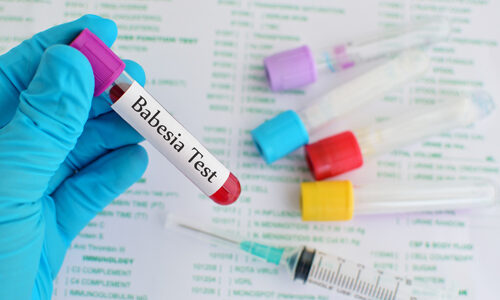
Blood smear, PCR, or antibody testing can detect infection. Rising titers (from <1:64 to 1:512) suggest recent infection.
Should all Lyme patients be tested for Babesia?
In endemic areas, testing should be considered—especially when fever persists or there is unexplained anemia or thrombocytopenia.
References
- Wormser GP, McKenna D, Scavarda C, et al. Co-infections in Persons with Early Lyme Disease, New York, USA. Emerg Infect Dis. 2019;25(4):748-752.
Related Reading
- Babesia and Lyme: What Patients Need to Know
- Lyme Disease Relapse Babesia: Why Symptoms Return After Treatment
- When Lyme Treatment Fails: Could It Be Babesia?
Dr. Daniel Cameron, MD, MPH
Lyme disease clinician with over 30 years of experience and past president of ILADS.
Symptoms • Testing • Coinfections • Recovery • Pediatric • Prevention