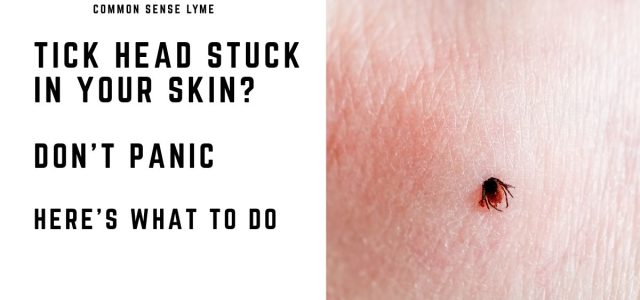
Tick Head Stuck in Skin: What to Do and Lyme Disease Risk
Tick mouthparts left in the skin rarely increase Lyme risk.
Avoid digging or squeezing the area after tick removal.
Focus on symptoms, healing, and proper follow-up.
Quick Answer: If a tick’s mouthparts stay in your skin, it usually does not increase the risk of Lyme disease. In most cases, the body will naturally push the material out over time without complications.
This situation—tick mouthparts left in skin—is common after tick removal and usually does not increase infection risk.
It’s not uncommon for the mouthparts of a tick to break off and remain in the skin after removal. Fortunately, this rarely increases the risk of infection, including Lyme disease.
For guidance on reducing exposure after a bite, see our Lyme disease prevention strategies.
Do Tick Mouthparts Increase Risk?
No. If the tick’s body is removed, the risk of Lyme or other tick-borne infections does not increase. Most disease transmission occurs during feeding—not from mouthparts left behind in the skin.
Transmission risk depends more on how long the tick was attached and whether it carried infection.
Learn more about how quickly ticks may transmit disease.
Is Removal of the Mouthparts Necessary?
There is no clear evidence that removing the mouthparts reduces the risk of Lyme disease or other complications.
I remove them if I can do so easily and without causing trauma to the skin. Otherwise, I let the body handle it naturally—just as it would with a splinter.
Digging aggressively into the skin may create more irritation than the retained material itself.
What You Should Do
Don’t dig.
Avoid using tweezers, needles, or squeezing. Digging can irritate the skin, push the material deeper, or increase the chance of secondary infection.
Let your body handle it.
The immune system will recognize the leftover material as foreign and gradually push it out over time.
Keep the area clean.
Wash with soap and water. Apply an antiseptic like alcohol or hydrogen peroxide. Use a clean bandage if needed.
Watch for signs of infection.
Monitor for increasing redness, swelling, pain, or pus from the site.
Most Important: Watch for Lyme Symptoms
Even without a rash, early signs of Lyme disease can still appear.
- Fatigue
- Fever or chills
- Headache
- Muscle or joint pain
- Neck stiffness
- Brain fog or sensitivity to light
These symptoms may occur days or weeks after a tick bite—especially if the tick was attached for more than 24 hours.
Some patients never recall a rash or even the tick bite itself. Learn more about Lyme disease without a known tick bite.
Also Consider Persistent Symptoms
If symptoms persist, evolve, or remain unexplained after initial evaluation, consider persistent symptoms after Lyme disease, including:
- Ongoing fatigue
- Cognitive issues or memory problems
- Mood changes, anxiety, or depression
- Nerve pain or numbness
- Joint inflammation
- Dizziness or POTS
- Sleep disturbances
- Sensory hypersensitivities
- Shortness of breath or chest discomfort (possible co-infection)
These signs may indicate a persistent or under-recognized co-infection and warrant further evaluation.
For broader symptom patterns, visit our Lyme Disease Symptoms Guide.
When to See a Doctor
- If the area becomes swollen, painful, or starts draining pus
- If redness spreads or worsens
- If you develop flu-like symptoms or neurological complaints
- If you’re unsure whether the site is healing properly
- If you have ongoing or unexplained symptoms following a tick bite
Persistent symptoms after a tick bite should not automatically be dismissed simply because testing is negative early on.
Did You Know?
Tick mouthparts left in the skin usually do not increase Lyme disease risk once the tick’s body has been removed.
The Bottom Line
If a tick’s mouthparts remain in the skin, it is usually not a cause for concern.
There is no clear evidence that removal is necessary, but removal can be considered if it can be done gently without causing trauma.
Focus on keeping the area clean, monitoring for signs of infection, and watching for symptoms of Lyme disease.
When in doubt, follow up with your doctor.
Related Articles:
Dr. Daniel Cameron, MD, MPH
Lyme disease clinician with over 30 years of experience and past president of ILADS.
Symptoms • Testing • Coinfections • Recovery • Pediatric • Prevention