Pain From Light Touch in Lyme Disease (Allodynia Explained)
Touch-evoked pain is a symptom many Lyme disease patients struggle to describe — and even more struggle to have believed.
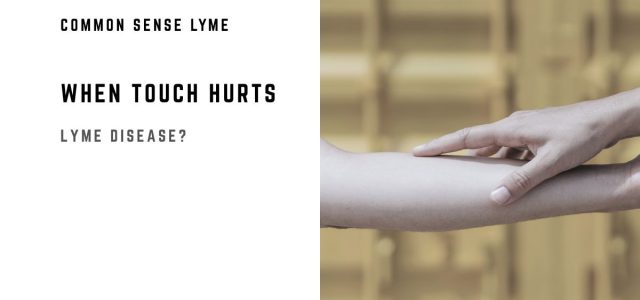
When clothing brushing against skin, a gentle touch, or cool air causes pain, it reflects a documented neurologic change, not imagination. This abnormal pain response has a name: allodynia.
In simple terms, allodynia means the nervous system is treating harmless touch as a pain signal. Pain from light touch in Lyme disease reflects a measurable change in how the nervous system processes sensory input.
These symptoms are part of the broader pattern of chronic Lyme disease pain, which can include neuropathic, musculoskeletal, and migrating pain patterns.
For a broader overview, see the Lyme disease symptoms guide.
What Allodynia Means in Neuropathic Pain
Under normal conditions, the nervous system distinguishes between harmless touch and potential threats. Light touch activates low-threshold sensory pathways, while pain pathways respond to injury or danger.
In allodynia, this separation breaks down. Signals that should register as neutral are misinterpreted as painful. The stimulus has not changed — the processing has.
This shift can occur at multiple levels of the nervous system, from peripheral sensory nerves to spinal cord circuits and higher brain centers involved in pain perception.
Why Light Touch Becomes Pain Without Visible Injury
Allodynia is often driven by sensory sensitization. Inflammation, immune activation, or repeated nerve signaling can lower the threshold at which sensory neurons fire. Over time, neurons become hyper-responsive, amplifying incoming signals.
Once sensitization occurs, ordinary contact can trigger pain responses that feel disproportionate to the stimulus.
This mechanism helps explain why patients may experience burning, tingling, or pain from light touch — even when imaging and nerve conduction studies are normal. In these cases, the problem is not structural damage but altered signaling within the nervous system.
This process overlaps with neuroinflammation in Lyme disease, where immune activation affects how the brain and nerves process sensory input.
What This Looks Like Clinically
A patient describes wearing only the softest cotton clothing, cutting out tags, and avoiding anything with seams. Even bedsheets feel abrasive at night.
Routine neurologic examinations and nerve conduction studies may be normal, yet the pain can be debilitating and constant.
This disconnect between testing and experience is characteristic of allodynia — and why understanding the underlying mechanism matters.
Small Sensory Fibers and Touch-Evoked Pain
Light touch and temperature are transmitted largely by small sensory nerve fibers. These fibers are not reliably assessed by standard nerve conduction studies.
When small fibers become irritated or dysregulated, patients may develop burning, aching, or touch-evoked pain characteristic of allodynia — even when routine tests are normal.
These symptoms may overlap with small fiber neuropathy, which frequently produces burning pain, tingling, and abnormal sensory responses despite normal routine testing.
This mismatch between symptoms and test results is a common source of frustration and medical dismissal.
Why Clothing, Pressure, and Temperature Trigger Pain
Clothing seams, elastic bands, or bedding apply constant low-level stimulation. In a sensitized nervous system, repetitive input can be more provocative than brief contact.
Pressure, warmth, and friction further increase nerve firing. For some patients with allodynia, symptoms worsen at night or during periods of fatigue or stress, when the nervous system’s ability to dampen sensory input is reduced.
Allodynia, Autonomic Dysfunction, and Sensory Overload
Allodynia frequently overlaps with autonomic nervous system dysfunction. Changes in blood flow, sweating, and temperature regulation can heighten skin sensitivity and magnify discomfort from touch or pressure.
This overlap helps explain why allodynia often coexists with symptoms such as temperature intolerance, flushing, lightheadedness, or palpitations.
Similar sensory amplification patterns are also seen in post-infectious neurologic conditions, including Lyme disease.
Why Reassurance Alone Is Not Enough
Patients are often told that nothing is wrong because tests are normal. While reassurance is well-intended, it can be dismissive when it ignores the underlying biology.
Allodynia reflects a documented alteration in sensory processing. Recognizing allodynia validates patient experience, explains why routine tests may be unrevealing, and shifts the conversation from disbelief to understanding.
Frequently Asked Questions
Can allodynia occur even if tests are normal?
Yes. Allodynia often involves small sensory fibers and central pain-processing pathways that are not measured by standard nerve conduction studies or imaging.
Is allodynia psychological?
No. Allodynia is a neurologic pain condition rooted in altered sensory processing. Stress may worsen symptoms, but it does not cause the condition.
Why does clothing trigger pain more than brief touch?
Continuous low-level stimulation can repeatedly activate sensitized nerves, making sustained contact more provocative than brief touch.
Can allodynia improve with Lyme disease treatment?
Yes. When allodynia is driven by infection-related neuroinflammation, treating the underlying infection can reduce sensory sensitization and improve symptoms over time.
Can Lyme disease cause skin sensitivity?
Yes. Some patients with Lyme disease develop abnormal sensory processing, leading to burning pain, tingling, or pain from light touch (allodynia). Similar symptoms may occur with small fiber neuropathy or neuroinflammation.
Clinical Takeaway
When light touch becomes painful, the issue is not the skin — it is how the nervous system processes sensation. Allodynia reflects altered sensory processing where inflammation, immune activation, and nerve sensitization lower the threshold for pain signals.
Recognizing this pattern helps explain symptoms that do not match standard testing and supports more accurate evaluation rather than dismissal.
Related Articles
Burning Pain with a Normal EMG
Small Fiber Neuropathy in Lyme Disease
Brain Fog in Lyme Disease
Neurologic Lyme Disease
Persistent Lyme Disease Mechanisms
References
- Woolf CJ. Central sensitization: implications for the diagnosis and treatment of pain. Pain. 2011;152(3 Suppl):S2–S15.
- Devigili G, Tugnoli V, Penza P, et al. The diagnostic criteria for small fibre neuropathy: from symptoms to neuropathology. Brain. 2008;131(Pt 7):1912–1925.
- Jensen TS, Finnerup NB. Allodynia and hyperalgesia in neuropathic pain: clinical manifestations and mechanisms. Lancet Neurol. 2014;13(9):924–935.
- Lacomis D. Small-fiber neuropathy. Muscle Nerve. 2002;26(2):173–188.
- Erdogan O, Hu XQ, Chiu IM. Sensory Neurons on Guard: Roles in Pathogen Defense and Host Immunity. Curr Opin Immunol. 2025.
Dr. Daniel Cameron, MD, MPH
Lyme disease clinician with over 30 years of experience and past president of ILADS.
Symptoms • Testing • Coinfections • Recovery • Pediatric • Prevention