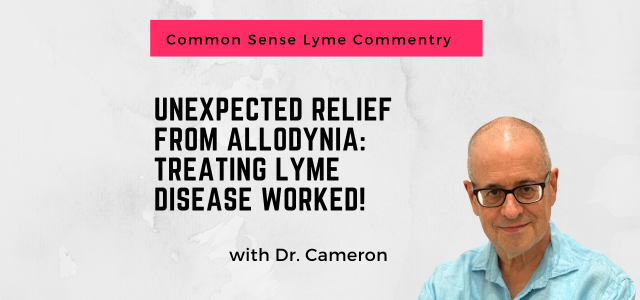
Can Lyme Disease Cause Allodynia? Relief for Painful Touch
Allodynia causes pain from normally harmless touch.
Lyme disease may trigger allodynia through small fiber neuropathy.
Treating the underlying cause may improve symptoms.
Allodynia is a neurological condition in which normally non-painful stimuli—such as a breeze, the pressure of clothing, or a light touch—become painful.
It is often associated with central sensitization, where the brain and spinal cord become overly responsive to nerve signals. However, central sensitization is not always the primary cause. In some patients, an underlying infection such as Lyme disease may contribute to nervous system dysfunction, and appropriate treatment of the infection may improve symptoms.
Although allodynia has many possible causes, Lyme disease should be considered when painful touch occurs together with burning pain, POTS, fatigue, dizziness, cognitive symptoms, or other neurologic complaints after tick exposure.
Allodynia frequently overlaps with other forms of neuropathic pain, including burning or freezing sensations, pins and needles, and electric shock-like pain. These symptoms may reflect small fiber neuropathy, a disorder affecting the small sensory and autonomic nerve fibers. Small fiber neuropathy has increasingly been recognized in some patients with Lyme disease and post-treatment Lyme disease syndrome.
For a broader overview, see our Lyme Disease Symptoms Guide.
Case Study: Allodynia With POTS and Lyme Disease
One of my patients experienced severe allodynia together with POTS, a form of dysautonomia. Even light contact with clothing or bedding caused significant pain.
He also suffered from dizziness, rapid heart rate upon standing, overwhelming fatigue, burning pain, and exercise intolerance—signs suggesting dysfunction of the autonomic nervous system.
Before seeing me, he had undergone extensive evaluations by multiple specialists. Despite numerous diagnostic tests and treatment attempts, his symptoms continued to worsen.
The Missed Diagnosis
During our initial consultation, one part of his history stood out. He had spent years outdoors in a Lyme-endemic region and recalled a summertime illness that had been dismissed as a viral infection.
Although he never remembered a classic bull’s-eye rash and standard Lyme testing was not definitive, his neurological symptoms, autonomic dysfunction, and clinical history raised concern for Lyme disease affecting the nervous system.
Based on his clinical presentation and exposure history, treatment was started despite the limitations of laboratory testing.
Improvement After Treatment
Following individualized Lyme disease treatment, his symptoms gradually improved.
The burning pain in his arms and legs diminished. His allodynia became substantially less severe, allowing him to tolerate normal clothing and routine daily activities again.
His electric shock sensations became less frequent, and his POTS symptoms gradually stabilized.
Although recovery was gradual, improvement in both pain and autonomic symptoms significantly improved his quality of life.
How Lyme Disease May Cause Allodynia
Borrelia burgdorferi, the bacterium responsible for Lyme disease, can involve the nervous system, producing neurologic Lyme disease (neuroborreliosis).
In some patients, the infection appears to affect the small unmyelinated nerve fibers responsible for pain perception, temperature sensation, sweating, heart rate regulation, blood pressure control, and gastrointestinal function.
Research has increasingly recognized associations between Lyme disease and small fiber neuropathy, autonomic dysfunction—including POTS and orthostatic intolerance—and chronic neuropathic pain syndromes.
When these nerve fibers become dysfunctional, patients may develop:
- Allodynia
- Burning skin pain
- Electric shock sensations
- Pins and needles
- Temperature sensitivity
- POTS or orthostatic intolerance
- Brain fog
- Fatigue
- Dizziness
- Abnormal sweating
- Exercise intolerance
Because routine MRI studies and EMG testing may remain normal, these symptoms are sometimes incorrectly attributed to fibromyalgia, anxiety, functional neurologic disorders, or unexplained chronic pain syndromes.
Allodynia Relief Depends on the Underlying Cause
Many patients search for allodynia relief without realizing that successful treatment depends on identifying the underlying cause.
Symptomatic therapies may help reduce pain, but when allodynia results from Lyme disease or another treatable neurologic disorder, addressing the underlying condition may lead to greater improvement.
Persistent allodynia accompanied by burning pain, autonomic dysfunction, fatigue, cognitive problems, dizziness, or other multisystem symptoms warrants a broader clinical evaluation rather than focusing only on pain control.
Why This Matters
This case highlights an important clinical principle: persistent neuropathic pain deserves a broad differential diagnosis.
In patients living in Lyme-endemic areas—or those with compatible exposure histories—Lyme disease should remain part of the differential diagnosis, particularly when allodynia occurs alongside burning pain, autonomic dysfunction, fatigue, cognitive symptoms, or migratory neurologic complaints.
When standard therapies fail and symptoms remain unexplained, clinicians may need to look beyond routine laboratory testing and consider the patient’s complete clinical picture.
Frequently Asked Questions
Can Lyme disease cause allodynia?
Yes. Lyme disease can contribute to allodynia by affecting the nervous system. Small fiber neuropathy, neuroinflammation, and central sensitization have all been associated with Lyme disease and may cause pain from normally non-painful touch.
What does allodynia feel like?
People describe allodynia as pain caused by light touch, clothing, bed sheets, a cool breeze, or brushing the skin. The pain may burn, sting, ache, or feel like an electric shock.
Can allodynia improve after Lyme disease treatment?
In some patients, yes. When Lyme disease contributes to nervous system dysfunction, treating the underlying infection may reduce inflammation and allow gradual improvement in allodynia, burning pain, and autonomic symptoms. Recovery varies from person to person.
What is the connection between allodynia and POTS?
Both conditions may involve dysfunction of the small nerve fibers that regulate pain sensation and autonomic function. Lyme disease has been associated with both small fiber neuropathy and autonomic dysfunction, including POTS.
Can Lyme disease cause burning skin pain?
Yes. Burning pain, abnormal skin sensitivity, electric shock sensations, and painful touch may occur in some patients with Lyme disease due to involvement of small sensory nerve fibers.
When should Lyme disease be considered?
Lyme disease may be considered in patients with unexplained allodynia accompanied by burning pain, fatigue, dizziness, cognitive symptoms, POTS, or other neurologic complaints—particularly following tick exposure or residence in an endemic area.
Clinical Takeaway
Allodynia is often viewed as a chronic pain disorder, but in some patients it may reflect an underlying neurologic illness such as Lyme disease.
When painful skin sensitivity occurs together with burning pain, POTS, fatigue, cognitive symptoms, dizziness, or other multisystem complaints, clinicians may consider Lyme disease and small fiber neuropathy as part of the differential diagnosis.
Persistent allodynia should not automatically be attributed to fibromyalgia or unexplained chronic pain. Lyme disease and small fiber neuropathy deserve consideration when painful touch occurs alongside autonomic or neurologic symptoms.
Related Articles
Learn more about related neurologic complications of Lyme disease:
Lyme Disease Symptoms Guide
Autonomic Dysfunction in Lyme Disease
Lyme Disease Neuropathy
Burning Pain With a Normal EMG
Chronic Pain in Lyme Disease
Allodynia: When Normal Touch Becomes Painful
References
- Woolf CJ. Central sensitization: implications for the diagnosis and treatment of pain. Pain. 2011;152(3 Suppl):S2-S15.
- Novak P, Felsenstein D, Mao C, et al. Association of small fiber neuropathy and post-treatment Lyme disease syndrome. PLoS One. 2019;14(2):e0212222.
- Jensen TS, Finnerup NB. Allodynia and hyperalgesia in neuropathic pain: clinical manifestations and mechanisms. Lancet Neurol. 2014;13(9):924-935.
Dr. Daniel Cameron, MD, MPH
Lyme disease clinician with over 30 years of experience and past president of ILADS.
Symptoms • Testing • Coinfections • Recovery • Pediatric • Prevention