
Contact us at 914-666-4665

Dr. Daniel Cameron

Dr. Daniel Cameron is a board-certified physician and epidemiologist specializing in Lyme disease and tick-borne illnesses. He is a past president of ILADS and has contributed to Lyme disease treatment guidelines, with a clinical focus on diagnosis, testing limitations, and complex cases.

Dr. Daniel Cameron

Malaria and Lyme Disease Co-Infection: Case Report Findings

Malaria and Lyme Disease Co-Infection: Case Report Findings Co-infections can complicate diagnosis and treatment in infectious diseases. A case report describes a patient with both malaria and Lyme disease, highlighting the importance of considering multiple infections when symptoms evolve or do not respond as expected. “As far as we are aware, we are writing the […]

Malaria and Lyme Disease Co-Infection: Case Report Findings Read More »
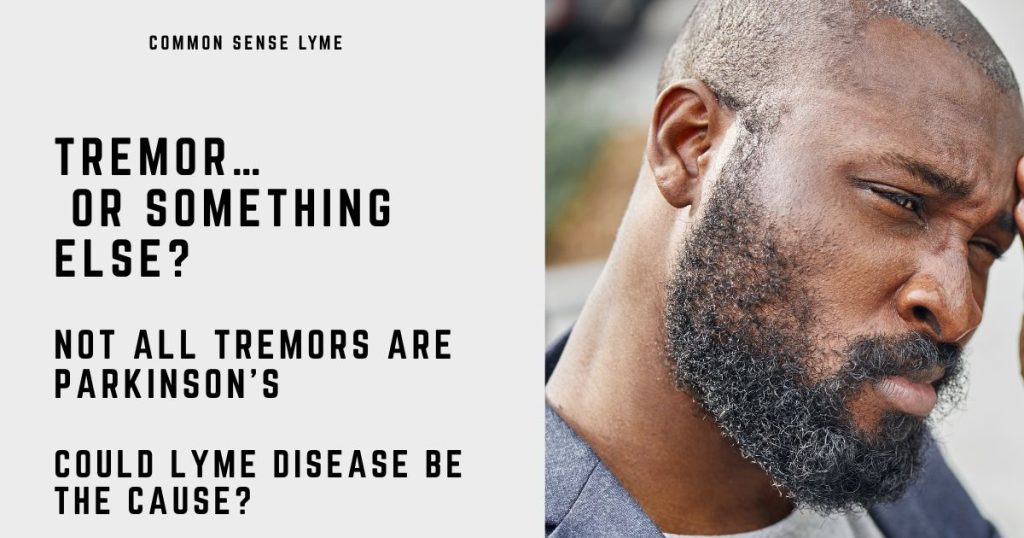
TREMOR… OR SOMETHING ELSE

Can Lyme Disease Mimic Parkinson’s? When Symptoms May Be Reversible

Can Lyme Disease Mimic Parkinson’s? When Symptoms May Be Reversible Can Lyme disease mimic Parkinson’s disease? In rare cases, patients may develop tremor, stiffness, slowed movement, or changes in speech—symptoms that resemble Parkinson’s disease. But in some instances, these symptoms are not degenerative. They may be caused by infection-related inflammation affecting the brain. This distinction

Can Lyme Disease Mimic Parkinson’s? When Symptoms May Be Reversible Read More »

Tracking Ticks with Digital Images: Surveillance Study Findings

Tracking Ticks with Digital Images: Surveillance Study Findings Digital tools may improve how ticks are identified and tracked. A study from Canada suggests that image-based tick identification can support surveillance when images are of sufficient quality. This raises an important question: can digital images reliably identify ticks and assess risk? In many cases, image-based methods

Tracking Ticks with Digital Images: Surveillance Study Findings Read More »

Reversible Heart Block in Lyme Disease: Canadian Case Report

Reversible Heart Block in Lyme Disease: Canadian Case Report Lyme disease can affect the heart and, in some cases, cause serious conduction abnormalities. A case from Canada highlights reversible complete heart block as a manifestation of early disseminated Lyme disease. This raises an important question: can Lyme disease cause severe heart block in otherwise healthy

Reversible Heart Block in Lyme Disease: Canadian Case Report Read More »

LYME TESTS DON’T AGREE

Western Blot vs Modified Two-Tier Testing in Lyme Disease

Western Blot vs Modified Two-Tier Testing in Lyme Disease Quick Answer: Modified Two-Tier Testing (MTTT) replaces Western blot with two enzyme immunoassays, but both approaches have limitations—especially in early Lyme disease. Clinical Insight: Lyme disease testing methods have evolved, but no current approach reliably detects all cases. Clinical judgment remains essential. Is Modified Two-Tier Testing

Western Blot vs Modified Two-Tier Testing in Lyme Disease Read More »

Antibiotic Combinations Show Activity Against Lyme Disease in Culture

Antibiotic Combinations Show Activity Against Lyme Disease in Culture Laboratory studies continue to explore how different antibiotics affect Borrelia burgdorferi. In vitro research suggests that certain combinations may be more effective than single drugs, particularly against stationary phase organisms. This raises an important question: can combination antibiotic therapy improve treatment outcomes in Lyme disease? Findings

Antibiotic Combinations Show Activity Against Lyme Disease in Culture Read More »

Temporary Pacemaker in Lyme Carditis: Reversible Heart Block Case

Temporary Pacemaker in Lyme Carditis: Reversible Heart Block Case HEART BLOCK FROM LYME DISEASE? IT CAN PROGRESS RAPIDLY BUT MAY BE REVERSIBLE Temporary pacemaker use in Lyme carditis shows that even severe heart block can be reversible. Quick Answer: High-degree AV block and even complete heart block in Lyme carditis may resolve with antibiotics, allowing

Temporary Pacemaker in Lyme Carditis: Reversible Heart Block Case Read More »

Hedgehogs and Tick-Borne Diseases: Urban Reservoir Study Findings

Hedgehogs and Tick-Borne Diseases: Urban Reservoir Study Findings Urban wildlife may play a larger role in tick-borne diseases than previously recognized. A study of European hedgehogs found high rates of infection in ticks, including multiple pathogens within the same tick. This raises an important question: can urban animals contribute to the spread of Lyme disease

Hedgehogs and Tick-Borne Diseases: Urban Reservoir Study Findings Read More »

Could slowing down the swimming speed of the Lyme disease spirochete help treatment?

Could slowing down the swimming speed of the Lyme disease spirochete help treatment? The Lyme disease bacterium moves through the body using a unique corkscrew-like motion. Laboratory research suggests that altering this motility may influence how the organism survives and causes infection. This raises an important question: could slowing the movement of Borrelia burgdorferi make

Could slowing down the swimming speed of the Lyme disease spirochete help treatment? Read More »