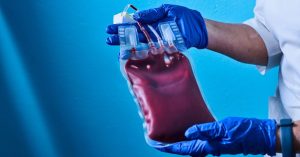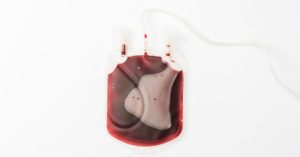
Babesia exchange transfusion is a life-saving procedure reserved for the most severe cases of babesiosis. When parasite levels rise dangerously high, removing infected red blood cells can rapidly reduce the parasite burden and stabilize critically ill patients.
In their article, “Repeat exchange transfusion for treatment of severe babesiosis,” Radcliffe and colleagues describe the case of a 73-year-old immunocompromised woman with 43% parasitemia who required two Babesia exchange transfusions and 12 weeks of treatment to survive this severe Babesia infection.
Severe babesiosis can occasionally become life-threatening, particularly in older or immunocompromised patients with very high parasite burdens.
The Case: When Babesia Exchange Transfusion Became Necessary
Approximately one month after camping in New Hampshire, the woman developed malaise, headaches, weakness, anorexia, and nausea that lasted four days. She did not recall a tick bite.
The patient had three major risk factors for severe babesiosis:
- Prior splenectomy for immune-mediated thrombocytopenia
- Longstanding rheumatoid arthritis
- Immunosuppressive therapy with weekly etanercept
A blood smear revealed 43% parasitemia and anemia with hemoglobin of 9.2 mg/dL.
“She was started on azithromycin and clindamycin and transferred to our hospital,” Radcliffe writes.
Patients with these risk factors are known to develop more severe disease and may require aggressive treatment for severe Babesia infection.
ICU Admission and First Babesia Exchange Transfusion
The woman was admitted to the intensive care unit for hypotension. She required fluids and vasopressors as well as supplemental oxygen for a pulse oximetry reading of 88%.
Her treatment regimen was expanded to include:
- IV clindamycin
- Oral quinine sulfate
- Oral doxycycline
Doxycycline was added as empiric therapy for possible tick-borne coinfections, including Lyme disease or Anaplasmosis.
On hospital day 1, she underwent her first Babesia exchange transfusion, receiving 12 units of packed red blood cells.
The procedure reduced parasitemia from 43% to 7.6%, representing an 81.5% reduction in parasite burden.
Exchange transfusion works by physically removing infected red blood cells and replacing them with donor cells, rapidly lowering parasitemia while improving oxygen delivery and reducing the inflammatory burden of the infection.
Parasitemia Rebounds: Second Babesia Exchange Transfusion Required
Despite the initial improvement, the parasite burden began rising again.
“Despite a post-exchange drop in parasitemia to 7.6%, it rebounded to 11.4% on hospital day 5 accompanied by new onset high fevers and hypoxia,” Radcliffe explains.
Because of the rebound infection, physicians performed a second Babesia exchange transfusion on hospital day 5.
This second procedure reduced parasitemia further to 2.2%.
“She improved after a second exchange transfusion and ultimately resolved her infection after 12 weeks of anti-babesial antibiotics,” the authors report.
Relapsing infections like this have also been described in asplenic patients with Babesia infection.
Extended Treatment After Babesia Exchange Transfusion
The patient required prolonged antimicrobial therapy because parasitemia persisted:
- 1.7% parasitemia on day 9
- <1% parasitemia on day 19
Radcliffe reports that antibiotics were discontinued at different intervals:
- Atovaquone/proguanil — 61 days after discharge
- Doxycycline — 72 days after discharge
- Azithromycin — 86 days after discharge
This 12-week treatment course far exceeds the typical 7–10 day treatment duration used for uncomplicated babesiosis.
The case highlights why immunocompromised patients often require individualized treatment strategies.
Why This Babesia Exchange Transfusion Case Matters
Cases requiring repeat Babesia exchange transfusion are rare. Only a handful of similar cases have been described in the medical literature, and at least one patient in prior reports died from the infection.
“Our present case is instructive,” the authors write, “because two exchange transfusions were necessary for cure despite a marked lowering of parasitemia after the first exchange transfusion.”
The authors conclude that clinicians must remain vigilant when treating babesiosis in highly immunocompromised patients, particularly those without a spleen.
For patients who continue to relapse after standard treatment, tafenoquine may be considered in selected cases.
Clinical Perspective
In my practice, many patients with Babesia are evaluated after the early parasitemic phase has already passed. By the time they are seen, parasites may no longer be easily visible in red blood cells on a peripheral smear.
These patients may still have symptoms consistent with Babesia infection—such as fatigue, night sweats, shortness of breath, or exercise intolerance—even when parasite levels are low or difficult to detect.
This case represents the opposite end of the clinical spectrum: a patient with extremely high parasitemia requiring exchange transfusion.
Most patients I see present later in the illness, when parasitemia is much lower and diagnosis often depends on clinical judgment, laboratory interpretation, and response to treatment rather than microscopy alone.
Editor’s Note
This case highlights the dangers of Babesia infection in immunocompromised patients.
The combination of splenectomy, autoimmune disease, and immunosuppressive therapy created a perfect storm for severe babesiosis.
In my experience, elderly patients and those receiving immunosuppressive medications may struggle to clear Babesia infections. I have seen older patients require longer treatment courses than standard recommendations suggest.
Treatment decisions should be guided by clinical response rather than arbitrary timelines.
Frequently Asked Questions
What is a Babesia exchange transfusion?
A Babesia exchange transfusion removes infected red blood cells and replaces them with healthy donor cells. This procedure rapidly lowers parasite levels in the bloodstream.
When is Babesia exchange transfusion needed?
Exchange transfusion is typically considered when parasite levels are extremely high or when patients develop severe complications from babesiosis.
In this case, the patient had 43% parasitemia, placing her at very high risk for complications.
How many exchange transfusions are usually required?
Most patients require one exchange transfusion, but severe infections may require additional procedures if parasitemia rebounds.
This patient required two exchange transfusions before the infection was controlled.
Why are immunocompromised patients at higher risk?
Patients without a spleen, those receiving immunosuppressive medications, and individuals with autoimmune disease may have difficulty clearing Babesia parasites.
This patient had all three risk factors, which likely contributed to the severity of her illness.
How long is treatment after exchange transfusion?
Treatment duration varies depending on immune status and clinical response.
This patient required 12 weeks of antimicrobial therapy, far longer than the standard 7–10 day course used for uncomplicated babesiosis.
References
- Krause PJ. Human babesiosis. Int J Parasitol. 2019;49(2):165-174.
- Krause PJ, Gewurz BE, Hill D, et al. Persistent and relapsing babesiosis in immunocompromised patients. Clin Infect Dis. 2008;46(3):370-376.
- Radcliffe C, Krause PJ, Grant M. Repeat exchange transfusion for treatment of severe babesiosis. Transfus Apher Sci. 2019.
Related Reading
- Babesia and Lyme: What Patients Need to Know
- Babesia in Asplenic Patients: Why 8 Weeks Wasn’t Enough
- How Serious Is Babesia?
Dr. Daniel Cameron, MD, MPH
Lyme disease clinician with over 30 years of experience and past president of ILADS.
Symptoms • Testing • Coinfections • Recovery • Pediatric • Prevention