
Contact us at 914-666-4665

Filter posts by category

Lyme Science Blog

Recognizing Lyme Disease in Children:

Recognizing Early Lyme Disease Symptoms in Children

Recognizing Early Lyme Disease Symptoms in Children Early Lyme disease symptoms in children are often subtle. Behavioral changes, fatigue, rash, or joint swelling may appear gradually. Recognizing patterns over time may help identify Lyme disease earlier. Over the years in clinical practice I have evaluated a number of adolescents and children with suspected Lyme disease,

Recognizing Early Lyme Disease Symptoms in Children Read More »

Facial Palsy in Children

Facial Palsy in Children: Could It Be Lyme Disease?

Facial Palsy in Children: Could It Be Lyme Disease? Facial weakness may be the first sign Tick bites and rash are often missed Lyme disease should remain on the differential Facial palsy in children may be caused by Lyme disease, particularly in endemic regions during summer and fall. Although Bell’s palsy is common, Lyme-related facial

Facial Palsy in Children: Could It Be Lyme Disease? Read More »

When to Suspect Lyme Disease

When to Suspect Lyme Disease in Children: Early Signs Parents Miss

When to Suspect Lyme Disease in Children: Early Signs Parents Miss Early Lyme symptoms in children are often missed Tick bites may never be seen or remembered Behavioral or school changes may be an early clue   When to suspect Lyme disease in children is a critical question, as early symptoms are often subtle and

When to Suspect Lyme Disease in Children: Early Signs Parents Miss Read More »

Risk of chronic illness from Lyme disease

Risk of Chronic Illness from Lyme Disease

Can Lyme Disease in Children Become Chronic? Long-Term Effects Explained Some children recover quickly after treatment Others develop persistent symptoms Early recognition may reduce long-term complications Lyme disease in children long-term outcomes vary considerably. While many children recover completely after treatment, others experience persistent symptoms affecting energy, cognition, mood, and physical functioning. Long-term effects of

Risk of Chronic Illness from Lyme Disease Read More »

What It Really Takes From Children

Childhood Lyme Disease Recovery: What Families Experience

Childhood Lyme Disease Recovery: What Families Experience Childhood Lyme disease can affect mood, attention, and school performance. Symptoms are often missed or attributed to other causes. Early recognition may help protect a child’s development and recovery. Childhood Lyme disease doesn’t just make children sick—it can affect confidence, learning, friendships, and the ability to fully participate

Childhood Lyme Disease Recovery: What Families Experience Read More »

A Toddler’s Lyme Disease Misdiagnosed as Abuse

A Toddler’s Lyme Disease Misdiagnosed as Abuse

Sometimes a bandaid covers more than a scrape. Sometimes it covers a bigger story—one about misdiagnosis, fear, and the high stakes of misunderstanding Lyme disease in children. That’s what happened in a case reported by Dr. Pan and colleagues in the journal Case Reports in Orthopedics [2021]. A young boy’s swollen knee, fracture, and skin

A Toddler’s Lyme Disease Misdiagnosed as Abuse Read More »

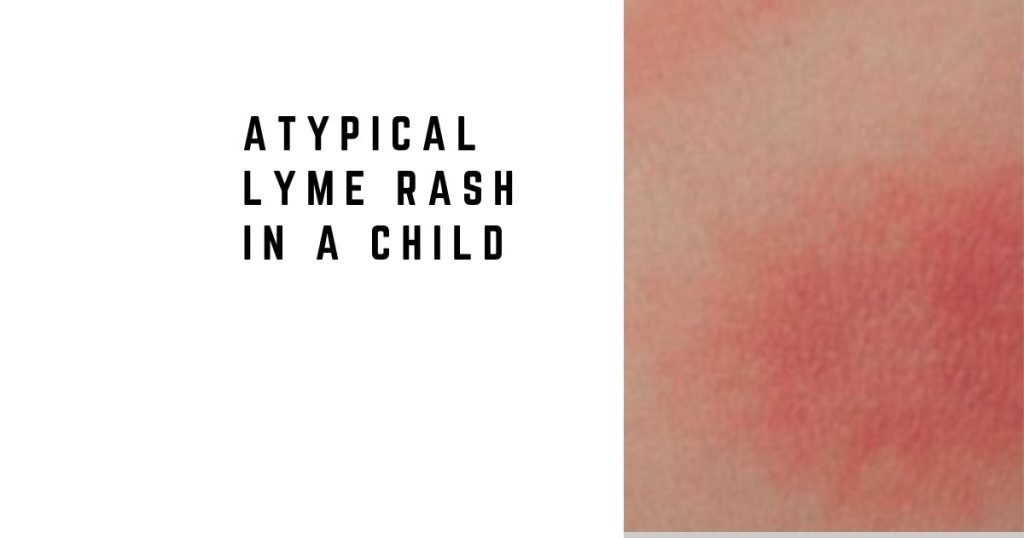
Atypical Lyme Rash in a Child

Atypical Lyme Rash in Children: When the Rash Changes Over Time

Atypical Lyme Rash in Children: When the Rash Changes Over Time Lyme rashes do not always look typical Rashes in children may evolve over days Early symptoms are often missed An atypical Lyme rash in children can make early diagnosis challenging—especially when the rash does not resemble the classic bull’s-eye pattern. Case reports highlight how

Atypical Lyme Rash in Children: When the Rash Changes Over Time Read More »

Lyme Disease Misdiagnosis

Lyme Disease Misdiagnosis: Why It Happens and What to Know

Early Symptoms of Lyme Disease: Why They Are Often Missed Early Lyme disease symptoms can look ordinary First signs of Lyme disease are often overlooked Delayed diagnosis may lead to prolonged illness Early symptoms of Lyme disease can include fatigue, headache, fever, chills, muscle aches, joint pain, dizziness, brain fog, and sometimes a rash. But

Lyme Disease Misdiagnosis: Why It Happens and What to Know Read More »

Lyme Disease ADHD Symptoms in Children: When Behavior Is Misread

Lyme Disease ADHD Symptoms in Children: When Behavior Is Misread Not every attention problem is ADHD Fatigue and brain fog can affect focus Lyme disease may be missed in children Lyme disease ADHD symptoms can overlap—making diagnosis in children more difficult than expected. Changes in child behavior, attention, mood, and school performance may sometimes reflect

Lyme Disease ADHD Symptoms in Children: When Behavior Is Misread Read More »