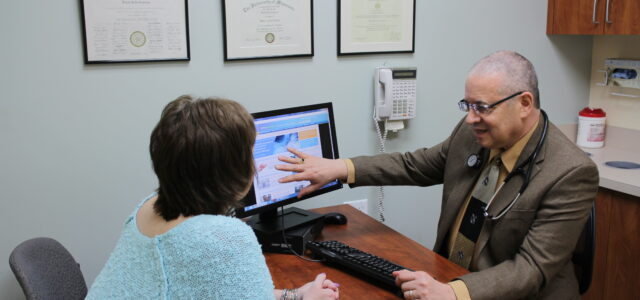
Finding a Doctor Who Treats Chronic Lyme: What to Look For
What should you look for in a doctor who treats chronic Lyme disease? Many patients begin searching after months—or even years—of fatigue, brain fog, pain, and frustration when symptoms don’t fit a single diagnosis.
For a concise overview of what defines an experienced Lyme disease doctor, see doctor who treats chronic Lyme.
Patients often arrive after being told their tests are normal or their symptoms are “just stress” or “part of aging.” But many of these cases involve chronic manifestations of Lyme disease that require a different clinical approach.
Lyme disease often does not stay in one system. Symptoms may shift across neurologic, musculoskeletal, and autonomic systems over time.
What Makes Chronic Lyme So Hard to Recognize?
Lyme disease is most commonly known for early signs like rash, fever, or joint pain. But when those signs are missed—or when treatment is incomplete—the illness can evolve into a more complex, multi-system condition.
These chronic manifestations of Lyme disease can include:
- Fatigue that doesn’t improve with rest
- Migratory joint or muscle pain
- Brain fog or memory issues
- Numbness, tingling, or burning
- Mood changes, anxiety, or depression
- Dizziness or heart palpitations
What often misleads patients and clinicians is evaluating each symptom separately rather than recognizing patterns across systems.
These patterns may include symptoms that change from day to day, come and go over time, or move around the body.
Not All Doctors Approach Chronic Lyme the Same Way
Standard protocols often focus on early Lyme disease. But when symptoms persist or relapse, a broader clinical approach is often needed.
A doctor experienced in chronic Lyme will consider:
- Clinical diagnosis even when labs are inconclusive
- Co-infections such as Babesia or Bartonella
- Individualized treatment over time
- Neurologic, cardiac, and autonomic involvement
This type of care is based on experience recognizing complex patterns—not just textbook definitions.
PTLDS and Persistent Symptoms
Some patients are diagnosed with post-treatment Lyme disease syndrome (PTLDS), a term used when symptoms continue after standard treatment.
However, persistent symptoms may also reflect:
- Ongoing infection
- Untreated co-infections
- Complex immune or neurologic involvement
Rather than assuming symptoms are “post-treatment,” experienced clinicians often re-evaluate the full clinical picture.
Conditions That Can Mimic Lyme Disease
Because Lyme disease affects multiple systems, it is often confused with:
- Fibromyalgia
- Chronic fatigue syndrome (ME/CFS)
- Multiple sclerosis (MS)
- Autoimmune conditions
- Anxiety or depression
- Autonomic dysfunction such as POTS
Chronic Lyme symptoms often migrate, fluctuate, and overlap across systems—patterns that may help distinguish it from single-system conditions.
When Should You Seek a Lyme Doctor?
Patients may consider evaluation when they have:
- Persistent fatigue or cognitive symptoms
- Neurologic or autonomic symptoms
- Chronic pain without clear explanation
- Symptoms that persist despite prior treatment
For a clear overview of what defines an experienced clinician, see doctor who treats chronic Lyme.
Clinical Takeaway
Chronic Lyme disease is often difficult to recognize because symptoms shift across systems and do not follow a predictable pattern.
Understanding these patterns—and finding a doctor experienced in recognizing them—is often the key step toward diagnosis and recovery.
Dr. Daniel Cameron, MD, MPH
Lyme disease clinician with over 30 years of experience and past president of ILADS.
Symptoms • Testing • Coinfections • Recovery • Pediatric • Prevention



Are there any recommendations for a telemedicine doctor for Lyme?
The laws differ from state to state and continue to change. Doctors differ in their approach to telemedicine. I offer telemedicine once I have seen a patient but that varies from patient to patient and may also change over time.
i live in France and my wife got lyme last year in ohio is there a way of contacting a doctor for a test review or any help?
You use the word “may” multiple times in this post. I received a tick bite back on Thanksgiving day, and while I tested negative for Lyme at six weeks, acquired something that settled in my neck and can lead to migraine-like symptoms, nausea, and muscle stiffness if I stress my neck too much or put pressure on the back of my head/neck. Three weeks of doxycycline almost worked, but not quite. I’ve been in touch with various regional neurologists, rheumatologists, etc. and most are happy to see me…in March or April. I was hoping telehealth could be a way out, but it seems in reality specialists and telehealth don’t often mix.
It can be difficult to find a doctor with experience treating Lyme for their perspective.
I need help finding a Dr. that can help me with neurological lyme disease symptoms. I am seeing a neurologist, but he is not up-to-date with treatment. I’ve had it for several years, but I had also had it for several years before being diagnosed. Right now I am having a really bad flare-up and just getting worse. I am in South Alabama in a small town that doesn’t even have a psychiatrist. I can’t even get help with symptoms, much less any appropriate treatment. Both of my ears at different times over the past 3 years have broke out with knots that are extremely painful and become infected from Lyme Disease infection. The skin around my ear will tear and then harden up like the texture of a shellfish. I am a landscape designer and contractor and I’m use to daily hard, physical labor, but now I can hardly get out of bed. I’ve gone into a tremendous amount of debt just to try to work. Now I don’t even know how I’m going to provide for me and my son and I can’t get any help. I am so worn down physically, mentally and emotionally that I couldn’t survive a round of antibiotics right now. I’ve had to go to the emergency room for fluids because I’m just so weak and somehow had become dehydrated. I feel like I should be in a hospital now, but if I were to go they’d probably just send me home not understanding what all is wrong with me as usual, just like it was so hard to get a diagnosis in the first place. I don’t know how much longer I can take this. I’m just exhausted. I can’t do anything but cry and I am getting more and more depressed every day and giving up. I just need somebody to help me and tell me what I should do that I would be able to in my situation.
You are not alone. I have Lyme disease patients in my practice in New York who have been quite sick. I hope you can find someone you can work with.