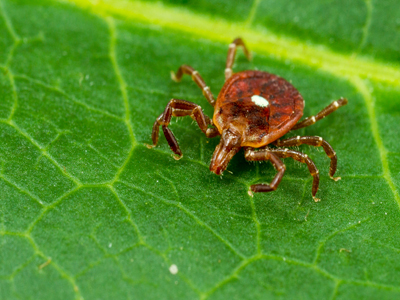
Are Lone Star Ticks in Your Neighborhood?
Lone star ticks are expanding rapidly—and many encounters are happening closer to home than expected.
Between 2006 and 2016, researchers received 8,608 ticks from 22 U.S. states. [1] Most were collected in Monmouth County, New Jersey, a region long recognized as endemic for Lyme disease.
Surprisingly, lone star ticks (Amblyomma americanum) accounted for nearly half (48.1%) of all ticks submitted—far outpacing black-legged ticks (Ixodes scapularis) at 28.2%.
Dog ticks (Dermacentor variabilis) made up approximately 20% of submissions.
Who Is Most at Risk?
The greatest number of tick bites occurred in:
- Children ages 0–9
- Adults age 50 and older
These groups were also more likely to submit partially or fully engorged ticks, suggesting a higher risk of disease transmission.
“These age groups were also more likely to submit partially or fully engorged ticks,” writes Jordan, highlighting increased exposure risk.
Tick Exposure Happens at Home
Many ticks were collected not in parks—but at home.
This was especially true for individuals over age 60.
Routine activities such as gardening or raking leaves were common sources of exposure.
This reinforces the importance of understanding tick bite prevention in everyday settings.
Seasonal Patterns and Tick Stages
Tick activity varied by species and developmental stage:
- Ixodes scapularis: active year-round, with adult females and nymphs equally represented
- Amblyomma americanum: 61% were nymphs
- Lone star and dog ticks: most active in spring and summer
The authors caution that fall and winter activity of black-legged ticks may also contribute to disease transmission.
Why Lone Star Ticks Matter
The lone star tick is expanding into new regions and is associated with multiple tick-borne illnesses—including a rare red meat allergy (alpha-gal syndrome).
Its growing presence increases the likelihood of exposure—even in familiar environments.
Clinical Perspective
In my practice, I advise patients that tick exposure is no longer limited to wooded or remote areas.
Backyards, gardens, and suburban settings are increasingly common sources of tick encounters.
Understanding where ticks live—and when they are active—is essential for prevention and early recognition of tick-borne illness.
References:
- Jordan RA, Egizi A. The growing importance of lone star ticks in a Lyme disease endemic county: Passive tick surveillance in Monmouth County, NJ, 2006–2016. PLoS One. 2019;14(2):e0211778.
Dr. Daniel Cameron, MD, MPH
Lyme disease clinician with over 30 years of experience and past president of ILADS.
Symptoms • Testing • Coinfections • Recovery • Pediatric • Prevention