Preventing Chronic Lyme Disease
Preventing Chronic Lyme Disease: A Clinical Guide
Can chronic Lyme disease be prevented? In many cases, yes. Early recognition, prompt treatment, and careful follow-up significantly reduce the risk of persistent symptoms—but prevention is not always straightforward.
Preventing chronic Lyme disease has been a central focus of my clinical practice. I have treated thousands of patients with tick-borne illness, and the pattern is consistent: while many recover fully with early recognition and appropriate treatment, others—despite receiving care—develop persistent, disabling symptoms that affect multiple body systems.
Most cases of chronic Lyme disease begin with missed or delayed opportunities for early treatment.
Preventing chronic Lyme disease depends on early recognition, timely treatment, and understanding how the infection evolves when these are delayed.
This page explains why that happens—and what we can do to stop it.
What Is Chronic Lyme Disease?
Chronic Lyme disease refers to persistent symptoms that continue for months or years after a Lyme infection—symptoms that significantly impair daily function. This includes unrelenting fatigue, brain fog and cognitive slowing, migratory joint and muscle pain, heart palpitations and rhythm disturbances, autonomic dysfunction including POTS, and neurologic symptoms that may mimic MS or fibromyalgia.
Some physicians refer to this as Post-Treatment Lyme Disease Syndrome (PTLDS)—a term used when symptoms persist despite standard antibiotic therapy. But regardless of terminology, the clinical reality is the same: a significant number of patients do not return to baseline after treatment, and they deserve continued attention and care.
Similar patterns of persistent illness are now being recognized in Long COVID, reinforcing what Lyme patients have experienced for decades: post-infectious syndromes are real, disabling, and require sustained clinical attention.
Co-Infections Complicate the Picture
Ticks don’t carry just one pathogen. A single bite can transmit Borrelia burgdorferi along with Babesia, Bartonella, Anaplasma, Ehrlichia, and other infections—sometimes simultaneously. In my experience, co-infections are present in a significant percentage of Lyme cases, and they complicate both diagnosis and treatment.
When a patient fails to improve on standard Lyme therapy, an unrecognized co-infection is often the reason. Babesia, for example, requires different treatment than Lyme alone. Bartonella can cause neuropsychiatric symptoms that persist even after Borrelia is addressed. Preventing chronic Lyme disease means looking beyond a single pathogen.
Primary Prevention—Avoiding the Bite
The most effective way to prevent chronic Lyme disease is to prevent the infection in the first place. This starts with tick avoidance.
For a broader overview of prevention strategies, see Lyme disease prevention: what works and what doesn’t.
Use EPA-registered insect repellents containing DEET or permethrin when spending time outdoors. Wear long sleeves and pants in wooded or grassy areas, and tuck pants into socks when hiking. Perform thorough tick checks after outdoor activity—paying close attention to hidden areas like the scalp, behind the ears, under the arms, and behind the knees. Shower within two hours of coming indoors, which can help wash off unattached ticks.
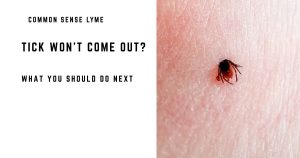
If you find an attached tick, remove it promptly with fine-tipped tweezers, grasping as close to the skin as possible and pulling straight up with steady pressure.
If you’ve recently been bitten by a tick, understanding what to do next is critical. See what to do after a tick bite.
Why Early Lyme Disease Is Often Missed
Early Lyme disease is frequently missed because symptoms are nonspecific, the rash may be absent or atypical, and testing may be negative in the first few weeks. These factors contribute to delayed diagnosis and increase the risk of persistent symptoms.
Lyme Disease Is Expanding Beyond Traditional Regions
Lyme disease was once considered a regional problem, concentrated in the Northeast and Upper Midwest. That is no longer the case.
Climate change, shifting tick populations, and changing land use patterns have expanded the geographic range of Lyme disease into areas previously considered non-endemic. CDC surveillance data confirms cases are now reported in states and regions where Lyme was once rare.
Why Does Lyme Disease Become Chronic?
Chronic Lyme disease does not appear overnight. It develops when early opportunities for diagnosis and treatment are missed.
The risk factors for chronic Lyme disease include delayed treatment, severity of initial infection, neurological involvement at onset, and the presence of co-infections.
Many patients never see the classic bull’s-eye rash. Others test negative early in infection, before antibodies develop. Some are told their symptoms don’t match textbook Lyme and are sent home without treatment.
In many cases, chronic Lyme disease reflects a missed opportunity—not an unavoidable outcome.
Secondary Prevention: Clinical Strategies That Work
Early Clinical Diagnosis. Lyme disease is a clinical diagnosis. You don’t need a classic rash or a positive test to justify early treatment.
Individualized Treatment. Standard antibiotic courses work for many patients, but not all. When symptoms persist, treatment should be reassessed—not dismissed.
Attentive Follow-Up. Some patients improve quickly. Others require reassessment. Treatment failure happens—and when it does, patients need follow-up, not dismissal.
Holistic Support. Many patients benefit from attention to sleep, physical conditioning, cognitive strain, and emotional stress.
What You Can Do
If you’re a patient: If you’ve spent time outdoors and develop unexplained symptoms, don’t wait. Seek evaluation early.
If you’re a clinician: Chronic Lyme is often a failure of pattern recognition—not testing. Trust clinical judgment and follow up carefully.
The Bottom Line
Chronic Lyme disease is not inevitable. It is often the result of missed opportunities—missed diagnosis, delayed treatment, or lack of follow-up.
Preventing chronic Lyme disease requires early recognition, individualized care, and continued attention to patients whose symptoms persist.
Don’t wait for certainty. Act on suspicion. The cost of a missed diagnosis is too high.
Dr. Daniel Cameron, MD, MPH
Lyme disease clinician with over 30 years of experience and past president of ILADS.
Symptoms • Testing • Coinfections • Recovery • Pediatric • Prevention