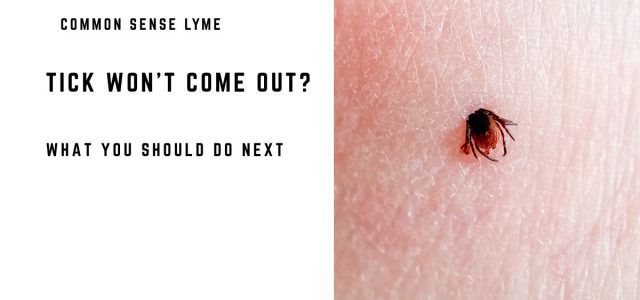
Why Are Ticks Hard to Remove? What to Do Next
Why are some ticks so difficult to remove? Most people expect a tick to come out easily—but in some cases, removal can be surprisingly difficult.
Some patients worry that part of the tick may still be embedded in the skin, raising questions about irritation, infection risk, and what to do next.
This matters because how a tick attaches—and how it is removed—can influence irritation, inflammation, and potential risk after a bite.
What Most People Expect
In many cases, ticks can be removed with fine-tipped tweezers using steady traction.
This is why standard advice often emphasizes simple removal as soon as a tick is found. You can learn more about what to do after a tick bite.
Why Are Ticks Hard to Remove?
Ticks are not simply attached to the skin—they are anchored.
This attachment is part of a broader interaction between the tick and the human immune system, which can influence early infection dynamics in Lyme disease. Learn more about mechanisms of persistent Lyme disease.
They use two main mechanisms:
- Barbed mouthparts: The tick’s feeding structure (hypostome) contains backward-facing barbs that help it grip the skin.
- Cement-like secretions: Ticks release proteins that harden around the mouthparts, reinforcing attachment.
These mechanisms allow ticks to remain attached for several days while feeding.
In rare cases, prolonged attachment can lead to deeper embedding in the skin, making removal more difficult and sometimes incomplete.
Can Ticks Fully Embed Under the Skin?
Many people worry that a tick has completely burrowed under the skin.
In most cases, the body of the tick remains visible while the mouthparts are embedded in the skin. However, prolonged attachment can occasionally make a tick appear deeply embedded.
People often describe these cases as a “deeply embedded tick” or a “fully embedded tick,” even though the body of the tick usually remains visible.
Although uncommon, case reports have described deeply embedded ticks where removal was more challenging than usual.
What Happens If a Tick Is Not Fully Removed?
If part of the tick remains in the skin, it may act as a foreign body.
Incomplete tick removal is relatively common and often involves retained mouthparts rather than the entire tick.
- Local irritation or redness may persist
- A small inflammatory reaction or granuloma may develop
- Secondary infection is possible, though uncommon
These local reactions can be concerning but are usually manageable and do not necessarily indicate Lyme disease or another tick-borne infection.
What Should You Do If a Tick Won’t Come Out?
If a tick will not come out easily, avoid aggressive digging or repeated attempts that may damage the surrounding skin.
Instead:
- Use fine-tipped tweezers and apply steady upward traction
- Avoid twisting or jerking motions
- Clean the area after removal
- Monitor for local irritation or evolving symptoms
If mouthparts remain embedded or the area becomes increasingly inflamed, medical evaluation may be appropriate.
Why This Matters for Lyme Disease Risk
The longer a tick remains attached, the greater the potential risk of pathogen transmission.
However, attachment time is not always easy to determine. This uncertainty is one reason Lyme disease can be missed early. Learn more about delayed Lyme disease diagnosis.
This is one reason why prevention and early recognition remain important. Learn more about Lyme disease prevention strategies.
If you’ve been bitten but feel well, you may still wonder what to do next. Learn more in tick bite but no symptoms: what should you do?.
Even after removal, it is important to monitor for evolving symptoms. These may include fatigue, joint pain, or cognitive changes seen in Lyme disease symptoms.
When Tick Removal Becomes More Complicated
In uncommon cases, ticks may remain firmly embedded after prolonged attachment.
Standard removal techniques may fail if:
- The tick has been attached for several days
- The body breaks during removal
- Mouthparts remain embedded in the skin
In these situations, additional care may be needed to fully remove retained fragments.
Frequently Asked Questions
Why are ticks so hard to remove?
Ticks use barbed mouthparts and cement-like secretions to anchor themselves to the skin while feeding, making removal more difficult.
Can ticks fully embed under the skin?
Most ticks do not completely burrow under the skin. Usually the mouthparts are embedded while the body remains visible.
What should I do if a tick won’t come out?
Use fine-tipped tweezers and steady upward traction. Avoid digging aggressively into the skin. Seek medical advice if retained parts cause ongoing irritation.
What happens if a tick is not fully removed?
Retained mouthparts may cause local inflammation, redness, or a small granuloma but do not necessarily indicate infection.
Does difficulty removing a tick increase Lyme disease risk?
Not directly. However, a difficult-to-remove tick may indicate longer attachment, which can increase the opportunity for pathogen transmission.
Clinical Takeaway
Most tick bites can be managed with careful removal and observation.
Ticks are difficult to remove because they use barbed mouthparts and cement-like secretions to remain attached while feeding. Most retained fragments cause local irritation rather than serious complications, but monitoring after a tick bite remains important.
Related Articles
What to Do After a Tick Bite
Tick Bite but No Symptoms: What Should You Do?
Delayed Lyme Disease Diagnosis
Prevention of Lyme Disease
Lyme Disease Symptoms Guide
References
- Wang B, Papdi N. Deep Subcutaneous Tick Embedding Following Prolonged Attachment: A Case Report and Mini-Review of Tick Fixation Mechanisms. Cureus. 2026.
Dr. Daniel Cameron, MD, MPH
Lyme disease clinician with over 30 years of experience and past president of ILADS.
Symptoms • Testing • Coinfections • Recovery • Pediatric • Prevention