Why Tick Bite Prevention for Kids Is So Difficult
Tick bite prevention for kids sounds simple in theory: use repellent, avoid ticks, and check children after outdoor activities. In practice, prevention is much harder.
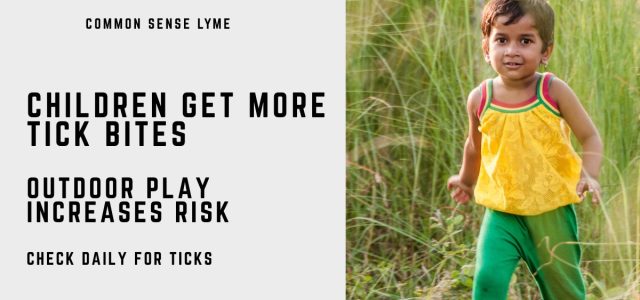
Children are among the age groups at highest risk for tick bites and Lyme disease. Young children spend more time outdoors, play close to the ground, may not notice attached ticks, and often depend on adults to recognize exposures.
A school-based study found that educational interventions improved knowledge and prevention behaviors, but prevention challenges remained even after instruction.1
Families looking for broader prevention strategies can also review prevention of Lyme disease.
Why Are Children at Higher Risk for Tick Bites?
Children ages 5–9 consistently rank among the highest-risk groups for Lyme disease exposure.
Several factors increase risk:
- More outdoor play time
- Frequent exposure to grass, leaves, and wooded areas
- Difficulty recognizing ticks
- Less consistent tick checking
- Ticks attaching to hard-to-see locations
Children may also receive bites from smaller nymphal ticks, which are harder to detect before transmission occurs.
These risks are particularly relevant during camps, sports, hiking, and playground activities.
Why Tick Checks Often Fail
Many parents perform tick checks inconsistently despite understanding their importance.
Researchers found only modest improvements in tick-checking behaviors after prevention education.1
Several factors make tick checks difficult:
- Children resist or rush through checks
- Ticks hide in hairlines and skin folds
- Busy schedules interfere with routines
- Parents may underestimate exposure risk
Tick checks are particularly important behind the ears, scalp, groin, behind the knees, and along waistbands.
Education Alone May Not Be Enough
Teaching children about ticks helps, but knowledge alone may not consistently change behavior.
The school intervention improved:
- Knowledge scores
- Confidence performing tick checks
- Attitudes toward prevention
- Reported prevention behaviors
However, improvements were modest, suggesting prevention requires reinforcement from parents, schools, and communities.
Parent involvement appears particularly important because adults perform or supervise many tick checks.
Preventing Tick Bites in Children: Practical Strategies
Parents often ask which prevention steps matter most.
Simple approaches include:
- Daily tick checks after outdoor activities
- Showering after outdoor exposure
- Protective clothing when practical
- Permethrin-treated clothing when appropriate
- Keeping play areas away from dense brush
- Teaching children where ticks hide
Parents should also remember that ticks may transmit infections beyond Lyme disease, including illnesses discussed in coinfections.
When Should Parents Worry After a Tick Bite?
Not every tick bite leads to infection, but some situations deserve closer attention.
Parents may want to monitor more closely when:
- The tick appears attached for a prolonged period
- The child develops fever or flu-like symptoms
- A rash develops
- Neurologic symptoms appear
- Symptoms persist after the bite
More guidance is available in bad signs after a tick bite.
Frequently Asked Questions
Why are children more likely to get tick bites?
Children spend more time outdoors and may not notice attached ticks, increasing exposure risk.
Are toddlers at higher risk for tick bites?
Young children often have difficulty recognizing ticks and rely on adults for prevention.
How often should parents check children for ticks?
Daily checks after outdoor exposure are generally recommended in endemic regions.
Do tick prevention programs work?
Educational programs improve knowledge and behavior, but prevention remains difficult.
Can children get infections besides Lyme disease from ticks?
Yes. Ticks may carry multiple organisms capable of causing illness.
Clinical Takeaway
Preventing tick bites in children remains difficult because exposure risk is high and prevention behaviors are inconsistent.
Parents, schools, and clinicians all play a role in reinforcing prevention habits that may reduce exposure risk.
Related Articles
These articles explore prevention, pediatric risk, and what to do after a tick bite.
Pediatric Lyme disease
Delayed Lyme disease diagnosis
Bad signs after a tick bite
Is it too late to treat a tick bite?
Babesia and tick-borne coinfections
References
- Shadick NA, Zibit MJ, Nardone E, DeMaria A Jr, Iannaccone CK, Cui J. A School-Based Intervention to Increase Lyme Disease Preventive Measures Among Elementary School-Aged Children. Vector Borne Zoonotic Dis. 2016;16(8):507-515.
Dr. Daniel Cameron, MD, MPH
Lyme disease clinician with over 30 years of experience and past president of ILADS.
Symptoms • Testing • Coinfections • Recovery • Pediatric • Prevention