Does the Size of the Tick Matter for Lyme Disease?
Most people worry when they find a tick, but few realize that its size can change everything. Does a smaller tick mean lower risk — or greater danger?
Yes and no. The size of the tick matters for the early detection of Lyme disease.
Understanding Tick Sizes
Both nymph and adult ticks can transmit Lyme disease and other tick-borne illnesses if they have fed on an infected host.
Deer ticks go through several life stages:
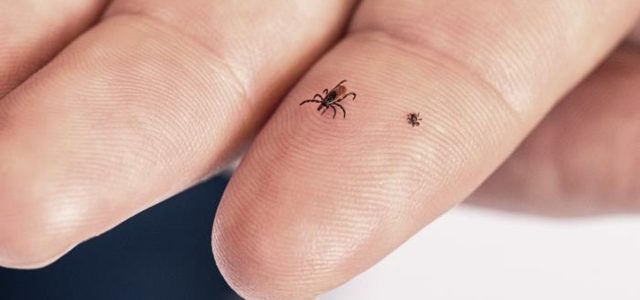
Nymph ticks are roughly the size of a poppy seed (1–2 mm). Their tiny size makes them nearly invisible on skin, especially in hair or skin folds. Most people never see or feel them.
Adult ticks are about the size of a sesame seed when unfed (3–5 mm). They’re more visible but still small enough to hide in areas like the scalp, groin, armpits, and behind the knees.
Why Adult Ticks Still Pose Significant Risk
Many people mistakenly believe that if they can see and feel a tick, it is less dangerous. That is not true.
Adult ticks deserve your full attention because:
They carry high infection rates. In endemic areas, adult deer ticks commonly carry Borrelia burgdorferi, the bacterium responsible for Lyme disease.
They are more likely to carry multiple infections. Adult ticks have already fed twice before — as larvae and nymphs — giving them more opportunities to acquire pathogens. They frequently carry co-infections such as Babesia and Anaplasmosis alongside Lyme disease.
Co-infections complicate illness. When multiple pathogens are transmitted together, symptoms are often more severe, recovery may take longer, and treatment becomes more complex.
They still go unnoticed. Despite being larger, adult ticks commonly attach in hidden areas where they may feed for days undetected.
What Tick Engorgement Tells You
The physical appearance of an attached tick provides clues about how long it has been feeding.
Flat and dark: Recently attached, likely within a day. The tick appears thin and dark brown or black.
Partially swollen: The tick is feeding actively and beginning to swell. It appears gray-brown and more rounded.
Fully engorged: The tick resembles a gray-blue grape or bean — translucent and swollen. This usually indicates prolonged attachment lasting several days.
The more engorged the tick, the longer it has likely been attached and the greater the risk of infection.
When to See a Doctor
If you find an attached tick, try to estimate how long it has been there. If you develop fatigue, fever, headache, muscle aches, or a rash — especially a bull’s-eye rash — within several weeks of a bite, contact your doctor promptly.
While early antibiotics help, some treated patients continue to experience persistent symptoms.
In my practice, I also recommend these daily precautions:
- Perform daily tick checks after spending time outdoors.
- Pay close attention to hidden areas including the scalp, waistline, groin, armpits, and behind the knees.
- Shower within two hours after outdoor exposure.
- Place clothing in a dryer on high heat for at least 10 minutes.
- Use repellents containing DEET or picaridin, or wear permethrin-treated clothing.
Prompt tick removal greatly reduces infection risk — even if the tick was infected.
The Bottom Line
Does the size of the tick matter for Lyme disease?
Yes — but primarily because larger ticks are easier to spot and remove before they transmit infection.
Both nymph and adult ticks are capable of carrying Lyme disease and co-infections.
Stay vigilant, check yourself carefully after outdoor activities, and remove attached ticks promptly. Early detection and removal remain among the best protections against Lyme disease.
Have you found a tick? Share your experience below — your story may help someone else recognize the risk and act quickly.
Additional Resources
- Tick Testing Laboratory
- About Ticks and Tickborne Disease
- Study Demonstrates Further Evidence Larval Ticks May Be a Threat to Humans
- How to Remove a Deer Tick From an 8-Year-Old Girl’s Eye
Dr. Daniel Cameron, MD, MPH
Lyme disease clinician with over 30 years of experience and past president of ILADS.
Symptoms • Testing • Coinfections • Recovery • Pediatric • Prevention


I found a small, sesame seed sized black tick on my neck. It looked like a tick but had shorter legs. It was alive but I list it in panic. I went to the doctor to be sure the head wasn’t in my skin. I scrapped it off not knowing what it was. I took antibiotics. Two days later I found one in my hair at the back of my head. I don’t think it was attached but I am not sure. Again I list it in panic. I am usually very controlled but the idea of a tik caused panic. I will go see a doctor tomorrow morning. Another antibiotic so soon could be a problem but I think its less risk than lyme disease.
Everyday i find at least 1 somedays i have found 3 to 4. . They itch to high heaven. Leave a nasty scar. Why in the last 2 years am i finding so many? I live n indiana. Louisville area