Young adults most at-risk for Lyme carditis
Young adults and Lyme carditis represent a critical connection that clinicians often miss. Males aged 20-40 are at highest risk for developing complete heart block from Lyme disease, yet their cardiac symptoms are frequently dismissed as anxiety or stress. Understanding this demographic pattern can prevent diagnostic delays and unnecessary permanent pacemakers.
The Demographics of Lyme Carditis
Interestingly, young adults, particularly males, are most at-risk for developing Lyme carditis, the authors point out. This demographic pattern is consistent across the medical literature and my own clinical experience treating Lyme disease for 37 years.
The concentration of Lyme carditis in young adults creates a diagnostic challenge: clinicians don’t expect serious heart block in previously healthy patients in their 20s and 30s. This assumption leads to delayed recognition and, in some cases, preventable deaths.
Case Report: 37-Year-Old Male with Complete Heart Block
In their article, “Lyme disease presenting as complete heart block in a young man: Case report and review of pathogenesis,” Carnazzo et al. discuss the case of a young man with complete heart block as a complication of Lyme disease, who presented with symptoms months after several tick bites.
Their case report describes a 37-year-old man who lived in northwestern Wisconsin. He presented to the emergency department with two episodes of syncope without prodromal symptoms which had occurred over a 5-day period.
“During these days, he had increasingly frequent episodes of dizziness and near-syncope,” writes Carnazzo.
“He also reported fever, chills, muscle aches, and bilateral lower extremity erythematous rash that had developed 3 weeks earlier that had resolved by the time of presentation.”
Two months before his symptoms began, the patient had removed several ticks from his left thigh and groin.
Clinical Presentation of Lyme Carditis
Lyme carditis often presents with non-specific symptoms, such as lightheadedness, syncope, dyspnea, palpitations, and chest pain, the authors explain. While an estimated 30% of patients exhibit no symptoms at all.
The most common clinical manifestation “is AV block, which can be acute in onset and can rapidly progress to complete heart block,” writes Carnazzo.
This rapid progression makes young adults and Lyme carditis particularly dangerous. A previously healthy 30-year-old can go from mild symptoms to complete heart block requiring emergency pacing within hours to days.
Why Young Males Are Most Affected
Several factors contribute to the higher incidence of Lyme carditis in young adult males:
- Higher outdoor exposure: Young men spend more time in tick-endemic areas through outdoor work, recreation, and sports
- Lower healthcare utilization: Young males are less likely to seek medical care for early symptoms
- Delayed recognition: Early cardiac symptoms may be attributed to being “out of shape” or anxiety
- Biological factors: Possible immune response differences, though mechanisms aren’t fully understood
The combination of higher tick exposure and delayed care-seeking creates a perfect storm for progression to severe carditis in this demographic.
Diagnostic Challenges in Young Adults
“Lyme carditis can be difficult to recognize in cases where classic signs of Lyme disease are not obvious upon patient presentation and EM rash or tick bite difficult to recall.”
This diagnostic difficulty is compounded in young adults because:
- Clinicians don’t expect serious heart block in healthy young patients
- Cardiac symptoms may be dismissed as anxiety or panic attacks
- Rash may have resolved by presentation (as in this case)
- Tick bite occurred months earlier and isn’t connected to current symptoms
- Initial symptoms (fever, muscle aches) may have been attributed to flu
The 37-year-old patient in this case had removed ticks two months before symptoms began. By the time he presented with syncope, the connection between tick exposure and cardiac symptoms wasn’t immediately obvious.
Diagnosis and Treatment
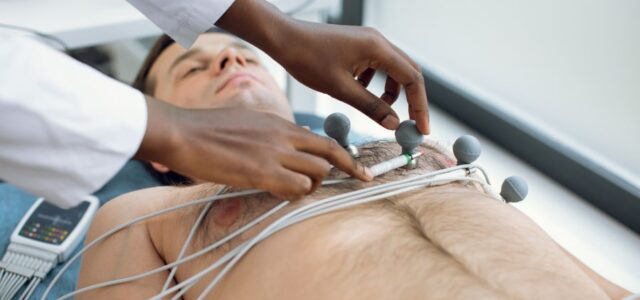
An electrocardiogram (ECG) revealed complete heart block, so a temporary pacemaker was inserted.
The man was diagnosed with Lyme carditis after he tested positive for B. burgdorferi on Western blot and treated successfully with IV ceftriaxone.
After 9 days, the heart block had completely resolved.
This rapid resolution demonstrates the reversible nature of Lyme carditis when treated promptly. The temporary pacemaker could be removed, and the patient avoided permanent pacing — an outcome only possible because Lyme disease was recognized and treated.
Clinical Recommendations
“Clinical suspicion for Lyme carditis should be high for young patients with unexplained high grade heart block, particularly in Lyme disease endemic areas.”
The authors provide specific guidance for clinicians:
“It is important for clinicians to be familiar with the presentation and treatment of this infection that is now being observed in a wider geographic distribution so as to avoid serious long-term complications…”
“Timely diagnosis and treatment of heart block due to Lyme carditis can lead to immediate and life-saving temporary pacing during initiation of antibiotic therapy, while avoiding unnecessary permanent pacemaker placement.”
“Patients presenting with AV block should be asked about possible tick exposure, history of erythema migrans rash, recent travel to a high incidence Lyme disease area and other constitutional symptoms of Lyme disease like fever, fatigue, malaise, chills, muscle and joint pain.”
Clinical Perspective
The concentration of Lyme carditis in young adult males creates a dangerous mismatch between who gets the disease and who clinicians suspect has serious cardiac pathology.
When a 75-year-old presents with heart block, clinicians expect it. When a 30-year-old presents with the same finding, there’s often diagnostic confusion and delay. The assumption is that young people don’t get serious heart block.
But in Lyme-endemic areas, high-grade heart block in a young adult should trigger immediate consideration of Lyme carditis. This isn’t a diagnosis to consider after ruling out everything else. It should be the first diagnosis on the differential.
I’ve seen too many young patients — usually males in their 20s and 30s — who experienced multiple healthcare encounters before anyone connected their cardiac symptoms to Lyme disease. Some were told they were having panic attacks. Others were worked up for structural heart disease. The common thread: no one asked about tick exposure because the patient was “too young” for serious cardiac pathology.
The lesson from this case and others like it: in endemic areas, young adults with unexplained heart block need empiric Lyme treatment immediately, not after extensive cardiac workup excludes other diagnoses.
Frequently Asked Questions
Why are young adults more likely to get Lyme carditis?
Young adults, particularly males aged 20-40, have higher outdoor exposure to ticks through recreation and work. They’re also less likely to seek early medical care, allowing the infection to disseminate to the heart. Lyme carditis develops in approximately 1% of untreated Lyme disease cases.
Can a 20-year-old have complete heart block from Lyme disease?
Yes. Lyme carditis commonly causes complete heart block in young, previously healthy patients. The death of a 17-year-old from Lyme carditis demonstrates it can affect adolescents and young adults with fatal consequences when diagnosis is delayed.
Do young people with Lyme carditis always remember a tick bite?
No. In this case, the patient removed ticks two months before cardiac symptoms developed. Many patients don’t connect tick exposure months earlier with current heart problems. Additionally, many Lyme carditis patients never recall a tick bite at all.
How quickly can Lyme carditis progress in young adults?
Very rapidly. AV block can progress from mild to complete within hours to days. Young adults often delay seeking care initially, then deteriorate quickly once cardiac involvement develops, creating a narrow window for diagnosis and treatment.
Do young adults with Lyme carditis need permanent pacemakers?
Usually not. When treated with antibiotics, heart block typically resolves completely within days to weeks. Temporary pacing bridges the patient until antibiotics work. This patient’s heart block resolved after 9 days of treatment, avoiding permanent pacemaker.
Should young men in endemic areas be screened for Lyme carditis?
Not routinely, but young males with any cardiac symptoms (palpitations, lightheadedness, syncope, chest pain) in endemic areas should be evaluated for Lyme disease. Don’t assume cardiac symptoms in young patients are benign or anxiety-related without ruling out Lyme carditis.
Why don’t clinicians suspect Lyme carditis in young adults?
Clinicians expect heart block in older patients with structural heart disease, not healthy young adults. This creates diagnostic blind spots. Additionally, by the time cardiac symptoms appear, the initial flu-like illness or rash may have resolved, obscuring the connection to Lyme disease.
Related Reading:
Lyme Carditis: When Heart Symptoms Can’t Wait
Young Man Dies from Lyme Carditis – Fatal Case Study
Lyme Carditis Symptoms: 5 Critical Warning Signs
Can You Die from Lyme Disease? Fatal Carditis Cases
Lyme Carditis Without Typical Symptoms
Lyme Carditis May Require Temporary Permanent Pacemaker
References:
- Carnazzo MC, Scholin C, Shweta F, Calvin AD. Lyme disease presenting as complete heart block in a young man: Case report and review of pathogenesis. IDCases. 2023 May 12;32:e01799. doi: 10.1016/j.idcr.2023.e01799. PMID: 37234726; PMCID: PMC10205533.
Dr. Daniel Cameron, MD, MPH
Lyme disease clinician with over 30 years of experience and past president of ILADS.
Symptoms • Testing • Coinfections • Recovery • Pediatric • Prevention



Does the COVID-19 vaccination increase the incidence of Carditis for those with Lyme disease since both the shot and Lyme infection are indicated as risk factors for heart injury?
I don’t know the answer, yet.
Dr. Cameron good afternoon. I have been experiencing low blood pressure for two weeks and as of yesterday when bending over my blood pressure was very high and I was rather short of breath like I was getting no air. I am also ridiculously tired from the babesia I. I sweat profusely day and night during the day. It’s when I bend over and it just pours from my temple areas in my head and my face has been bilaterally. Numb for about four months where before that it was just one spot on my left cheek bone I am wondering if this is related if you have an answer or any ideas for me I’d sure appreciate your response. Thank you have a great day.
Excellent case report on Lyme carditis, similar to cases seen in SE Massachusetts. They deserve IV ceftriaxone, just as done, even if the heart block doesn’t resolve.