
How Long Do Symptoms of Lyme Disease Last?
How long do symptoms of Lyme disease last? The answer varies widely. Some patients recover quickly after treatment, while others experience symptoms that persist for months or even years.
Patients with Lyme disease frequently report a wide range of ongoing symptoms, including extreme fatigue, sleep disturbances, mood changes, poor memory and concentration, headaches, dizziness, neck pain, tingling in the hands and feet, and joint pain.
In some individuals, Lyme disease can lead to chronic or debilitating complications affecting multiple body systems.
Persistent complications reported in Lyme disease
Several chronic manifestations of Lyme disease have been described in the medical literature, including:
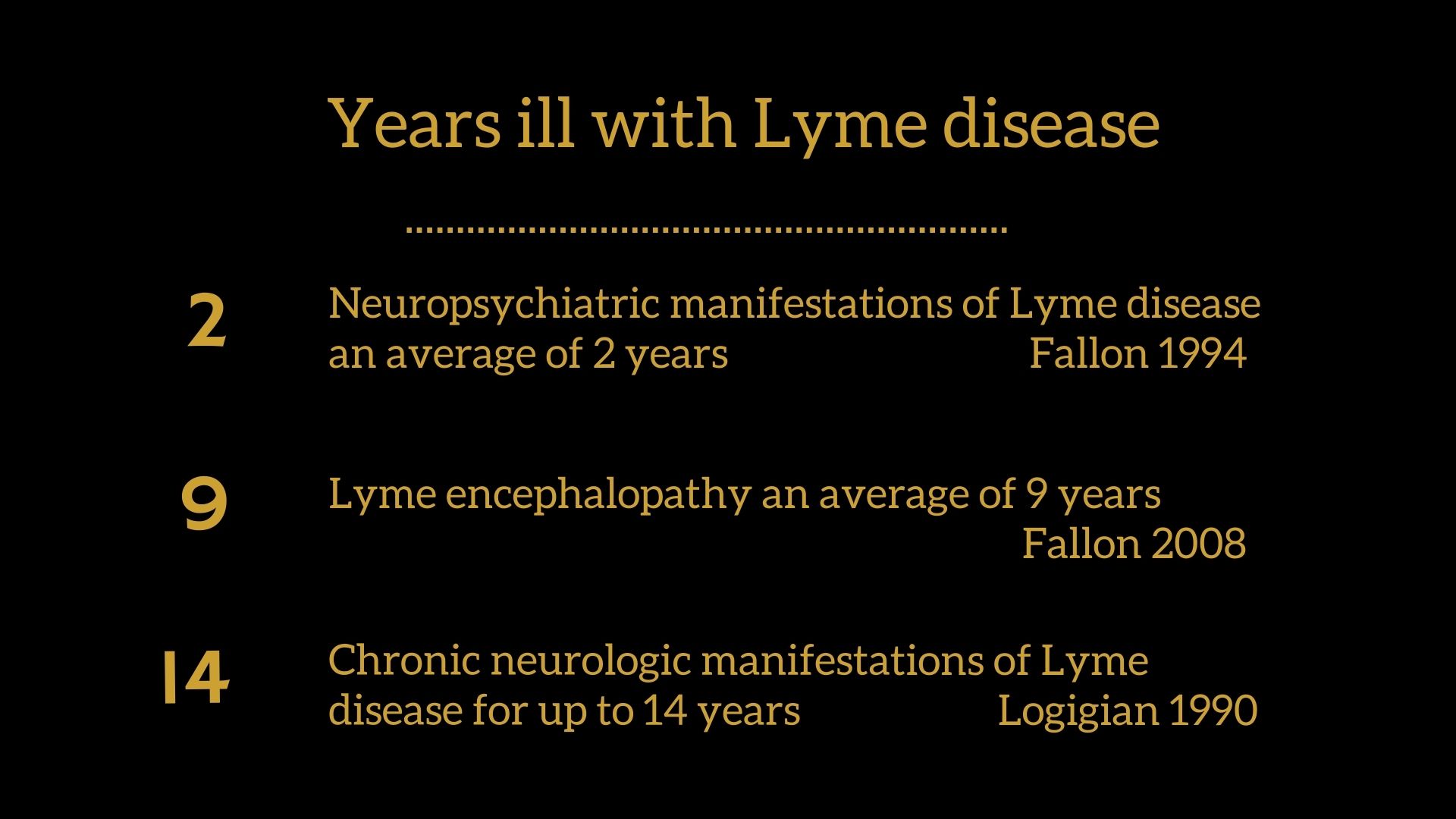
- Lyme encephalopathy 1,3
- Lyme neuropathy 4
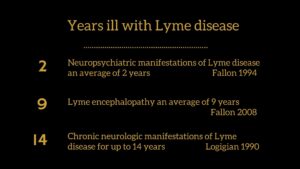
- Neuropsychiatric Lyme disease 5
- Pediatric acute-onset neuropsychiatric syndrome (PANS) 6
- Lyme carditis 7
- Autonomic dysfunction including POTS 8
- Post-treatment Lyme fatigue 9
- Neuropathic pain 10
- Persistent symptoms after Lyme disease 2
- Lyme disease with coinfections such as Babesia 11
Why symptoms of Lyme disease may persist
Some Lyme disease patients fail to improve after initial treatment, while others improve temporarily but later relapse. Because Lyme disease affects multiple systems in the body, the course of illness can vary significantly from one patient to another.
Researchers continue to debate the underlying cause of persistent symptoms.
Some scientists argue that chronic symptoms may reflect a persistent infection with Borrelia burgdorferi or other tick-borne pathogens.
Others believe ongoing symptoms are due to an immune dysfunction triggered by the original infection. Patients with persistent symptoms are often diagnosed with Post-Treatment Lyme Disease Syndrome (PTLDS). 12
Why the duration of Lyme symptoms varies
There is no universal timeline for Lyme disease recovery. Several factors may influence how long symptoms last, including:
- How early the infection is diagnosed
- The presence of tick-borne coinfections
- The patient’s immune response
- Whether the infection has spread to the nervous system
- Individual response to treatment
For some individuals, symptoms improve within weeks. For others, symptoms may persist longer and require ongoing evaluation and management.
Clinical perspective
Too many Lyme disease patients have suffered for years without being diagnosed or properly treated. Understanding how long Lyme disease symptoms last remains an important area of research and clinical care.
Until we develop reliable tests that can determine whether a tick-borne infection has fully cleared, clinicians must carefully evaluate each patient and consider multiple possible explanations for persistent symptoms.
WATCH:
Signs and symptoms of Lyme disease
Related Articles:
How do Lyme disease symptoms persist long term?
Lyme disease patient symptoms are not “excessive”
Don’t confuse somatic symptoms with depression in early Lyme disease
References:
- Logigian EL, Kaplan RF, Steere AC. Chronic neurologic manifestations of Lyme disease. N Engl J Med. 1990;323(21):1438-1444.
- Klempner MS et al. Two controlled trials of antibiotic treatment in patients with persistent symptoms and a history of Lyme disease. N Engl J Med. 2001.
- Fallon BA et al. Repeated IV antibiotic therapy for Lyme encephalopathy. Neurology. 2008.
- Halperin JJ et al. Lyme disease as a cause of peripheral neuropathy. Neurology. 1987.
- Fallon BA, Nields JA. Lyme disease: a neuropsychiatric illness. Am J Psychiatry. 1994.
- Sigra S et al. Treatment of PANS and PANDAS: systematic review. Neurosci Biobehav Rev. 2018.
- Muehlenbachs A et al. Cardiac tropism of Borrelia burgdorferi. Am J Pathol. 2016.
- Kanjwal K et al. Postural orthostatic tachycardia syndrome following Lyme disease. Cardiol J. 2011.
- Krupp LB et al. Post-Lyme fatigue study (STOP-LD). Neurology. 2003.
- Simons LE. Neuropathic pain mechanisms in chronic illness. Pain. 2016.
- Krause PJ et al. Concurrent Lyme disease and babesiosis. JAMA. 1996.
- Rebman AW et al. Characterization of post-treatment Lyme disease syndrome. Front Med. 2017.
Dr. Daniel Cameron, MD, MPH
Lyme disease clinician with over 30 years of experience and past president of ILADS.
Symptoms • Testing • Coinfections • Recovery • Pediatric • Prevention



My husband has been dealing with extreme weight loss and not able to gain weight since his first diagnosis of Lyme Disease in 2016.
Without a doctor who can explain his weight loss, (multiple tests of elimination what it could have been), no diagnosis of what the cause is? Lyme diease is a possibility since the timing is coincidental