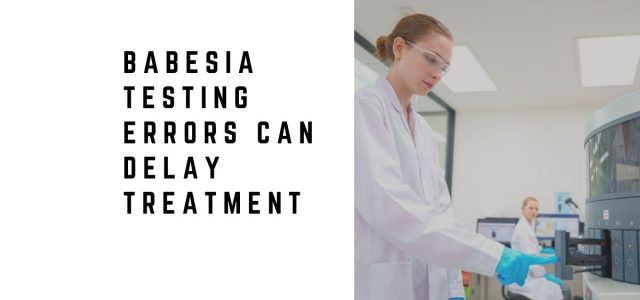
Babesia Testing: Why False Negatives Can Delay Treatment
Babesia testing has important limitations
False-negative results can delay diagnosis and treatment
Clinical judgment remains essential
She came to my office exhausted after six months of fevers, sweats, and crushing fatigue. Her initial testing for Babesia was negative. It wasn’t confirmed until much later, after PCR and antibody testing were positive. But by then, treatment was delayed, and her recovery was harder.
False-negative Babesia testing is a common reason patients with Lyme disease and co-infections remain sick. Ordering the wrong test, relying on a single method, or testing at the wrong time can produce negative results that leave patients untreated.
I see this regularly in my practice — patients with classic symptoms are told, “Your test was negative, so you don’t have Babesia.” But in fact, testing was incomplete, mistimed, or too limited to capture the infection.
What Is Babesia?
Babesia is a parasite that infects red blood cells, much like malaria. It is transmitted by blacklegged ticks — the same ticks that spread Lyme disease. In the U.S., Babesia microti is most common in the Northeast and Midwest, while Babesia duncani appears more often on the West Coast.
Common symptoms of Babesia include:
- Fevers and drenching sweats, especially at night
- Crushing fatigue that feels different from Lyme exhaustion
- Air hunger — the sensation of not getting enough oxygen
- Chills, headaches, or muscle aches
- Anemia in more severe cases
Babesia often occurs as a co-infection with Lyme disease, which makes diagnosis and treatment more complicated. Because the parasite lives inside red blood cells, it does not always show up on standard blood work, making accurate testing and clinical judgment critical.
Why Babesia Tests Become Less Sensitive Over Time
Babesia is often easiest to detect during the first week or two of illness, when parasite levels in the blood are highest. During this acute phase, blood smears are more likely to show parasites, and laboratory abnormalities such as hemolytic anemia, thrombocytopenia, elevated bilirubin, and elevated lactate dehydrogenase (LDH) may be present.
By the time many patients are evaluated months later, parasite levels may have fallen below the detection threshold of blood smear or PCR testing. Laboratory abnormalities may also have resolved, even though patients continue to experience symptoms. In these situations, antibody testing, repeat testing, and careful clinical assessment become increasingly important.
Types of Babesia Testing
Blood Smear — Giemsa Stain
- Detects parasites inside red blood cells.
- Works best in acute, high-level infections where parasite burden is high.
- Often misses low-level or delayed cases, which are common in outpatient practice (Persing et al., 1992).
A single negative blood smear does not rule out Babesia, especially when symptoms have been present for weeks or months.
PCR — Polymerase Chain Reaction
- Detects Babesia DNA circulating in the blood.
- Can be more sensitive than smear, especially for B. microti (Krause et al., 1996).
- In real-world practice, however, PCR may miss infections if parasite levels are very low or fluctuate over time. A negative PCR does not always rule Babesia out.
Antibody Testing — IgM and IgG
- Measures the immune system’s response to Babesia.
- In my practice, antibody testing is often more sensitive than PCR, particularly in patients with chronic or intermittent symptoms.
- Limitations: antibodies may linger from past infection, and patients with weakened immune systems may not produce detectable antibodies (Krause et al., 2002).
Specialized Assays
- Some specialty laboratories offer expanded Babesia PCR panels or enhanced molecular testing.
- These tools can sometimes catch cases that standard methods miss, though false negatives still occur.
- Even with advanced testing, clinical judgment and symptom tracking remain essential.
Why False-Negative Babesia Tests Happen
In my experience, false-negative Babesia testing arises from several common pitfalls:
- Wrong test ordered — A blood smear alone often misses delayed or low-level infections.
- Timing issues — Parasites cycle in and out of the bloodstream. Testing on the wrong day may miss an active infection.
- Species mismatch — Not all laboratories test for Babesia duncani or other Babesia species beyond B. microti (Conrad et al., 2006).
- Single-test reliance — One negative result does not always tell the full story.
- Delayed presentation — Patients evaluated months after becoming ill often no longer have the laboratory findings typically seen during acute babesiosis.
The Hidden Risk: Transfusion-Transmitted Babesiosis
Transfusion-transmitted babesiosis remains a recognized problem in the United States despite blood donor screening efforts. Donors may carry asymptomatic parasitemia for months to years, and recurrent infections have been documented even after negative screening tests.
A striking report from Connecticut described three newborns who developed Babesia from a single blood donor, demonstrating that individuals without symptoms may still transmit infection. These cases illustrate how Babesia testing can miss infections with important real-world consequences.
Did You Know?
A single negative blood smear does not rule out Babesia.
Babesia testing may remain negative even in symptomatic patients. Accurate diagnosis often requires combining PCR, antibody testing, repeat testing when appropriate, and careful attention to the patient’s clinical presentation.
The Patient Impact of False-Negative Babesia Testing
The medical literature has described dramatic cases of congenital and transfusion-associated babesiosis, including newborns who initially appeared healthy but were later found to have parasites in their red blood cells. These reports highlight how easily early testing can miss infection.
In my own practice, I’ve also seen Babesia present in ways that surprised even experienced clinicians. Patients dismissed after a negative blood smear later tested positive by PCR, antibody testing, or repeat testing during a flare. By that time, treatment was often delayed and recovery more complicated.
Importantly, I’ve also found that treatment can be successful in patients who test negative when their clinical picture strongly suggests Babesia. Using careful clinical judgment, I’ve seen patients improve significantly despite negative laboratory results, reminding us that testing is only part of the diagnostic picture.
Clues It May Be Babesia
Certain clinical patterns make me strongly consider Babesia even when early testing is negative:
- Drenching night sweats that wake patients and soak bedding
- Air hunger despite normal lung function
- Cyclical flares of illness followed by temporary improvement
- Crushing fatigue described as “different” from Lyme fatigue
- Temperature swings — feeling chilled one moment and overheated the next
- Persistent symptoms despite appropriate Lyme disease treatment
When patients describe these patterns, I do not stop with a single negative Babesia test.
Clinical Perspective
No single Babesia test is perfect. Reliable care requires choosing the right test for the clinical situation, repeating testing when suspicion remains high, and interpreting laboratory results in the full context of symptoms and exposure history.
One important lesson from both the literature and my own clinical experience is that Babesia often looks very different months after infection than it does during the acute illness. Early cases may present with obvious parasites on blood smear, anemia, thrombocytopenia, elevated bilirubin, or elevated LDH. Many patients I evaluate later in the course of illness no longer have these classic laboratory findings, making diagnosis considerably more challenging.
False-negative results and delayed recognition remain real risks. A negative laboratory test should never be the final word when the overall clinical picture continues to suggest Babesia.
Clinical Takeaway
Babesia testing has advanced considerably, but it remains imperfect. The best outcomes come from combining multiple testing methods, repeating tests when appropriate, and respecting the patient’s symptom pattern.
If a patient with Lyme disease remains ill with drenching sweats, air hunger, cyclical flares, or crushing fatigue, Babesia should remain on the differential diagnosis—even if early Babesia testing was negative.
Have you experienced delayed Babesia diagnosis, false-negative testing, or delayed onset of symptoms? Share your experience below.
Frequently Asked Questions
Can a Babesia test be negative even if you have Babesia?
Yes. Babesia testing can be negative even when infection is present. Blood smear, PCR, and antibody tests each have limitations, particularly when parasite levels are low or symptoms have been present for months. When clinical suspicion remains high, repeat testing and careful clinical assessment may be appropriate.
What is the most accurate Babesia test?
No single Babesia test is considered the most accurate in every situation. Blood smear works best during acute infection with high parasite levels. PCR can detect Babesia DNA but may miss low-level or intermittent parasitemia. Antibody testing may be more helpful later in the illness. Using more than one testing method often provides the greatest diagnostic value.
Why do Babesia symptoms persist after negative testing?
Symptoms may persist because parasite levels fluctuate, testing was performed outside the optimal window, the wrong Babesia species was tested, or current laboratory methods failed to detect infection. In other patients, persistent symptoms may also reflect Lyme disease, another tick-borne co-infection, autonomic dysfunction, or another medical condition.
Related Articles
Learn more about Babesia symptoms, diagnosis, treatment, and related tick-borne infections:
- Babesia Symptoms: Why This Tick-Borne Infection Is Often Missed
- Babesia and Lyme — It’s Worse Than You Think
- Air Hunger and Babesia
- Two Mothers Transmit Babesia to Their Babies
- Blood Donor Infects Premature Infants With Babesia
References
- Cameron DJ, Johnson LB, Maloney EL. Evidence assessments and guideline recommendations in Lyme disease: the clinical management of known tick bites, erythema migrans rashes and persistent disease. Expert Rev Anti Infect Ther. 2014;12(9):1103-1135.
- Persing DH, Mathiesen D, Marshall WF, et al. Detection of Babesia microti by polymerase chain reaction. J Clin Microbiol. 1992;30(8):2097-2103.
- Krause PJ, Spielman A, Telford SR III, et al. Persistent parasitemia after acute babesiosis. N Engl J Med. 1998;339(3):160-165.
- Krause PJ, Telford SR III, Spielman A, et al. Concurrent Lyme disease and babesiosis: evidence for increased severity and duration of illness. JAMA. 1996;275(21):1657-1660.
- Krause PJ. Babesiosis diagnosis and treatment. Vector Borne Zoonotic Dis. 2003;3(1):45-51. doi:10.1089/153036603765627442. PMID: 12804380
- Kjemtrup AM, Conrad PA. Human babesiosis: an emerging tick-borne disease. Int J Parasitol. 2000;30:1323-1337.
- Vannier E, Hunfeld KP, Smith RP, Krause PJ. Management of human babesiosis – approaches and perspectives. Expert Rev Anti Infect Ther. 2025;23(9):739-752.
Dr. Daniel Cameron, MD, MPH
Lyme disease clinician with over 30 years of experience and past president of ILADS.
Symptoms • Testing • Coinfections • Recovery • Pediatric • Prevention