Can Controlled Burns Reduce Tick Populations?
Researchers continue to explore ways to reduce tick populations and lower the risk of tick-borne diseases such as Lyme disease. One strategy that has received attention is the use of controlled burns in forested areas.
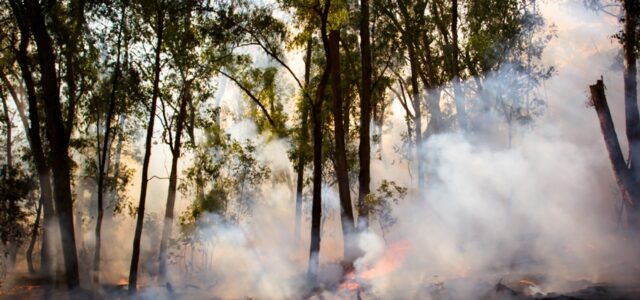
In a study examining tick populations in eastern Texas, Hodo and colleagues evaluated whether controlled burns could affect tick density and the presence of disease-causing pathogens. Controlled burns may affect tick populations, pathogen prevalence, and the risk of pathogen exposure to humans and animals and therefore may be a useful tool in integrated tick management.
Controlled Burns and Tick Density
“We found a marked difference in density of host-seeking ticks between transects with different burn histories and an overall low prevalence of known pathogens,” Hodo writes.
According to their survey, the number of ticks was reduced from 15 and 18 ticks per 1000 m² in unburned areas to 2 and 4 ticks per 1000 m² in burned areas. “We observed low questing tick density in areas with a history of controlled burns,” the authors explain.
Tick Species Identified
Researchers collected 112 ticks from drag samples taken across the study area. The majority (two out of three) were Ixodes scapularis ticks, also known as deer ticks. The remaining ticks were Amblyomma americanum ticks, commonly referred to as lone star ticks.
Investigators also collected 106 ticks from the clothing of drag operators, highlighting the occupational exposure risk faced by individuals working in tick habitats.
Borrelia burgdorferi, the bacterium responsible for Lyme disease, was not detected in any of the ticks tested in this study.
However, researchers detected a high prevalence of Rickettsia species and a low prevalence of relapsing fever organisms among the collected ticks.
Do Controlled Burns Work Long-Term?
Other studies investigating the impact of controlled burns on tick populations have produced mixed results, according to Hodo’s review of the literature.
Editor’s Note: While controlled burns demonstrated a reduction in the number of ticks in this study, the long-term effect remains uncertain. Tick populations may return once vegetation regrows and animal hosts reoccupy the habitat. Controlled burns may therefore represent only one component of a broader tick management strategy.
Understanding how environmental management affects tick populations may help reduce the risk of Lyme disease and other tick-borne infections.
Related Articles:
Will eliminating deer help stop the spread of infected ticks?
What blood type do ticks prefer?
Permethrin treated clothing causes “hot foot” effect in ticks
References:
- Hodo CL, Forgacs D, Auckland LD, Bass K, Lindsay C, Bingaman M, Sani T, Colwell K, Hamer GL, Hamer SA. Presence of diverse Rickettsia spp. and absence of Borrelia burgdorferi sensu lato in ticks in an East Texas forest with reduced tick density associated with controlled burns. Ticks Tick Borne Dis. 2019.
Dr. Daniel Cameron, MD, MPH
Lyme disease clinician with over 30 years of experience and past president of ILADS.
Symptoms • Testing • Coinfections • Recovery • Pediatric • Prevention



This is a temporary measure which would eliminate the ticks and reduce tick bites in the burnt area, until The mice they feed on and deer revisit for vegetation and residence. You are far better off to use the prescribed preventive steps and avoid high vegetation where tick quest for your blood. Blouse you pants into your socks, spray with Off Deep Woods, and don’t go into virgin woods if not necessary. Shower as soon as you get back to home base, and buddy inspect for ticks. Google Tick bites if you need more information, before you go out to tick habitats. Which may be your own back yard.
My parents bought a 40 acre property 50 years ago. Every night we all had to be checked for ticks before bed. They did controlled burns for about a 2 acre area surrounding our house for 3 years in a row. To this day, over 50 years later there is no longer a tick problem.