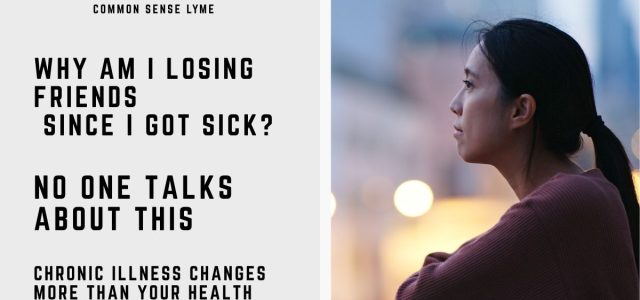
Losing Friends Because of Chronic Illness: Why It Happens
Chronic illness changes more than physical health
Friendships often shift when illness becomes long term
Many patients grieve the social losses no one prepared them for
Losing friends because of chronic illness is something many patients with Lyme disease describe quietly, often with more pain than their physical symptoms. They are not angry. They are grieving.
As illness persists, plans are canceled, energy fades, and life narrows. Over time, messages slow and invitations stop. Friends who once felt close begin to feel distant—or disappear altogether.
Many patients tell me they feel they lose friends because they are sick long before they lose physical function.
No one prepares patients for the social consequences of chronic illness.
This experience is increasingly recognized in patients with post-treatment Lyme disease syndrome (PTLDS) and other chronic medical conditions where symptoms fluctuate unpredictably.
Why Losing Friends Because of Chronic Illness Happens
Chronic illness changes how people move through the world. Fatigue, pain, cognitive slowing, dizziness, and uncertainty can alter work, relationships, routines, and social participation.
Many patients look outwardly well while feeling profoundly unwell.
Adult friendships are often built around shared activity, consistency, and ease. When illness disrupts those patterns, relationships may gradually erode.
This loss is rarely dramatic. More often, it unfolds through missed gatherings, unanswered messages, and assumptions made in silence.
Why Friends Sometimes Pull Away
When someone is sick for a long time, discomfort often emerges. Friends may not know what to say or may fear saying the wrong thing.
Some people feel helpless in the face of ongoing symptoms. Others assume recovery should already have happened.
Withdrawal is usually not intentional cruelty. More often, distance feels easier than learning how to remain present with uncertainty.
Chronic illness can also create asymmetry in relationships. One person may have less energy, reduced availability, or changing emotional needs, while healthy friends continue moving through life at a different pace.
Why Lyme Disease Patients Are Especially Vulnerable
Patients with Lyme disease often face prolonged illness, relapsing symptoms, and uncertainty surrounding diagnosis and recovery.
Symptoms fluctuate. Capacity may vary dramatically from day to day. Progress is rarely linear.
These challenges overlap with broader persistent Lyme disease mechanisms, where neurologic, autonomic, immune, and inflammatory symptoms may persist over time.
Cognitive dysfunction, fatigue, pain, and autonomic symptoms may further limit social participation and communication.
Lyme disease also carries unique social challenges. Symptoms are often invisible, and public understanding remains inconsistent.
When friends encounter conflicting information about Lyme disease, they may struggle to understand why recovery takes so long—or why symptoms persist at all.
Without a clear narrative, empathy can fade. What remains is often silence rooted more in confusion than indifference.
The Emotional Cost of Losing Friends Because of Chronic Illness
For many patients, the loss of friendships feels like a second illness layered on top of the first.
Isolation deepens. Confidence erodes. Some patients begin minimizing symptoms or forcing themselves beyond physical limits in an attempt to preserve relationships.
This social loss is not benign. Loneliness affects mental health, immune function, resilience, and the ability to cope with chronic disease.
Yet these social consequences are rarely addressed directly in medical care.
This Is Not Your Fault
If you have lost friends because you are sick, it does not mean you are difficult, negative, or failing socially.
It means your life changed in ways many people were not prepared to navigate.
Illness reveals which relationships can adapt—and which depended on a version of you that no longer exists.
That realization is painful, but it is not a judgment on your worth.
Relationships Can Still Evolve
Although you cannot control how others respond, some patients find relief in adjusting expectations.
Not every friendship will survive chronic illness. Some relationships quietly dissolve. Others become deeper and more meaningful.
Many patients also form new relationships through support groups, advocacy communities, faith communities, or online chronic illness networks.
Even one or two steady relationships can provide grounding during illness.
Just as importantly, grief over lost friendships deserves acknowledgment. It is real loss.
The Clinical Reality
Chronic illness is not only a medical condition—it is also a social one.
When patients lose friends because they are sick, it often reflects gaps in understanding rather than personal failure.
As clinicians, we should recognize that healing involves more than symptom management. Social isolation and relational loss influence resilience, recovery, and mental health.
These experiences deserve acknowledgment rather than minimization.
Clinical Takeaway
Losing friends because of chronic illness is common in Lyme disease and other chronic medical conditions, yet many patients are unprepared for the emotional impact.
When illness changes energy, reliability, social participation, and identity, friendships may shift in painful and unexpected ways. These losses are real and can significantly affect emotional well-being and recovery.
Support, understanding, and meaningful connection remain possible—even if relationships eventually look different than before.
Frequently Asked Questions
Is it common to lose friends when you have a chronic illness?
Yes. Many people with chronic illness experience changes in friendships due to reduced availability, misunderstanding, unpredictability, or discomfort surrounding long-term illness.
Why do people drift away instead of asking how to help?
Uncertainty, fear of saying the wrong thing, emotional discomfort, or difficulty understanding chronic symptoms may lead some people to withdraw.
Why is Lyme disease socially isolating?
Lyme disease symptoms are often invisible, fluctuate unpredictably, and remain poorly understood by the public, which can strain relationships.
Why do invisible illnesses strain relationships?
Invisible illnesses can create misunderstanding because symptoms are not always obvious to others. Friends may underestimate the severity, unpredictability, or daily impact of chronic illness.
Can friendships recover?
Some friendships recover or adapt over time. Others evolve into different forms of support and connection.
Does loneliness affect physical health?
Yes. Research suggests chronic loneliness may affect mental health, stress physiology, immune function, and resilience during illness.
Related Articles
- Post-Treatment Lyme Disease Syndrome
- Persistent Lyme Disease Mechanisms
- Lyme Disease Fatigue
- Lyme Disease Brain Fog
- Neuropsychiatric Lyme Disease
Resources
- Holt-Lunstad J, Smith TB, Layton JB. Social relationships and mortality risk: A meta-analytic review. PLoS Med. 2010;7(7):e1000316.
- National Academies of Sciences, Engineering, and Medicine. Living Well With Chronic Illness: A Call for Public Health Action.
- National Institute of Allergy and Infectious Diseases (NIAID). Lyme Disease.
- CDC. Signs and Symptoms of Untreated Lyme Disease.
Dr. Daniel Cameron, MD, MPH
Lyme disease clinician with over 30 years of experience and past president of ILADS.
Symptoms • Testing • Coinfections • Recovery • Pediatric • Prevention



Merci DR. Cameron. You put words on what I am feeling. Merci merci!!