Night Sweats and Lyme Disease: Why You Wake Up Drenched
“I wake up drenched every night.”
Lyme disease night sweats are often dismissed, but they can be one of the most important warning signs of tick-borne illness.
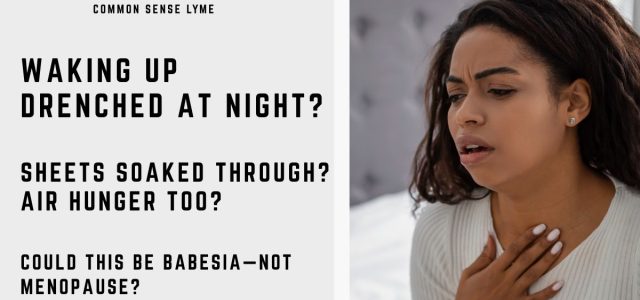
Patients are frequently told their symptoms are caused by menopause, anxiety, stress, or medications. But when night sweats are drenching, cyclical, and accompanied by fatigue or air hunger, they may reflect Babesia coinfection or Lyme-related autonomic dysfunction.
For many patients, the problem is not simply sweating—it is disruption of the nervous system’s ability to regulate body temperature during sleep.
Drenching night sweats that soak bedding—especially when they occur with air hunger, palpitations, or cyclical symptoms—are not typical of menopause or anxiety alone and may warrant evaluation for Babesia or Lyme disease.
What Causes Night Sweats in Lyme Disease?
Night sweats in Lyme disease may arise from two overlapping mechanisms: autonomic dysfunction and immune activation.
The autonomic nervous system regulates body temperature, heart rate, sweating, and sleep transitions. When neuroinflammation disrupts this system, the body may trigger inappropriate heat-dissipation responses during sleep, producing drenching sweats even without fever.
Patients may also experience:
- Heart palpitations
- Dizziness when standing
- Temperature intolerance
- Fragmented or nonrestorative sleep
These symptoms suggest broader autonomic instability rather than isolated sweating dysfunction.
Learn more about autonomic dysfunction in Lyme disease.
Babesia and Cyclical Night Sweats
In patients with Babesia coinfection, night sweats may reflect parasitic infection of red blood cells triggering immune activation similar to malaria.
The sweats are often cyclical—severe for several nights, then temporarily improving before returning again.
This pattern may correspond to the parasite’s life cycle in the bloodstream.
A 35-year-old woman described severe drenching sweats for several nights followed by brief periods of improvement. Her symptoms were initially dismissed as hormonal fluctuations.
The pattern was not random. Further evaluation ultimately led to a diagnosis of Lyme disease with Babesia coinfection.
Cyclical sweats are clinically important because they often differ from typical menopausal or anxiety-related sweating patterns.
When Night Sweats Are Misdiagnosed
A 48-year-old woman came to me after two years of waking drenched in sweat. Her gynecologist diagnosed perimenopause and prescribed hormone therapy. It did not help.
The sweats continued—cyclical, exhausting, and accompanied by crushing fatigue and shortness of breath.
When I asked about tick exposure, she remembered a camping trip years earlier. Further evaluation ultimately led to a diagnosis of Lyme disease with Babesia coinfection.
After treatment directed at both infections, her night sweats resolved completely.
Another patient, a 42-year-old man, developed drenching sweats, air hunger, and panic-like nighttime episodes. He was treated for anxiety without improvement.
His symptoms ultimately proved consistent with Babesia-associated illness and autonomic dysfunction rather than a primary psychiatric disorder.
After appropriate treatment, the sweats and nighttime episodes resolved.
Why Testing Often Misses the Diagnosis
Standard evaluations for night sweats usually focus on hormones, thyroid disease, medications, or anxiety.
Tick-borne illness is often overlooked—especially when patients do not recall a tick bite or rash.
Even when testing is ordered, Babesia may still be missed.
- Blood smears may miss low-level infection.
- Antibody tests can decline over time.
- PCR testing may fail to detect certain Babesia species.
Testing limitations can falsely reassure clinicians while symptoms persist.
Learn more about Babesia testing limitations.
The Biology Behind Drenching Sweats
Inflammatory cytokines released during infection may disrupt hypothalamic temperature regulation, creating cycles of chills, overheating, and sweating.
In Babesia infection, destruction of infected red blood cells may contribute to inflammatory responses resembling malaria-like illness.
This helps explain why hormone therapy or psychiatric treatment often fails to resolve symptoms rooted in infection or autonomic dysfunction.
Frequently Asked Questions
Can Lyme disease cause night sweats?
Yes. Lyme disease may contribute to night sweats through autonomic dysfunction. Drenching or cyclical night sweats can also occur with Babesia coinfection.
Do severe night sweats suggest Babesia?
Drenching or cyclical night sweats are commonly associated with Babesia coinfection, particularly when accompanied by air hunger, chills, fatigue, or palpitations.
How are Babesia night sweats different from menopause?
Babesia-related night sweats are often cyclical, severe, and accompanied by symptoms such as air hunger, fatigue, chills, or dizziness rather than isolated hot flashes.
Can testing miss Babesia?
Yes. Blood smears, antibody testing, and PCR tests may all fail to detect low-level infection, so clinical judgment remains important.
Can treatment help night sweats?
Many patients improve when the underlying infection and associated autonomic dysfunction are appropriately identified and treated.
Clinical Perspective
Night sweats are common and have many causes, including menopause, medications, infections, endocrine disorders, and malignancy. However, in patients with possible tick exposure, drenching or cyclical sweats accompanied by fatigue, air hunger, palpitations, dizziness, or sleep disruption should prompt consideration of Lyme disease and Babesia coinfection.
Because standard laboratory testing may miss some cases of Babesia, diagnosis often depends on recognizing the overall clinical picture—including symptom patterns, exposure history, and appropriate laboratory testing—rather than relying on a single negative test.
Clinical Takeaway
Night sweats in Lyme disease should not automatically be dismissed as menopause, stress, or anxiety.
Drenching or cyclical sweats—especially when accompanied by fatigue, air hunger, palpitations, or dizziness—may signal Babesia coinfection or autonomic dysfunction. Recognizing these patterns early may help prevent delayed diagnosis and prolonged illness.
Related Articles
Learn more about Babesia, autonomic dysfunction, and sleep-related symptoms associated with tick-borne illnesses:
Sweats May Be a Sign of Babesia
References
- Vannier E, Krause PJ. Human babesiosis. N Engl J Med. 2012;366(25):2397-2407.
- Krause PJ, Gewurz BE, Hill D, et al. Persistent and relapsing babesiosis in immunocompromised patients. Clin Infect Dis. 2008;46(3):370-376.
- Lantos PM, Rumbaugh J, Bockenstedt LK, et al. Clinical practice guidelines by the Infectious Diseases Society of America (IDSA), American Academy of Neurology (AAN), and American College of Rheumatology (ACR): 2020 Guidelines for the Prevention, Diagnosis and Treatment of Lyme Disease. Clin Infect Dis. 2021;72(1):e1-e48.
- Bonnet MH, Arand DL. Hyperarousal and insomnia: state of the science. Sleep Med Rev. 2010;14(1):9-15.
- Raj SR. Postural tachycardia syndrome (POTS). Circulation. 2013;127(23):2336-2342.
Dr. Daniel Cameron, MD, MPH
Lyme disease clinician with over 30 years of experience and past president of ILADS.
Symptoms • Testing • Coinfections • Recovery • Pediatric • Prevention