Can Lyme Disease Cause a Rash? Skin Findings, Spots, and Lesions
Lyme disease rashes can vary widely in appearance
Many Lyme rashes do not look like a bull’s-eye
Early recognition can help prevent missed diagnosis
A Lyme disease rash is often the earliest visible sign of Lyme disease, although skin symptoms vary widely and may include expanding redness, spots, patches, or skin lesions after a tick bite.
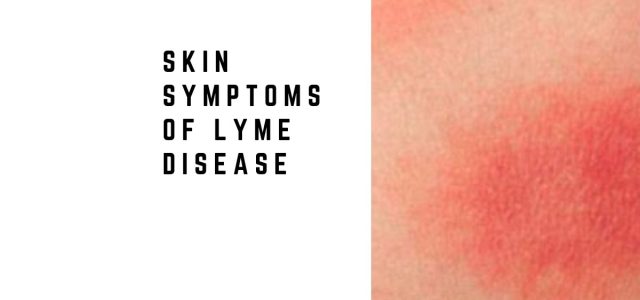
The most recognized skin manifestation of Lyme disease is erythema migrans, a rash that may expand over time. However, not all Lyme rashes have the classic bull’s-eye appearance. Some patients develop solid red patches, multiple lesions, or unusual rash patterns that can be mistaken for insect bites, cellulitis, spider bites, ringworm, or allergic reactions.
This page highlights common skin findings associated with Lyme disease and links to clinical articles discussing these findings in greater detail.
Common skin findings in Lyme disease
- Erythema migrans, or an expanding rash
- Bull’s-eye rash
- Solid red rash or patch
- Multiple erythema migrans lesions
- Lyme disease spots on the skin
- Lyme skin lesions
- Early expanding erythema migrans rash
- Skin irritation or inflammation near the bite
Some patients never notice a rash, while others develop skin findings that are easily mistaken for insect bites, allergic reactions, cellulitis, spider bites, fungal infections, or ringworm.
Because Lyme disease skin manifestations vary widely, diagnosis should not rely solely on whether the rash matches the classic bull’s-eye appearance. Patients with an early rash may also have negative blood tests because antibodies often have not yet developed. Learn more about why early Lyme disease tests can be negative.
What does a Lyme disease rash look like?
A Lyme disease rash can look different from person to person. While many people expect a classic bull’s-eye pattern, the rash is often a uniformly red or pink expanding patch. It may be round, oval, faint, or have partial central clearing. Some patients develop several expanding rashes rather than a single lesion, particularly when the infection has spread.
The rash most commonly appears near the site of the tick bite, but additional lesions may develop elsewhere on the body. An erythema migrans rash often enlarges over several days, which helps distinguish it from many uncomplicated insect bites. Because appearance varies so widely, a rash should not be dismissed simply because it does not resemble textbook photographs.
Lyme disease rash and skin manifestations
Searches for Lyme disease rash, Lyme disease skin manifestations, and Lyme skin lesions often reflect the same clinical concern: patients are trying to decide whether a skin change after a tick bite could represent early Lyme disease.
An erythema migrans rash may be round, oval, expanding, solid red, or partially cleared in the center. The rash may appear near the bite or, in some patients, in multiple areas of the body.
Because early skin signs may be subtle, patients often benefit from taking dated photographs of the rash and seeking medical evaluation if the lesion expands or is accompanied by fever, headache, fatigue, muscle aches, joint pain, or swollen lymph nodes.
Other Lyme disease skin symptoms
Although erythema migrans is the best-known skin finding, patients sometimes describe their rash as itchy, pimple-like, or consisting of small red bumps or spots. Others develop multiple expanding lesions on different parts of the body. Because Lyme disease rashes can occur almost anywhere on the body and vary considerably in appearance, the diagnosis should not rely on a single rash pattern.
Any expanding rash after possible tick exposure—particularly when accompanied by fever, fatigue, headache, or muscle aches—should prompt medical evaluation. If Lyme disease is suspected but early blood tests are negative, learn more about Lyme disease test accuracy and the limitations of early testing.
Articles about Lyme disease rash and skin lesions
Lyme disease rash without a bull’s-eye
Bad signs after a tick bite
What happens when tick mouthparts stay in the skin?
Is it too late to treat a tick bite?
Why Lyme disease rashes and skin manifestations are often missed
Many people expect the classic bull’s-eye rash when they think of Lyme disease. In reality, Lyme rashes vary greatly in appearance and may be mistaken for spider bites, cellulitis, ringworm, insect bites, or allergic reactions.
Some erythema migrans rashes are uniformly red rather than ring-shaped, while others are faint, oval, or partially cleared in the center. The rash may also be hidden beneath hair, behind the knee, under the arm, or in other areas that are not easily seen.
Because the rash can be subtle or overlooked, early Lyme disease may go unrecognized. To learn more about diagnostic challenges, see our page on Lyme disease misdiagnosis and additional discussion about why many Lyme rashes are not classic bull’s-eye lesions.
For a broader overview of symptoms affecting different body systems, see the Lyme disease symptoms guide.
Frequently Asked Questions
What are common skin findings of Lyme disease?
Common skin findings of Lyme disease include an expanding erythema migrans rash, a bull’s-eye rash, a solid red patch, multiple erythema migrans lesions, skin lesions, or irritation near the tick bite.
Does a Lyme disease rash always look like a bull’s-eye?
No. Many Lyme disease rashes do not have the classic bull’s-eye pattern. Some are solid red, oval, expanding, faint, or mistaken for other skin conditions.
Can Lyme disease cause spots or lesions on the skin?
Yes. Lyme disease may cause skin findings described as spots, patches, or lesions. One of the most important clues is that an erythema migrans rash gradually expands over time, particularly after possible tick exposure.
Can Lyme disease occur without a rash?
Yes. Some patients never notice a rash, while others may miss it because it is faint, hidden, or mistaken for another skin problem.
Does a Lyme disease rash itch?
Sometimes. A Lyme disease rash may be itchy, mildly tender, or have no symptoms at all. Because itching varies widely, it should not be used alone to determine whether a rash is caused by Lyme disease.
When should a Lyme disease rash be evaluated?
A rash after a tick bite should be evaluated promptly if it expands, persists, or occurs with symptoms such as fever, fatigue, headache, muscle aches, joint pain, or swollen lymph nodes.
Clinical Takeaway
Skin findings are among the earliest clues to Lyme disease, but the rash does not always appear in the classic form shown in textbooks.
A Lyme disease rash may be expanding, solid red, oval, faint, appear in multiple locations, or be mistaken for another skin problem. Many patients never develop the classic bull’s-eye pattern shown in textbooks.
The key clinical point is that Lyme disease skin findings should not be dismissed simply because the rash does not look like a classic bull’s-eye.
Related Articles
To learn more about Lyme disease rashes, diagnosis, testing, and related symptoms, explore these articles:
Lyme disease test accuracy
Neurologic Lyme disease
Pediatric Lyme disease
Prevention of Lyme disease
References
-
-
-
- Centers for Disease Control and Prevention. Lyme Disease Rashes. CDC. 2024.
- Centers for Disease Control and Prevention. Signs and Symptoms of Untreated Lyme Disease. CDC. 2024.
- Centers for Disease Control and Prevention. Testing and Diagnosis for Lyme Disease. CDC. 2024.
- Aucott JN, Seifter A, Rebman AW. Probable Late Lyme Disease: A Variant Manifestation of Untreated Borrelia burgdorferi Infection. BMC Infect Dis. 2012;12:173.
- Khanna S, Goebel LJ. Atypical Lyme Disease Rash: A Case Report. Cureus. 2024;16(2):e54779. doi:10.7759/cureus.54779.
-
-
Dr. Daniel Cameron, MD, MPH
Lyme disease clinician with over 30 years of experience and past president of ILADS.
Symptoms • Testing • Coinfections • Recovery • Pediatric • Prevention