Can Larval Ticks Transmit Disease? Borrelia miyamotoi Findings
Larval ticks may transmit Borrelia miyamotoi infection
Unlike Lyme disease bacteria, infected female ticks may pass the infection to offspring
Tiny larval ticks may pose a greater disease risk than previously recognized
For years, many clinicians and patients assumed larval ticks posed little infectious risk to humans because Lyme disease transmission typically occurs later in the tick life cycle.
However, newer research suggests some larval ticks may carry and transmit Borrelia miyamotoi, a relapsing fever spirochete spread by black-legged ticks.
Unlike Borrelia burgdorferi, the bacteria causing Lyme disease, infected female ticks may pass Borrelia miyamotoi directly to their offspring through vertical transmission.
Can Larval Ticks Carry Disease?
Yes. Han and colleagues found that infected female Ixodes scapularis ticks were capable of transmitting Borrelia miyamotoi to eggs and larvae at unexpectedly high rates.
The researchers examined ticks collected from white-tailed deer in:
- Maine
- New Hampshire
- Tennessee
- Wisconsin
Out of 1,263 ticks collected, 33 tested positive for Borrelia miyamotoi.
The investigators found:
- Average infection rates of 2.6% among collected ticks
- Vertical transmission from infected female ticks to eggs occurred in 90.9% of cases
- Transmission from infected eggs to larvae occurred in 84.8% of cases
These findings suggest larval ticks may occasionally transmit infection before taking their first blood meal.
How Borrelia miyamotoi Differs From Lyme Disease
Classic Lyme disease caused by Borrelia burgdorferi is usually transmitted by nymphal or adult ticks after feeding on infected animal hosts.
By contrast, Borrelia miyamotoi may be transmitted vertically from adult female ticks directly to larvae.
This difference may help explain why some Borrelia miyamotoi disease cases occur during periods when larval ticks are most active.
Why Tiny Larval Ticks May Be Overlooked
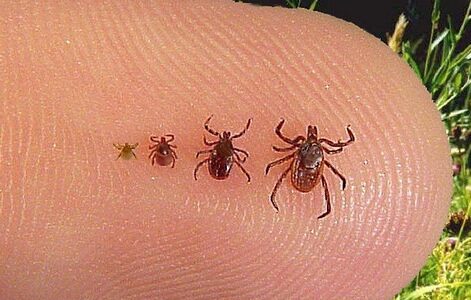
Larval ticks are extremely small and may be difficult to detect on the skin.
Many people refer to larval or nymphal black-legged ticks as “baby deer ticks” because of their extremely small size.
Because they are tiny and often feed unnoticed, larval ticks may increase the likelihood of unrecognized tick exposure.
The authors suggested larvae may pose an important epidemiologic risk because of:
- High seasonal abundance
- Tiny size
- Potential vertical transmission of infection
Patients may not recall a tick bite before developing symptoms.
Can Larval Ticks Carry Lyme Disease?
Larval ticks are generally considered less likely to transmit classic Lyme disease caused by Borrelia burgdorferi because larvae typically hatch uninfected and acquire infection after feeding on infected hosts.
However, this study highlights that other tick-borne pathogens such as Borrelia miyamotoi may behave differently.
These findings may complicate assumptions regarding which stages of the tick life cycle pose infectious risk.
Symptoms of Borrelia miyamotoi Disease
Borrelia miyamotoi disease may produce symptoms overlapping with Lyme disease or relapsing fever illnesses.
Symptoms may include:
- Fever and chills
- Headache
- Fatigue
- Muscle pain
- Relapsing symptoms
Because symptoms may overlap with other tick-borne infections, diagnosis may occasionally be delayed or missed.
Patients with Lyme disease coinfections or atypical tick-borne illnesses may require broader clinical evaluation.
Why This Study Matters
The study challenges the longstanding assumption that larval ticks pose minimal infectious risk to humans.
It also highlights how emerging tick-borne pathogens may follow different transmission pathways than classic Lyme disease.
Understanding these differences may improve prevention strategies, clinician awareness, and recognition of atypical tick-borne illnesses.
Frequently Asked Questions
Can larval ticks transmit disease?
Yes. Research suggests larval ticks may transmit Borrelia miyamotoi through vertical transmission from infected adult female ticks.
Can larval ticks carry Lyme disease?
Larval ticks are generally considered less likely to transmit classic Lyme disease caused by Borrelia burgdorferi, but they may carry other pathogens such as Borrelia miyamotoi.
What is Borrelia miyamotoi?
Borrelia miyamotoi is a relapsing fever spirochete transmitted by black-legged ticks and related to Lyme disease bacteria.
Can tiny larval ticks bite humans?
Yes. Larval ticks can bite humans and may be difficult to detect because of their extremely small size.
Are baby deer ticks dangerous?
Yes. Tiny larval or nymphal deer ticks may occasionally carry infectious pathogens and can be difficult to detect on the skin.
Why are larval ticks difficult to notice?
Larval ticks are extremely small and may feed unnoticed, increasing the chance of unrecognized tick exposure.
Clinical Takeaway
Larval ticks may pose a greater infectious risk than previously recognized, particularly for pathogens such as Borrelia miyamotoi capable of vertical transmission.
Because larval ticks are extremely small and often overlooked, patients may not recognize tick exposure before developing symptoms.
Emerging research suggests clinicians may need to consider atypical tick-borne infections even when exposure involves tiny larval ticks previously thought to pose minimal risk.
Related Articles
These related articles explore Borrelia miyamotoi disease, larval tick transmission, coinfections, and emerging tick-borne infection risks.
Blood Smear Not Reliable in Diagnosing Borrelia miyamotoi Disease
Doctors Face Challenges in Diagnosing Borrelia miyamotoi
Larval Ticks May Be a Threat After All
Move Over Nymphal Ticks, Larval Deer Ticks Now Pose a Threat
Prevention of Lyme Disease
References
- Han S, Lubelczyk C, Hickling GJ, Belperron AA, Bockenstedt LK, Tsao JI. Vertical transmission rates of Borrelia miyamotoi in Ixodes scapularis collected from white-tailed deer. Ticks Tick Borne Dis. 2019;10(3):682-689.
Dr. Daniel Cameron, MD, MPH
Lyme disease clinician with over 30 years of experience and past president of ILADS.
Symptoms • Testing • Coinfections • Recovery • Pediatric • Prevention