Babesia Autonomic Dysfunction: Air Hunger, Breathing Changes, and Severe Symptoms
Babesia autonomic dysfunction causes some of the most severe and frightening symptoms in tick-borne illness. Air hunger, crushing fatigue, night sweats, and a terrifying sense of impending collapse stem from disruption of the autonomic nervous system—the body’s automatic control system for breathing, heart rate, and temperature regulation.
Babesia autonomic dysfunction often presents with air hunger, fatigue, and neurologic symptoms even when oxygen levels and imaging are normal.
Understanding why Babesia autonomic dysfunction produces such severe symptoms—even when standard tests appear normal—is critical for proper diagnosis and treatment.
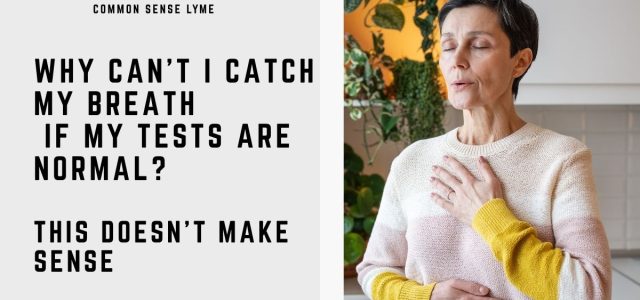
When You Can’t Catch Your Breath but Tests Are Normal
Note: Patient details have been modified to protect privacy. This case represents a composite of typical presentations observed in clinical practice.
A 45-year-old man presented to the ER for the third time in two weeks with overwhelming air hunger. His breathing felt manual rather than automatic. He was yawning constantly, feeling chest pressure, and convinced something was catastrophically wrong.
Each time, his oxygen saturation was normal. Chest X-ray was clear. He was told he was having panic attacks.
But the episodes kept happening—often without emotional triggers, frequently during exertion. He had also developed drenching night sweats, profound fatigue, and dizziness when standing.
A clinician took a different approach. History revealed a tick bite three months earlier. Testing—initially overlooked—came back positive. Treatment began, and over several weeks, the air hunger episodes decreased.
What changed was recognizing that this co-infection can cause severe respiratory and autonomic symptoms even when standard tests appear completely normal.
Understanding Babesia Autonomic Dysfunction
Babesia is a malaria-like parasitic infection that invades red blood cells and is one of several tick-borne infections that can trigger autonomic dysfunction, disrupting the body’s automatic regulation systems.
While anemia from red blood cell destruction can occur, the most distressing symptoms often result from disruption of the nervous system that normally controls automatic bodily functions.
The autonomic nervous system regulates breathing, heart rate, blood pressure, temperature, and other vital functions without conscious effort. When this infection disrupts the system, patients experience symptoms that feel life-threatening even when objective measures appear normal.
These patterns reflect broader persistent Lyme disease mechanisms, where autonomic and immune systems remain dysregulated after infection.
How Babesia Autonomic Dysfunction Affects the Body
Air hunger – Inability to get a satisfying breath, repeated yawning, chest tightness. Breathing feels manual rather than automatic.
Sense of impending collapse – A powerful feeling that something is catastrophically wrong despite stable vital signs.
Crushing fatigue – Exhaustion disproportionate to exertion, reflecting dysregulated energy systems.
Autonomic instability – Palpitations, dizziness when standing, temperature dysregulation.
Night sweats – Drenching sweats that soak bedding, caused by disrupted temperature control.
Many patients report that these symptoms feel more severe than Lyme disease itself. The intensity is real—and reflects physiologic dysregulation.
Why Babesia Disrupts Breathing Control
Air hunger from Babesia autonomic dysfunction is not respiratory failure—it is dysregulation of breathing control.
Normally, breathing is automatic. The brainstem monitors carbon dioxide and oxygen, adjusting breathing without conscious effort.
In this infection, autonomic regulation becomes impaired, producing altered carbon dioxide sensing and disrupted respiratory pacing where breathing feels manual.
The disconnect between how sick patients feel and what tests show is destabilizing. Oxygen saturation is often normal, imaging unremarkable, and lung exams clear—yet patients feel as though their breathing system has failed.
Standard tests measure gas exchange—not autonomic regulation.
This is not simply anxiety—it reflects physiologic autonomic dysregulation.
When air hunger occurs alongside night sweats, fatigue, and orthostatic symptoms, clinicians should consider Babesia rather than primary respiratory disease.
What Actually Helps
While symptoms of Babesia autonomic dysfunction can be terrifying, most patients are not in immediate danger—even when it feels that way.
Severe symptoms warrant comprehensive evaluation and should never be dismissed.
When this infection is accurately identified, antimicrobial treatment targeting the parasite can reduce symptom severity over weeks to months. Improvement is typically gradual.
Co-infections are common and may require concurrent treatment.
Supportive care may include hydration, pacing, and gradual reconditioning.
As one patient described: “Once I knew this feeling had a name and a cause, it stopped controlling me.”
Why These Symptoms Are Often Missed
Standard testing has significant limitations. Antibody tests may be negative even when infection is present. Direct parasite detection requires specific timing and expertise.
When air hunger, night sweats, and autonomic symptoms appear together, clinicians familiar with tick-borne illness consider Babesia even when initial testing is negative.
Patients may be told symptoms are anxiety-related, but these symptoms reflect physiologic dysfunction—not psychological distress.
With recognition and appropriate care, many patients improve as autonomic function gradually recovers.
Frequently Asked Questions
What is Babesia autonomic dysfunction?
It occurs when parasitic infection disrupts the autonomic nervous system—the system controlling automatic functions like breathing, heart rate, and temperature regulation.
Why does Babesia cause air hunger if oxygen levels are normal?
Air hunger reflects dysregulated breathing control—not low oxygen levels.
Can symptoms be severe without anemia?
Yes. Autonomic disruption alone can produce severe symptoms.
How is this different from panic attacks?
Symptoms often occur without emotional triggers and are associated with physical patterns like night sweats and orthostatic intolerance.
How is Babesia diagnosed?
Diagnosis combines testing and clinical assessment. No single test is fully reliable.
Can Babesia occur without Lyme disease?
Yes, though co-infection is common.
References
- CDC. Babesiosis.
- CDC. Clinical Care of Babesiosis.
- Vannier E, Krause PJ. Human Babesiosis. NEJM.
- Raj SR. Postural Tachycardia Syndrome. Circulation.
Related Reading
Dr. Daniel Cameron, MD, MPH
Lyme disease clinician with over 30 years of experience and past president of ILADS.
Symptoms • Testing • Coinfections • Recovery • Pediatric • Prevention

Hi,
Does Babesia linger and have flare ups even after treatment?
Thank you
i have the same question too.
Absolutely. Not enough research so we use ant malarials. There are quite a few of us who will be treating Babesia for rest of our lives.
Babesia can be persistent in some patients, and symptoms may recur or fluctuate after treatment. This can reflect incomplete clearance, immune factors, or other overlapping conditions. Ongoing or returning symptoms should be evaluated individually rather than assumed to be a flare.
I’ve had chronic air hunger for 8 months. PFT normal with no bronchiodiolator response, endoscopy normal, PPI trial do nothing, CBC/Ferritin blood panels healthy, essentially all diseases have been ruled out with heart and lungs. Could I have babesia? I have really no other symptoms maybe some mild fatigue every so often. I just have this unbearable air hunger which I do not believe is anxiety or breathing pattern at all if I’m being totally honest. I’m 5’9” 149lbs male who is active and fit (the air hunger has made this harder), however I still regularly workout and am able to maintain my physical health.
Yes—Babesia can cause persistent air hunger, sometimes with minimal other symptoms and normal heart and lung testing. It’s reasonable to discuss targeted Babesia testing with a clinician experienced in tick-borne disease, especially when standard evaluations are unrevealing.
I was diagnosed with Lyme in 2005, but I was very sick for two years prior to getting a diagnosis. I’ve had three LLMDs, and the third told me I had three co-infections: babesia, erhrlichiosis, and mycoplasma pneumonia. That was in 2009, and I went into remission at that time. I’ve been so much better over the years, but I still have to pace myself because of fatigue. I can literally do pretty much any activity I want to, but I pay for it for days. I usually don’t feel the fatigue for hours after exercising, and sometimes it’s the next day. Early on in 2003, I had air hunger, and I still have it on occasion. Sometimes it is painful to take a deep breath. Could it be that I still have untreated babesia?
Here’s a concise, safe response you can use:
—
Thank you for sharing this—many patients describe a similar pattern of improvement with ongoing limits like delayed fatigue and occasional symptoms such as air hunger.
I can’t provide individual medical advice here, but symptoms like fatigue and shortness of breath can have multiple causes over time. In some cases, conditions like Babesia infection may be part of the discussion, while in others, lingering or overlapping factors need to be considered.
A careful, individualized evaluation can help sort out what’s contributing now and what next steps make sense.