Night Sweats and Lyme Disease: Why You Wake Up Drenched at Night
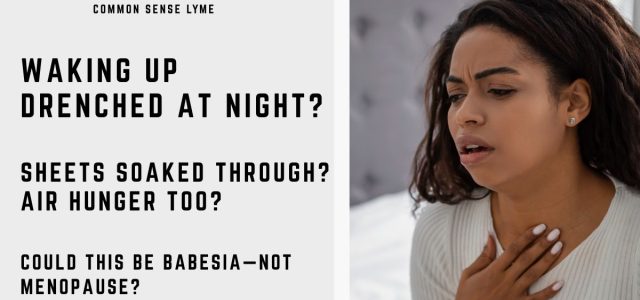
“I wake up drenched every night.”
Night sweats in Lyme disease are often dismissed—but they can be one of the most important warning signs of tick-borne illness.
Patients are told it’s menopause, anxiety, or medications. But when night sweats are drenching, cyclical, and accompanied by crushing fatigue or air hunger, they may reflect autonomic dysfunction or Babesia coinfection.
“The sheets are soaked through.”
“My doctor says it’s just menopause.”
Night sweats in Lyme disease don’t fit into neat diagnostic boxes. They’re blamed on hormones, anxiety, or medications—anything except infection.
Yet for many patients with Lyme disease or Babesia coinfection, night sweats represent autonomic nervous system dysregulation or active parasitic infection disrupting temperature control.
When night sweats are drenching, cyclical, and accompanied by fatigue or air hunger, they demand evaluation—not reassurance that “it’s normal.”
What Are Night Sweats in Lyme Disease?
Night sweats are episodes of excessive sweating during sleep severe enough to soak clothing or bedding. In Lyme disease, night sweats often result from autonomic dysfunction—disruption of the nervous system that controls temperature regulation, heart rate, and sweating responses.
Normal sleep depends on precise temperature control. The body cools slightly during sleep through coordinated autonomic signaling. When this system becomes dysregulated by neuroinflammation or infection, the body may activate heat-dissipation responses inappropriately, producing drenching sweats even in cool environments and without fever.
Night sweats in Lyme disease often occur alongside other autonomic symptoms including heart palpitations, dizziness when standing, temperature intolerance, and disrupted sleep. These symptoms reflect widespread autonomic instability rather than isolated sweating dysfunction.
In patients with Babesia coinfection, night sweats may also reflect parasitic infection of red blood cells triggering immune activation similar to malaria. The sweats may be cyclical—severe for several nights, then calm, then returning—matching the parasite’s life cycle in the bloodstream.
Night Sweats Dismissed as Menopause
A 48-year-old woman came to me after two years of waking drenched in sweat. Her gynecologist diagnosed perimenopause and prescribed hormone therapy. It didn’t help.
The sweats continued—cyclical, exhausting, accompanied by crushing fatigue and shortness of breath that didn’t fit a hormonal pattern.
When I asked about tick exposure, she remembered a camping trip years earlier. Testing revealed Lyme disease and Babesia coinfection.
After treatment targeting both infections, her night sweats resolved completely—something hormone therapy never achieved.
This pattern repeats frequently. Women in midlife are often diagnosed with menopause without considering infectious causes, creating a diagnostic blind spot.
Night Sweats Blamed on Anxiety
A 42-year-old man presented with months of drenching night sweats, air hunger, and panic-like episodes during sleep.
He was treated for anxiety. Nothing improved.
His symptoms weren’t anxiety—they were Babesia-related autonomic dysfunction.
The night sweats reflected disrupted temperature control. The air hunger reflected impaired oxygen delivery. The “panic” reflected autonomic instability.
After treatment for Babesia, his symptoms resolved.
What changed wasn’t his mental health—it was recognition of an underlying infection.
Night Sweats That Cycle
A 35-year-old woman described a pattern: severe night sweats for several nights, then a period of calm, then recurrence.
This was dismissed as stress or hormonal fluctuation.
The pattern wasn’t random—it reflected Babesia’s red blood cell life cycle.
As parasites multiply and rupture cells, immune activation increases, triggering temperature dysregulation and sweating. When parasite levels drop, symptoms temporarily improve before returning.
This cyclical pattern is clinically important.
Hormonal sweats may be random or cycle monthly. Anxiety-driven sweats are unpredictable. But Babesia-related sweats often follow 4–7 day cycles.
Why Night Sweats in Lyme Disease Are Dismissed
Night sweats are common and often attributed to benign causes such as menopause, thyroid disease, medications, or anxiety.
Tick-borne illness is rarely considered—especially if patients don’t recall a tick bite.
Standard evaluations typically focus on hormones and thyroid function. Babesia and Lyme disease are often not included unless specifically suspected.
Even when testing is done, results may be falsely negative.
- Blood smears may miss infection
- Antibody tests can decline over time
- PCR may miss low-level infection
Testing limitations can falsely reassure clinicians while symptoms persist.
The Biology of Night Sweats in Tick-Borne Illness
Night sweats arise from two overlapping mechanisms: autonomic dysregulation and immune activation.
Neuroinflammation disrupts communication between the brain and nervous system, leading to inappropriate activation of temperature regulation responses.
In Babesia infection, red blood cell destruction triggers inflammatory responses that mimic malaria—causing fever, chills, and cyclical sweating.
Inflammatory cytokines further disrupt hypothalamic temperature control, creating feedback loops that sustain symptoms.
This explains why hormone therapy or psychiatric treatment does not resolve these symptoms.
Clinical Takeaways
- Drenching night sweats may signal Babesia or Lyme-related autonomic dysfunction
- Cyclical patterns are an important diagnostic clue
- Testing may miss infection
- Symptoms are often misattributed to menopause or anxiety
- Treatment requires addressing infection—not just symptoms
Frequently Asked Questions
What causes night sweats in Lyme disease?
Autonomic dysfunction or Babesia coinfection can disrupt temperature regulation and trigger immune responses.
How do I know if it’s Babesia or menopause?
Babesia sweats often cycle, are severe, and don’t respond to hormone therapy.
Can Lyme alone cause night sweats?
Yes, through autonomic dysfunction—but severe cyclical sweats suggest Babesia.
Do night sweats mean active infection?
Not always—but worsening symptoms may indicate ongoing infection or coinfection.
Will treatment help?
Many patients improve with appropriate antimicrobial and antiparasitic treatment.
Related Reading
Night Sweats and Autonomic Dysfunction
Babesia and Night Sweats
Diagnosis and Misdiagnosis
Related Symptoms
Dr. Daniel Cameron, MD, MPH
Lyme disease clinician with over 30 years of experience and past president of ILADS.
Symptoms • Testing • Coinfections • Recovery • Pediatric • Prevention