Contact us at 914-666-4665

Dr. Daniel Cameron

Board-certified physician with 38+ years specializing in Lyme disease and tick-borne illnesses. Past President of ILADS (International Lyme and Associated Diseases Society) and first author of ILADS treatment guidelines. Dr. Cameron operates a solo practice focused on patient advocacy and evidence-based Lyme disease treatment. He is the author of 1,100+ articles spanning diagnosis, treatment, co-infections, and recovery from tick-borne illnesses. His work challenges conventional approaches that often leave patients undiagnosed or undertreated, emphasizing clinical judgment over rigid adherence to testing criteria that frequently produce false negatives.

Dr. Daniel Cameron
tick, deer tick, powassan virus, tick-borne disease

Powassan Virus in Maine: Prevalence and Tick-Borne Infection Risk

Powassan Virus in Maine: Prevalence and Tick-Borne Infection Risk Powassan virus in Maine is a growing concern. Although rare, the virus can be severe, with a fatality rate of approximately 10%. In 2013, a Maine woman died from the disease, and by 2017, 10 residents had been infected. An increase in cases of Powassan virus […]

Powassan Virus in Maine: Prevalence and Tick-Borne Infection Risk Read More »
fatal Lyme carditis

Fatal Lyme Carditis: When Negative Tests Lead to Missed Diagnosi

Fatal Lyme Carditis: When Negative Tests Lead to Missed Diagnosis Fatal Lyme carditis can occur when Lyme disease is missed or diagnosis is delayed. In this case, a 17-year-old from New York died after weeks of flu-like symptoms—despite multiple medical evaluations and negative initial testing. In the summer of 2013, a young man from Poughkeepsie,

Fatal Lyme Carditis: When Negative Tests Lead to Missed Diagnosi Read More »

Powassan virus polio

Powassan Virus Polio-Like Illness: First Case Report

Powassan Virus Polio-Like Illness: First Case Report Powassan virus polio-like illness is rare but serious, as this case report demonstrates. While vacationing in rural Newfoundland, a man developed nausea, vomiting, abdominal pain, double vision (diplopia), and impaired coordination (ataxia). He was admitted to a hospital where his symptoms worsened. The man became febrile and experienced

Powassan Virus Polio-Like Illness: First Case Report Read More »

The third rail of Lyme disease: how Borrelia bacteria persist

Borrelia Persistence: The “Third Rail” of Lyme Disease Borrelia persistence remains one of the most debated and controversial questions in Lyme disease. A growing number of researchers are now examining whether the bacteria can remain active after standard antibiotic treatment in patients who continue to experience symptoms. The working group, led by Dr. John Aucott

The third rail of Lyme disease: how Borrelia bacteria persist Read More »

When Children Are Told They Don’t Have Lyme Disease: Medically Unexplained Symptoms

When Children Are Told They Don’t Have Lyme Disease: Medically Unexplained Symptoms When children are told they don’t have Lyme disease, their symptoms are often labeled as medically unexplained. This can leave families without clear answers while symptoms persist. From the Archives (2019) This article reflects clinical observations from a period when families of children

When Children Are Told They Don’t Have Lyme Disease: Medically Unexplained Symptoms Read More »

Lyme disease consultations common in France

Lyme Disease Consultations Common in France Lyme disease consultations are common in France, but not all patients are ultimately diagnosed with Lyme borreliosis. According to Haddad and colleagues, more than 1,000 individuals consulted one of three French centers for presumed Lyme borreliosis. However, only about 10% received a final diagnosis of Lyme disease. “The most

Lyme disease consultations common in France Read More »

babesia early lyme

Babesia Early Lyme: When Co-infection Appears During Treatment

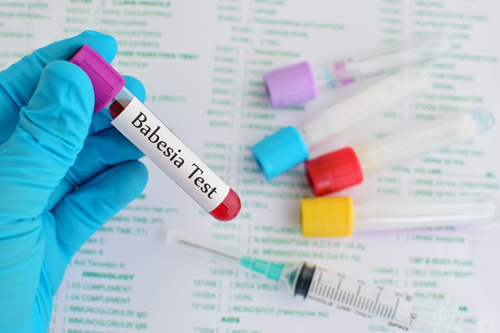
Babesia Early Lyme: When Co-infection Appears During Treatment Babesia early Lyme co-infection is more common than many clinicians realize. In a study of 52 patients with early Lyme disease, 4 (7.7%) had convincing evidence of Babesia microti co-infection, writes Wormser. These patients, along with 2 additional suspected cases, highlight why Babesia should be considered during

Babesia Early Lyme: When Co-infection Appears During Treatment Read More »

lab, medical, blood vials

9 cases of children in France with Lyme neuroborreliosis

Lyme Neuroborreliosis in Children: 9 Cases and Key Symptoms Lyme neuroborreliosis in children remains uncommon but clinically important. “The exact prevalence of Lyme neuroborreliosis in France is unknown because reporting is not required,” Guet-Revillet explains. “Nevertheless, the condition appears to be rare.” Some children present with neurologic symptoms that resemble viral infections, delaying diagnosis. The

9 cases of children in France with Lyme neuroborreliosis Read More »

boy, child, sitting, alone

Lyme pseudothrombophlebitis in a young child

Lyme Pseudothrombophlebitis in a Young Child: A Missed Diagnosis Lyme pseudothrombophlebitis in a young child can mimic more common conditions such as muscle injury or deep vein thrombosis (DVT), leading to delayed diagnosis. The pain had been ongoing for one week. “He described the pain as throbbing, worse with movement, and improved with rest,” writes

Lyme pseudothrombophlebitis in a young child Read More »