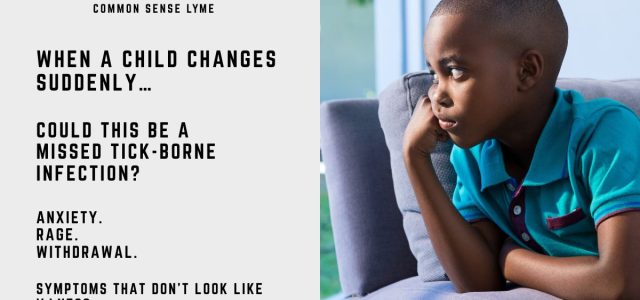
Babesia odocoilei and Bartonella in Children With Severe Psychiatric Symptoms
Babesia and Bartonella may affect the nervous system
Children developed severe psychiatric and autonomic symptoms
Advanced testing identified multiple co-infections
Babesia infection and Bartonella co-infections in children may be more common than previously recognized.
In some pediatric patients, these infections have been associated with severe neuropsychiatric symptoms, autonomic dysfunction, developmental regression, anxiety, hallucinations, and behavioral deterioration.
Researchers using advanced molecular testing identified multiple co-infections in children who had remained undiagnosed for years.
For a broader overview, see tick-borne coinfections.
Advanced Testing Detected Babesia and Bartonella Co-Infections
“Droplet digital PCR assays (ddPCRs) were developed and validated in our laboratory to enhance the sensitivity of detection of Babesia, Bartonella and Borrelia spp. DNA in animal and human patient specimens,” according to Maggi and colleagues from the College of Veterinary Medicine at North Carolina State University.
Investigators used digital PCR assays with enhanced sensitivity to detect B. odocoilei DNA in seven research participants—six were also co-infected with one or more Bartonella species.
The seven participants lived in the United States and Mexico and had reportedly been ill for periods ranging from several days to 14 years.
“Fatigue was the most frequently reported symptom, followed by memory loss, headache, irritability/rage/aggression and poor appetite,” the authors stated.
These findings suggest that Babesia odocoilei and Bartonella co-infections may be associated with a broad range of neuropsychiatric symptoms, including cognitive impairment, anxiety, behavioral deterioration, irritability, rage, and aggression.
Babesia odocoilei is a lesser-known Babesia species that may not be identified through standard Babesia testing, which may contribute to delayed diagnosis.
Notably, the questionnaire used in the study did not include night sweats or air hunger, symptoms frequently associated with Babesia infection.
Babesia and Bartonella in a 4-Year-Old Boy
At age four, a previously healthy, high-functioning boy suddenly developed symptoms consistent with Pediatric Acute Onset Neuropsychiatric Syndrome (PANS).
He experienced rapid speech regression involving both receptive and expressive language, along with anxiety, sleep disturbances, and major behavioral changes.
Additional symptoms included impaired memory, irritability, rage, aggression, poor appetite, and muscle weakness.
For the next 5½ years, the boy was evaluated by at least 12 specialists and treated with clonazepam and clonidine.
“At the time of study entry, ‘undiagnosed brain disease of 5 years and 10 months duration’ was listed as a working diagnosis. The boy’s condition deteriorated to the point where he was almost entirely non-verbal,” the authors stated.
According to the child’s father, the boy became physically weak, severely anxious, and functionally impaired.
Testing later confirmed infection with both Babesia odocoilei and Bartonella henselae.
Tick-Borne Infections in a Suicidal 9-Year-Old Girl
A 9-year-old girl reportedly exhibited symptoms suggesting autonomic nervous system dysfunction and severe neuropsychiatric illness, including suicidal and homicidal thoughts.
She had been diagnosed with oppositional defiant disorder (ODD) and experienced anxiety, severe depression, headaches, nightmares, hallucinations, tachycardia, recurrent urinary infections, and behavioral instability.
“She subsequently attempted suicide and over the ensuing years developed tachycardia, repeated urinary infections, homicidal thoughts and cutaneous stretch marks,” the authors stated.
The patient also reported cat and dog bites during the same year she developed psychiatric symptoms.
Testing later revealed infection with Babesia odocoilei, Babesia quintana, and Bartonella henselae.
Toddler Develops Night Sweats, Knee Pain, and Sleep Problems
A 2½-year-old girl developed a bull’s-eye rash after playing in her parents’ backyard in Oklahoma.
Over the following months, she developed night sweats, knee pain, nightmares, and sleep apnea symptoms.
Despite antibiotic treatment, symptoms reportedly persisted for years.
According to her father, she continued to experience significant night sweats, knee pain, nightmares, and abnormal nighttime breathing.
Testing revealed infection with Babesia odocoilei, Bartonella henselae, and Bartonella quintana.
The authors did not report treatment outcomes for the study participants.
Why Babesia and Bartonella Co-Infections May Be Missed
Babesia and Bartonella symptoms may overlap with psychiatric, neurologic, autoimmune, developmental, or autonomic disorders.
Children may undergo years of psychiatric or neurologic evaluations before tick-borne infections are considered.
Standard testing may also fail to detect less common species such as Babesia odocoilei.
This overlap contributes to Lyme disease misdiagnosis and delayed treatment.
What This Research Suggests
The investigators concluded:
- “Using a combination of different molecular diagnostic approaches, infection with Babesia odocoilei was confirmed in seven people suffering chronic non-specific symptoms, of whom six were co-infected with one or more Bartonella species.”
- “We conclude that infection with Babesia odocoilei is more frequent than previously documented and can occur in association with co-infection with Bartonella spp.”
Research involving Babesia odocoilei in humans remains limited, and additional studies are needed to better understand transmission, diagnosis, and long-term outcomes.
Frequently Asked Questions
Can Babesia and Bartonella cause psychiatric symptoms in children?
Yes. Babesia Bartonella co-infections have been associated with anxiety, rage, depression, hallucinations, developmental regression, and suicidal thoughts in some children.
Can Babesia odocoilei and Bartonella cause irritability or rage?
In this study, irritability, rage, and aggression were among the symptoms reported by some children with Babesia odocoilei and Bartonella co-infections. Additional research is needed to better understand these associations.
What is Babesia odocoilei?
Babesia odocoilei is a lesser-known Babesia species that may not be detected through standard testing methods.
Why are these infections difficult to diagnose?
Symptoms overlap with psychiatric, neurologic, developmental, and autonomic disorders, while standard testing may miss some infections.
Can tick-borne infections mimic psychiatric illness?
Yes. Some tick-borne infections may present with behavioral, cognitive, autonomic, or psychiatric symptoms.
Did the study describe treatment outcomes?
No. The authors did not provide detailed treatment outcomes for the patients described in the study.
Important Study Limitations
This report describes a small number of patients and cannot establish that Babesia odocoilei or Bartonella directly caused the psychiatric, behavioral, cognitive, or autonomic symptoms.
Additional studies will be needed to confirm these observations, determine how frequently these associations occur, and better understand the underlying biologic mechanisms.
Clinical Takeaway
Babesia and Bartonella co-infections may contribute to severe neuropsychiatric and autonomic symptoms in children.
Some pediatric patients remain undiagnosed for years despite extensive neurologic and psychiatric evaluations.
I have seen children with persistent behavioral, cognitive, autonomic, and sleep-related symptoms whose tick-borne infections were not initially recognized.
Although additional research is needed, clinicians should consider Babesia odocoilei, Bartonella, and other tick-borne infections in children with unexplained psychiatric, behavioral, cognitive, autonomic, developmental, or neurocognitive symptoms, particularly when standard evaluations fail to provide answers.
Related Articles
Bartonella Associated With Psychiatric Symptoms
Neurologic Complications of Babesia
Autonomic Dysfunction in Lyme Disease
Pediatric Lyme Disease
Lyme Disease Symptoms Guide
References
- Maggi RG, Calchi AC, Moore CO, Kingston E, Breitschwerdt EB. Human Babesia odocoilei and Bartonella spp. co-infections in the Americas. Parasit Vectors. 2024;17(1):302.
Dr. Daniel Cameron, MD, MPH
Lyme disease clinician with over 30 years of experience and past president of ILADS.
Symptoms • Testing • Coinfections • Recovery • Pediatric • Prevention


I am suffering from what is called PTLDS. My left knee cartilage has designigrated to the point of needing a knee replacement. My right eye is quite irritated and have had frequent eye appointments for uveitis, irritation, etc…I had been dx with having ehrlichiosis and treated, Now what can been done for the residual issues? I am afraid of further deteriation.
I have patients who degenerative joint disease and a persistent tick borne infection no responding to treatment for Ehrlichia. I have had to have them work with an orthopedist and be retreated for Lyme. The knee is still challenging
Hello, dr. Cameron,
I would like to ask do you know if these children improved with treatment? I have two children 7 and 10 years old with Babesia and Lyme probably for a long time, withsome neuro-psychiatric symptoms, starting now treatment Malarone+Azithromycine now. Soon we will start treating also the Lyme. What do you think in your experience do children can recover with prolonged treatment? Do they have the chance to have normal life?
Thank you!
I have seen children improve, sometimes significantly. Recovery is often gradual, but many return to school, activities, and a full life over time.