Lyme Carditis and Complete Heart Block in a 26-Year-Old Man
Complete heart block from Lyme disease can deteriorate rapidly even after antibiotics begin. A 26-year-old man progressed from 2:1 AV block to complete block with asystole within 24 hours of starting treatment, requiring emergency pacemaker placement. His complete recovery and pacemaker removal after 19 days demonstrates the reversible nature of Lyme carditis when managed appropriately.
Initial Emergency Presentation
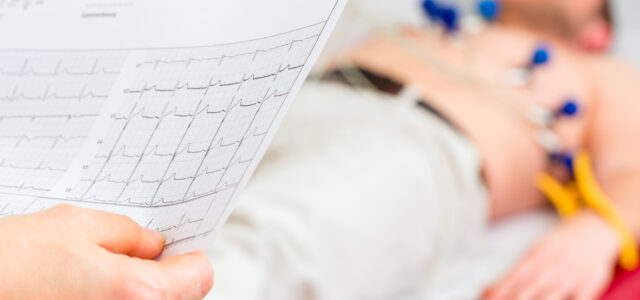
The patient was evaluated in the emergency room with presyncope (lightheadedness, muscle weakness) and worsening fatigue. Telemetry monitoring demonstrated a “2:1 AV block alternating with complete heart block and a junctional escape rhythm in the range of 30 beats per minute,” according to Chaudhry and colleagues from the Department of Cardiology and Electrophysiology, Aultman Hospital, Ohio.
This cardiac presentation was immediately life-threatening. 2:1 AV block means only half of the electrical signals from the atria were reaching the ventricles. Complete heart block means no signals were getting through at all. The junctional escape rhythm at 30 beats per minute was the only thing preventing cardiac arrest — a backup pacemaker deep in the heart generating just enough electrical activity to maintain minimal cardiac output.
The alternation between these rhythms showed unstable electrical activity that could deteriorate further at any moment.
Empiric Treatment Initiated
Doctors suspected Lyme disease and started intravenous ceftriaxone. This was the correct approach — empiric antibiotics for suspected Lyme carditis rather than waiting for serologic confirmation.
But the patient’s course demonstrates that even appropriate treatment doesn’t guarantee immediate stabilization.
Deterioration Despite Antibiotics
Within 24 hours the man’s condition had worsened. “Twenty-four hours after admission, he had loss of junctional escape with underlying complete heart block and asystole with near syncope,” describes Chaudhry.
This progression is critical to understand. The patient was on appropriate antibiotics. IV ceftriaxone was killing the spirochetes. Yet he got worse, not better.
Loss of junctional escape means the backup pacemaker failed. With complete heart block and no escape rhythm, the heart stopped generating electrical activity entirely — asystole. The patient nearly passed out from inadequate blood flow to the brain.
This near-cardiac arrest occurred while on antibiotics for Lyme disease. The treatment was correct, but the cardiac damage had already progressed to the point where spirochetal die-off and inflammation couldn’t resolve quickly enough to prevent life-threatening arrhythmias.
Emergency Pacemaker Placement
The man required a pacemaker. “Emergent right subclavian access was obtained for temporary pacing and placement of an active fixation permanent pacemaker lead,” explains Chaudhry.
This describes placement of what’s called a temporary permanent pacemaker — using permanent pacemaker hardware but as an external device. The lead (wire) was actively fixed to the heart muscle, but the generator remained outside the body, allowing it to be removed once heart function recovered.
This approach gave the patient the stability of a permanent pacemaker without committing a 26-year-old to permanent hardware if his conduction recovered with antibiotic treatment.
Diagnostic Confirmation
Serologic tests were positive by ELISA and confirmed with the Western Blot IgM.
The positive IgM with negative IgG (not mentioned, but implied by the emphasis on IgM) suggests early disseminated infection. Lyme carditis typically develops weeks to months after infection, often before the full IgG antibody response develops.
Understanding the Pathology
“Lyme carditis is a dreaded complication of disseminated Lyme disease and is caused by direct cardiac invasion by spirochetes,” Chaudhry states.
The authors summarize the underlying pathology: “There is initially a transmural inflammation with macrophages and neutrophils followed by a band-like appearance of lymphocytes. Interstitial fibrosis, as well as small and large vessel vasculitis, pericarditis, myocarditis, acute coronary syndromes, and coronary artery aneurysms can potentially occur.”
This description reveals the complexity of cardiac Lyme involvement:
- Transmural inflammation: Inflammation extends through the full thickness of the heart wall
- Multiple immune cells: Acute and chronic inflammatory responses
- Interstitial fibrosis: Potential scar tissue formation
- Vasculitis: Blood vessel inflammation
- Pericarditis and myocarditis: Inflammation of heart structures
- Coronary involvement: Rare but serious complications
The breadth of potential cardiac involvement explains why Lyme disease can cause diverse cardiac manifestations.
Recovery and Pacemaker Removal
The placement of an external pacemaker enabled the patient to be discharged home after 12 days while continuing IV antibiotics. His pacemaker was removed at day 19.
This case demonstrates that even severe conduction abnormalities can resolve with appropriate treatment.
Why Worsening Occurred Despite Treatment
Initial deterioration may reflect inflammatory responses such as a Jarisch-Herxheimer reaction or progression of existing cardiac inflammation.
This underscores the importance of continued cardiac monitoring early in treatment.
Clinical Perspective
This case highlights the potential severity of Lyme carditis and the need for careful monitoring even after treatment begins.
Temporary pacing strategies can provide life-saving support while allowing time for recovery.
In young patients, avoiding permanent pacemaker placement when possible is an important consideration.
Frequently Asked Questions
Can complete heart block from Lyme disease be reversed?
Yes. Many patients recover completely with appropriate antibiotic treatment.
Why might patients worsen after starting antibiotics?
Inflammatory responses or progression of existing disease may temporarily worsen symptoms.
Do all patients need permanent pacemakers?
No. Temporary pacing is often sufficient while the heart recovers.
How long does recovery take?
Recovery typically occurs over days to weeks.
Can Lyme carditis be life-threatening?
Yes. Severe conduction abnormalities can lead to life-threatening arrhythmias.
Should patients be hospitalized?
Patients with significant heart block should be monitored in a hospital setting.
What is a temporary permanent pacemaker?
A pacing system using permanent leads with an external generator, allowing removal after recovery.
Related Reading:
Lyme Carditis: When Heart Symptoms Can’t Wait
Young Adults and Lyme Carditis: Why Males Are at Highest Risk
Lyme Carditis May Require Temporary Permanent Pacemaker
Can You Die from Lyme Disease? Fatal Carditis Cases
Lyme Disease Cardiac Problems: 19 Documented Complications
Lyme Carditis Symptoms: 5 Critical Warning Signs
References:
- Chaudhry MA, Satti SD, Friedlander IR. Lyme carditis with complete heart block: management with an external pacemaker. Clin Case Rep. 2017;5(6):915-918.
Dr. Daniel Cameron, MD, MPH
Lyme disease clinician with over 30 years of experience and past president of ILADS.
Symptoms • Testing • Coinfections • Recovery • Pediatric • Prevention

I have the same thing…..pacemaker in for a moth now…..they called it AV node dysfunction
I had complained of palpitations for years, EKG, Echo, Holter all normal. Then thought I was having a heart attack but it was Supraventricular tachycardia, had an ablation and spent 6 days in the ICU. Because I didn’t have a fever they ignored the fact I said I had Lyme but wasn’t CDC positive anymore. Now I need another ablation my heart is fluttering and keeping me up at night……I need a real doctor!
There is not enough known about cardiac manifestations of Lyme disease. I would be reasonable to see a doctor with experience treating Lyme disease as part of your evaluation particularly given you apparently had Lyme disease in the past.
Hi dana, did you ever take antibiotics for Lyme prior to the palpitations?
After surviving 4 cardiac arrests due(back to back to back to back) to Lyme Carditis, I received an implant. Looking back at the day of the Cardiac arrests, I recall the symptoms being identical to heart attack patients. i.e. muscle weakness, headaches, neck pain, arm weakness, fatigue, etc. Warning to all: Do not ignore these symptoms even though it’s not recognizable. It will kill you if it goes unchecked.
Hello
My son had lyme carditis my concern is was he treated adequately? What would confirm that?
I typically have ask my patient to follow up. They may have other symptoms that he did not recogniz that have not resolved
I have patients with heart block, a type of Lyme carditis that resolved within days. I have more complex cases requiring ongoing work with a cardiologist. I do not have a blood test that helps determine if Lyme disease has resolved. I have to assess each of my patients