
Contact us at 914-666-4665

Dr. Daniel Cameron

Dr. Daniel Cameron is a board-certified physician and epidemiologist specializing in Lyme disease and tick-borne illnesses. He is a past president of ILADS and has contributed to Lyme disease treatment guidelines, with a clinical focus on diagnosis, testing limitations, and complex cases.

Dr. Daniel Cameron
WHY DO I WAKE UP AT 3AM

Sleep Disorders in Lyme Disease: Why Sleep Problems Persist

Sleep Disorders in Lyme Disease: Why Sleep Problems Persist Many patients with Lyme disease describe the same pattern—exhaustion that never lifts, nights spent waking at 2 or 3 AM, and the feeling that sleep no longer restores them. Sleep disorders in Lyme disease often persist despite rest, reflecting underlying neurologic and autonomic dysfunction. Sleep disorders […]

Sleep Disorders in Lyme Disease: Why Sleep Problems Persist Read More »

lyme disease in children

Could Lyme disease in children lead to parental flooding?

Lyme Disease in Children: Behavior Changes and “Lyme Rage” Behavioral changes can be sudden. Reactions can be intense. Parents may feel overwhelmed. Lyme disease in children can lead to behavioral changes that are difficult for families to manage. In some cases, these changes include what many parents describe as “Lyme rage.” These reactions can appear

Could Lyme disease in children lead to parental flooding? Read More »

Lyme disease and pregnancy

Lyme Disease in Pregnancy: What Studies Show About Outcomes

Lyme Disease in Pregnancy: What Studies Show About Outcomes Can Lyme disease affect pregnancy? A study followed over 300 treated women. Outcomes were mostly reassuring—but not fully clear. Lyme disease pregnancy outcomes remain an important concern for women diagnosed with infection during pregnancy. Key Question: Does Lyme disease during pregnancy increase the risk of complications—even

Lyme Disease in Pregnancy: What Studies Show About Outcomes Read More »

ticks live in alps mountains

Ticks at High Altitudes: Expanding Risk for Lyme Disease

Ticks at High Altitudes: Expanding Risk for Lyme Disease Ticks are expanding into new environments Higher altitudes were once considered low risk That assumption may no longer hold Quick Answer: Ticks can survive and reproduce at higher altitudes than previously thought. This expansion may increase the risk of Lyme disease and other tick-borne infections in

Ticks at High Altitudes: Expanding Risk for Lyme Disease Read More »

doctor reluctant to diagnose lyme disease

Why Doctors Miss Lyme Disease: Evidence From Clinical Cases

Why Doctors Miss Lyme Disease: Evidence From Clinical Cases Why doctors miss Lyme disease is not always about missing symptoms. It’s often about hesitation to make the diagnosis. And the need for certainty when certainty isn’t always possible. Why doctors miss Lyme disease becomes clearer when clinicians are asked to evaluate real-world cases. In a

Why Doctors Miss Lyme Disease: Evidence From Clinical Cases Read More »

IS THIS SHINGLES… OR SOMETHING ELSE

Lyme Disease Mistaken for Shingles: A Case Report

Lyme Disease Mistaken for Shingles: A Case Report Quick Answer: Lyme disease can be mistaken for shingles when patients present with rash and nerve pain. If symptoms do not improve with antiviral treatment, Lyme disease should be considered—especially in endemic areas. Lyme disease can sometimes be mistaken for shingles when patients present with rash and

Lyme Disease Mistaken for Shingles: A Case Report Read More »

Bannwarth Syndrome Cases

Neurologic Lyme Disease: Bannwarth Syndrome and Severe Nerve Pain

Neurologic Lyme Disease: Bannwarth Syndrome and Severe Nerve Pain SEVERE NERVE PAIN? WEAKNESS OR FACIAL DROOP? COULD THIS BE NEUROLOGIC LYME DISEASE? Neurologic Lyme disease can affect the brain, peripheral nerves, and spinal nerve roots. One important but often underrecognized presentation is Bannwarth syndrome, which can cause severe nerve pain, weakness, and neurologic dysfunction. Lyme

Neurologic Lyme Disease: Bannwarth Syndrome and Severe Nerve Pain Read More »

can lyme disease cause dementia

Lyme Disease Dementia: When Cognitive Decline May Be Reversible

Lyme Disease Dementia: When Cognitive Decline May Be Reversible MEMORY LOSS? RAPID COGNITIVE DECLINE? COULD THIS BE LYME DISEASE? Lyme disease dementia is uncommon but important to recognize. In some patients, neurologic Lyme disease (Lyme neuroborreliosis) can cause memory loss, confusion, gait changes, and behavioral symptoms that resemble degenerative dementia. In certain cases, these symptoms

Lyme Disease Dementia: When Cognitive Decline May Be Reversible Read More »

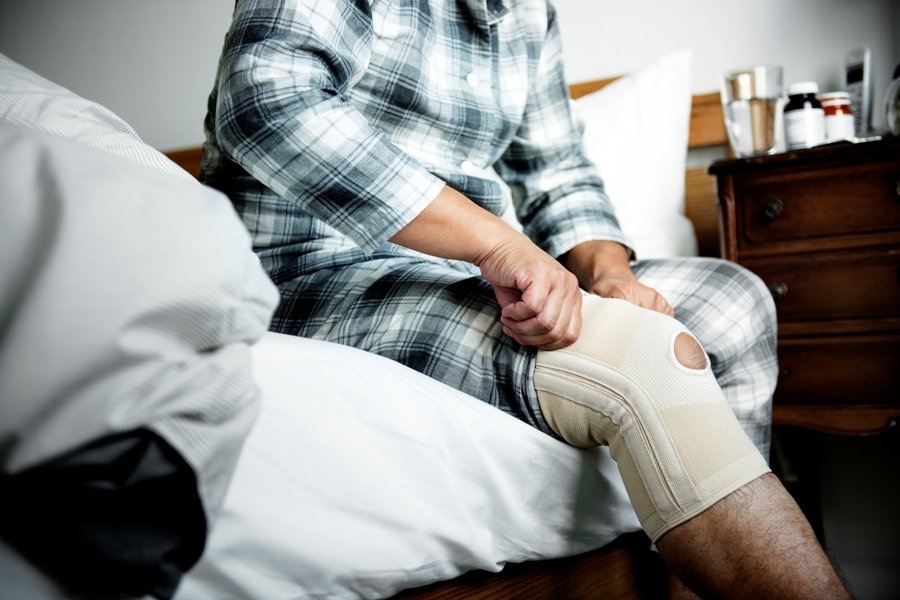
bandaged knee for treatment for lyme arthritis

Treatment for Lyme Arthritis: When Symptoms Persist After Knee Replacement

Treatment for Lyme Arthritis: When Symptoms Persist After Knee Replacement KNEE SWELLING AFTER SURGERY—BUT NO CLEAR CAUSE? LYME ARTHRITIS MAY BE MISSED EVEN AFTER REPLACEMENT A patient undergoes knee replacement surgery—but months later, the swelling returns. Imaging looks normal. There is no clear mechanical failure. Yet the joint remains inflamed. What if the cause is

Treatment for Lyme Arthritis: When Symptoms Persist After Knee Replacement Read More »

can lyme disease cause jaundice

Can Lyme Disease Cause Jaundice?

Can Lyme Disease Cause Jaundice? Jaundice is a rare presentation Bilirubin levels may be elevated Tick exposure may be overlooked Lyme should remain in the differential Lyme disease jaundice is rare—but documented. Case reports suggest that hyperbilirubinemia may occur and should be considered in the differential diagnosis in patients with exposure risk. :contentReference[oaicite:0]{index=0} Two published

Can Lyme Disease Cause Jaundice? Read More »