
Contact us at 914-666-4665

Dr. Daniel Cameron

Dr. Daniel Cameron is a board-certified physician and epidemiologist specializing in Lyme disease and tick-borne illnesses. He is a past president of ILADS and has contributed to Lyme disease treatment guidelines, with a clinical focus on diagnosis, testing limitations, and complex cases.

Dr. Daniel Cameron

More Evidence of Lyme Disease in the Southern United States

More Evidence of Lyme Disease in the Southern United States Lyme disease has traditionally been considered a Northeastern and Midwestern illness. However, growing evidence suggests that the geographic risk may be broader than previously recognized. Ticks capable of carrying Borrelia burgdorferi are now found across a large portion of the United States, including many Southern […]

More Evidence of Lyme Disease in the Southern United States Read More »

The True Cost of Lyme Disease: A Growing Economic Burden

The True Cost of Lyme Disease: A Growing Economic Burden Lyme disease carries a significant cost—not only to individual patients, but to society as a whole. When persistent symptoms develop, the financial impact rises sharply. :contentReference[oaicite:0]{index=0} Cost of Early vs Chronic Lyme Disease For patients with early Lyme disease, the average annual cost is relatively

The True Cost of Lyme Disease: A Growing Economic Burden Read More »

Is Lyme Disease New

Is Lyme Disease New? What History Reveals About an Ancient Infection

Is Lyme Disease New? What History Reveals About an Ancient Infection Is Lyme disease new? Although Lyme disease was first recognized in Connecticut in the 1970s, evidence suggests the bacteria responsible for the illness have existed for thousands — and possibly millions — of years. Lyme disease is not new—it is an ancient infection that

Is Lyme Disease New? What History Reveals About an Ancient Infection Read More »

Child examined for Lyme disease knee arthritis

IgM Immunoblot in Children: When a Positive Test Matters

IgM Immunoblot in Children: When a Positive Test Matters The accuracy of IgM immunoblot testing for Lyme disease has been debated for years—particularly when IgM is positive but IgG remains negative. This question is especially important in children, where early diagnosis can influence long-term outcomes. :contentReference[oaicite:0]{index=0} Children are among the age groups most frequently affected

IgM Immunoblot in Children: When a Positive Test Matters Read More »

Researchers identify novel drug combinations to combat Lyme persister cells

Why Lyme Treatment May Fail in Some Patients

Why Lyme Treatment May Fail in Some Patients Why do some patients continue to have symptoms after treatment? Laboratory research suggests that certain forms of Borrelia burgdorferi may be more tolerant to standard antibiotics. A key pattern is persistence. Not all bacterial forms respond the same way to treatment. See persistent Lyme disease mechanisms. What

Why Lyme Treatment May Fail in Some Patients Read More »

Sick for years with Post-Treatment Lyme Disease Syndrome

Post-Treatment Lyme Disease Syndrome: Why Some Patients Remain Ill for Years

Post-Treatment Lyme Disease Syndrome: Why Some Patients Remain Ill for Years Post-Treatment Lyme Disease Syndrome (PTLDS) describes patients who continue to experience symptoms months or even years after treatment. A growing body of research highlights the long-term impact of Lyme disease in a subset of individuals. :contentReference[oaicite:0]{index=0} Persistent Symptoms Are Well Documented Several studies have

Post-Treatment Lyme Disease Syndrome: Why Some Patients Remain Ill for Years Read More »

problems with 2-week course of antibiotics for Lyme disease

Do Short Courses of Antibiotics Fall Short in Lyme Disease?

Do Short Courses of Antibiotics Fall Short in Lyme Disease? Standard treatment for Lyme disease often includes a 2–3 week course of antibiotics. However, several studies have raised questions about whether this duration is sufficient for all patients. :contentReference[oaicite:0]{index=0} Early Concerns About Treatment Duration As early as 1990, Logigian and colleagues suggested that a two-week

Do Short Courses of Antibiotics Fall Short in Lyme Disease? Read More »

DEMENTIA— OR SOMETHING ELSE

Can Lyme Disease Mimic Dementia? When Cognitive Decline May Be Reversible

Can Lyme Disease Mimic Dementia? When Cognitive Decline May Be Reversible Quick Answer: Lyme disease can cause memory loss, confusion, and cognitive decline that may resemble dementia—and in some cases, these symptoms may improve with treatment. Clinical Insight: Unlike Alzheimer’s disease or other neurodegenerative conditions, Lyme-related cognitive symptoms may be driven by inflammation and infection

Can Lyme Disease Mimic Dementia? When Cognitive Decline May Be Reversible Read More »

LADS Lyme disease guidelines rank in top 5% of all research articles

ILADS Lyme Disease Guidelines Rank in Top 5% of Research Articles

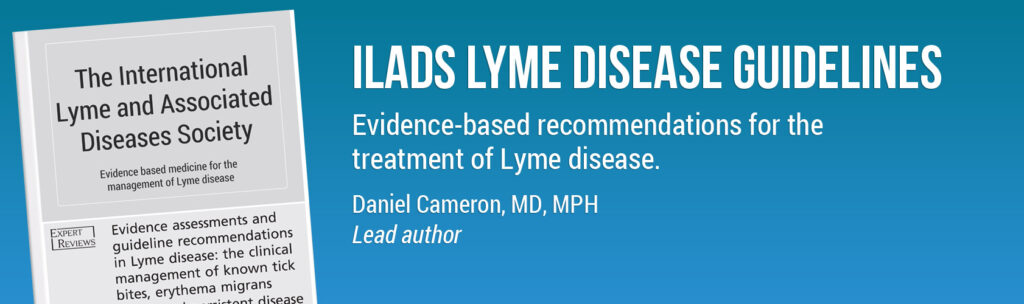
ILADS Lyme Disease Guidelines Rank in Top 5% of Research Articles The ILADS Lyme disease guidelines have ranked in the top 5% of all research articles, based on Altmetric scoring—highlighting their reach and influence beyond traditional citation metrics. :contentReference[oaicite:0]{index=0} What Is an Altmetric Score? Altmetrics track how research is discussed and shared across news outlets,

ILADS Lyme Disease Guidelines Rank in Top 5% of Research Articles Read More »

Lyme disease Netherlands clinical trial

Netherlands Trial: Does It Really Support Short-Term Lyme Disease Therapy?

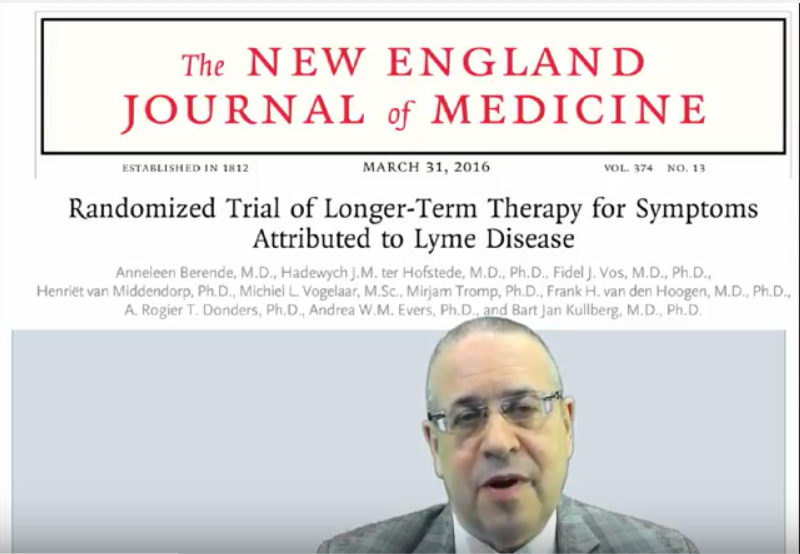
Netherlands Trial: Does It Really Support Short-Term Lyme Disease Therapy? A randomized trial published in the New England Journal of Medicine evaluated whether longer-term antibiotic treatment improves outcomes in patients with persistent symptoms attributed to Lyme disease. :contentReference[oaicite:0]{index=0} The authors concluded that longer-term therapy did not provide additional benefit compared to shorter-term treatment. Who Was

Netherlands Trial: Does It Really Support Short-Term Lyme Disease Therapy? Read More »