
Contact us at 914-666-4665

Dr. Daniel Cameron

Dr. Daniel Cameron is a board-certified physician and epidemiologist specializing in Lyme disease and tick-borne illnesses. He is a past president of ILADS and has contributed to Lyme disease treatment guidelines, with a clinical focus on diagnosis, testing limitations, and complex cases.

Dr. Daniel Cameron
PTLDS symptoms

Autoimmune Arthritis After Lyme Disease: Could Infection Still Be Present?

Autoimmune Arthritis After Lyme Disease: Could Infection Still Be Present? Patients who develop systemic autoimmune joint disease following Lyme disease are often treated with anti-inflammatory therapies, including disease-modifying anti-rheumatic drugs (DMARDs). However, an important clinical question remains: could a persistent infection still be contributing to symptoms? Treatment Approaches After Lyme Disease In one study, patients […]

Autoimmune Arthritis After Lyme Disease: Could Infection Still Be Present? Read More »
Quality of Life in Lyme Disease: What the Netherlands Study Reveals

Quality of Life in Lyme Disease: What the Netherlands Study Reveals Quality of life in patients with Lyme disease can be significantly impaired, particularly in those with persistent symptoms following treatment. Findings from the Netherlands PLEASE trial highlight the extent of this burden. :contentReference[oaicite:0]{index=0} Quality of Life Scores Remain Low Participants in the PLEASE trial

Quality of Life in Lyme Disease: What the Netherlands Study Reveals Read More »

DO STEROIDS WORSEN LYME DISEASE

Do Steroids Worsen Lyme Disease Outcomes? Risks to Consider

Do Steroids Worsen Lyme Disease Outcomes? Risks to Consider Use of corticosteroids in patients with Lyme disease has been associated with worse long-term outcomes in several studies, particularly when infection is not yet recognized. Steroids in Lyme disease may worsen outcomes when infection is unrecognized, particularly if used before antibiotics. Lyme Facial Palsy vs Bell’s

Do Steroids Worsen Lyme Disease Outcomes? Risks to Consider Read More »

Women and Chronic Lyme Disease: Could Immune Response Play a Role?

Women and Chronic Lyme Disease: Could Immune Response Play a Role? Women appear to be overrepresented among patients with chronic symptoms attributed to Lyme disease. This observation has raised questions about both diagnosis and underlying mechanisms. Gender Differences in Chronic Lyme Symptoms In one study, patients labeled with chronic Lyme disease were significantly more likely

Women and Chronic Lyme Disease: Could Immune Response Play a Role? Read More »

How Lyme Disease Can Affect Work and Productivity

How Lyme Disease Can Affect Work and Productivity Lyme disease can affect more than physical health—it may also impact a person’s ability to work and maintain daily functioning. Studies examining patients with chronic and post-treatment Lyme disease highlight the potential burden on employment and productivity. :contentReference[oaicite:0]{index=0} Impact on Employment In a study of patients with

How Lyme Disease Can Affect Work and Productivity Read More »

How important are T-cell chemokines in chronic manifestations of Lyme disease?

How important are T-cell chemokines in chronic manifestations of Lyme disease? T-cell chemokines may play an important role in the development of persistent symptoms following Lyme disease. Research has identified CCL19 as a potential marker associated with Post-Treatment Lyme Disease Syndrome (PTLDS). :contentReference[oaicite:0]{index=0} What Is CCL19? CCL19 is a chemokine involved in regulating immune responses,

How important are T-cell chemokines in chronic manifestations of Lyme disease? Read More »

Does a “Watch and Wait” Approach Work for Lyme Disease?

Does a “Watch and Wait” Approach Work for Lyme Disease? Some patients with persistent symptoms after Lyme disease are advised to follow a “watch and wait” approach rather than receive additional treatment. However, several studies suggest that a significant proportion of patients do not fully recover after standard therapy. What Do the Data Show? Investigators

Does a “Watch and Wait” Approach Work for Lyme Disease? Read More »

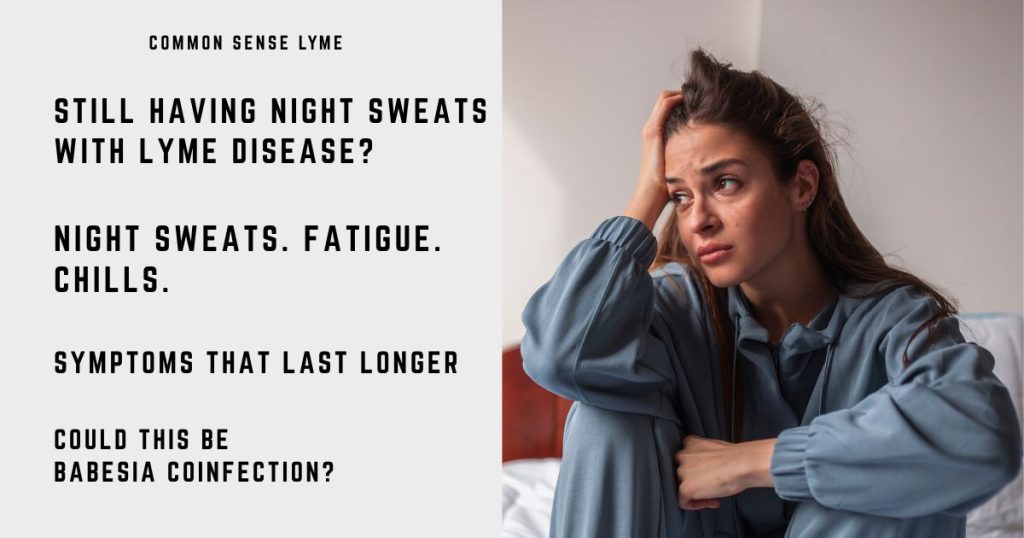
STILL HAVING NIGHT SWEATS WITH LYME DISEASE

Babesia Sweats and Coinfection: Why Symptoms Last Longer

Babesia Sweats and Lyme Coinfection: Why Symptoms Last Longer Babesia sweats are a common symptom—but they are only part of the picture. When Lyme disease and Babesia occur together, symptoms are often more severe, more persistent, and harder to treat. Key Insight: If night sweats come with fatigue, air hunger, or symptoms that don’t improve

Babesia Sweats and Coinfection: Why Symptoms Last Longer Read More »

Are There Different Strains of Lyme Disease? Why Symptoms Vary

Are There Different Strains of Lyme Disease? Why Symptoms and Recovery Vary Same infection, different outcomes Symptoms that don’t follow one pattern Recovery that doesn’t match expectations Are there different strains of Lyme disease? Yes—but the greater concern is that symptoms and recovery may not follow a predictable pattern, and this difference is often overlooked.

Are There Different Strains of Lyme Disease? Why Symptoms Vary Read More »