
Contact us at 914-666-4665

Dr. Daniel Cameron

Dr. Daniel Cameron is a board-certified physician and epidemiologist specializing in Lyme disease and tick-borne illnesses. He is a past president of ILADS and has contributed to Lyme disease treatment guidelines, with a clinical focus on diagnosis, testing limitations, and complex cases.

Dr. Daniel Cameron

Lyme Disease Clinical Trial Volunteers: Study on New Test (Now Completed)

Lyme Disease Clinical Trial Volunteers: Study on New Test (Now Completed) Lyme disease clinical trial volunteers play a critical role in advancing diagnostic research. This study, conducted by Dr. Daniel Cameron & Associates, focused on validating a newly developed Lyme disease test. Note: This study is now complete. Thank you to all who participated. Clinical […]

Lyme Disease Clinical Trial Volunteers: Study on New Test (Now Completed) Read More »
Lyme Carditis Misdiagnosis: A Physician’s Journey to Advocacy

Lyme Carditis Misdiagnosis: A Physician’s Journey to Advocacy Lyme carditis misdiagnosis can have life-threatening consequences—even for experienced physicians. Dr. Neil Spector, a leading cancer researcher and oncologist, became a powerful advocate for Lyme disease patients after nearly losing his life to undiagnosed Lyme carditis. Update: Dr. Neil Spector has since passed away. He will be

Lyme Carditis Misdiagnosis: A Physician’s Journey to Advocacy Read More »

Lyme Disease in Tennessee: Hundreds of Cases Missing from Reports<

Lyme Disease in Tennessee: Hundreds of Cases Missing from Reports Lyme disease Tennessee underreporting may be significant, with studies suggesting cases are far higher than official surveillance data. Researchers examining insurance claims and public health records identified major gaps in reported Lyme disease cases in Tennessee. A study using data from BlueCross BlueShield of Tennessee

Lyme Disease in Tennessee: Hundreds of Cases Missing from Reports< Read More »

Lyme Disease Testing Gap: 82% Untested in Non-Endemic Regions

Lyme Disease Testing Gap: 82% Untested in Non-Endemic Regions Most patients with symptoms consistent with Lyme disease are not tested in non-endemic regions—creating a major diagnostic gap. The Testing Gap in Non-Endemic Regions Researchers from Duke University Health System in North Carolina reviewed the medical records of 1,621 patients with a clinical history consistent with

Lyme Disease Testing Gap: 82% Untested in Non-Endemic Regions Read More »

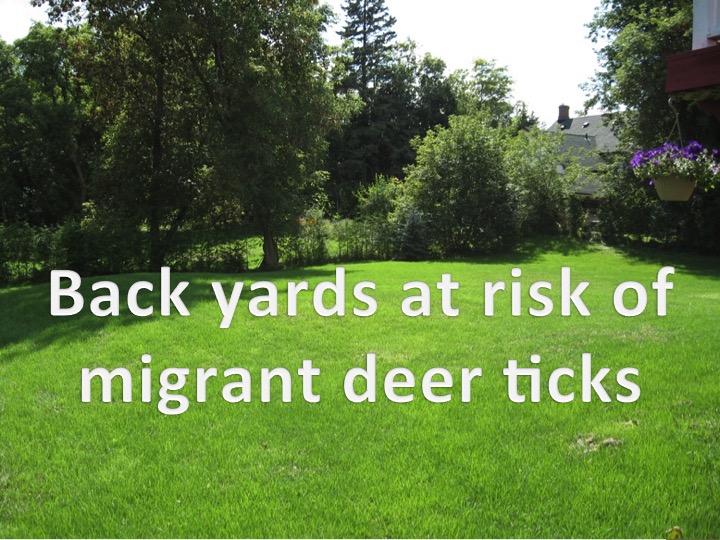
Deer Ticks in Your Backyard: Study Shows Ongoing Risk

Deer Ticks in Your Backyard: Study Shows Ongoing Risk Deer ticks backyard risk may be greater than many homeowners realize. Even if a yard is cleared of ticks, new research suggests they can quickly return through short-distance migration. “The increases in the geographic range and population sizes of several tick species… have resulted in dramatic

Deer Ticks in Your Backyard: Study Shows Ongoing Risk Read More »

Chronic Lyme Disease: Patients Want Treatment, Not Management

Chronic Lyme Disease: Patients Want Treatment, Not Management Chronic Lyme disease patients want to be treated—not simply managed. This distinction reflects a deeper divide in how clinicians approach persistent symptoms and patient care. :contentReference[oaicite:0]{index=0} The quote, “Minds are like parachutes. They only function when open,” attributed to Thomas Dewar, comes to mind when considering the

Chronic Lyme Disease: Patients Want Treatment, Not Management Read More »

WHAT IS THAT SMELL

What Is That Smell? Lyme Disease and Heightened Sensitivity

Lyme Disease and Sensitivity to Smell: Why Odors May Feel Stronger Can Lyme disease affect your sense of smell? Some patients report heightened sensitivity to odors—known as hyperosmia—suggesting that Lyme disease may affect sensory pathways in addition to cognition and fatigue. Lyme disease may alter more than joints, energy, and thinking—it may also change how

What Is That Smell? Lyme Disease and Heightened Sensitivity Read More »

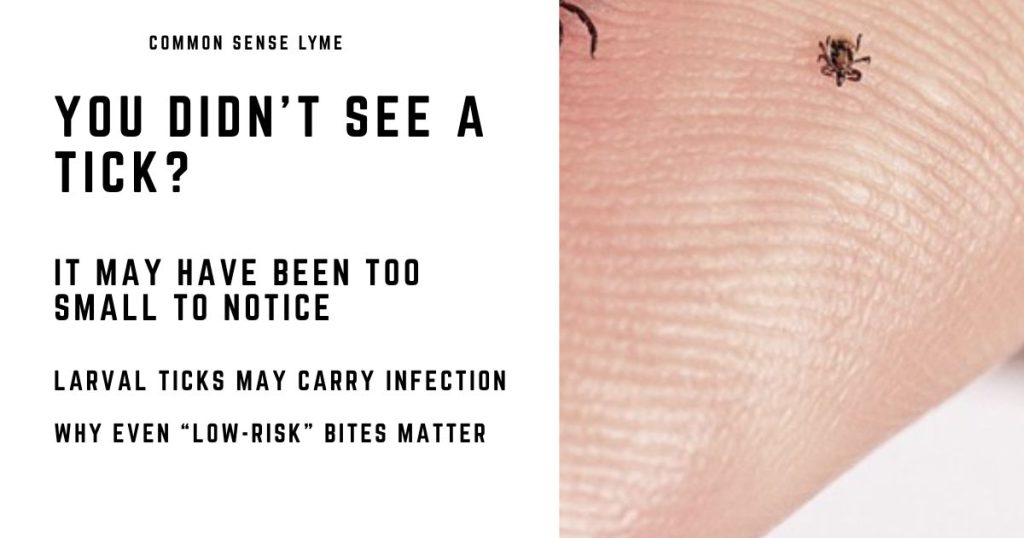
YOU DIDN’T SEE A TICK (1)

Can Larval Ticks Spread Disease? Borrelia Miyamotoi Risk Explained

Can Larval Ticks Spread Disease? Borrelia Miyamotoi Risk Explained Can larval ticks spread disease? Emerging research suggests they can—and the risk may be higher than previously believed. For years, nymphal ticks have been considered the primary source of tick-borne infections. But new evidence indicates that larval ticks—despite their microscopic size—may also transmit infections such as

Can Larval Ticks Spread Disease? Borrelia Miyamotoi Risk Explained Read More »

Chronic Lyme Disease Study Limitations: Why Early Treatment Data Can Mislead

Chronic Lyme Disease Study Limitations: Why Early Treatment Data Can Mislead Chronic Lyme disease study limitations can lead to conclusions that do not reflect real-world patient experience. While some studies suggest that Lyme disease does not result in long-term illness, closer examination reveals important gaps in study design and patient selection. :contentReference[oaicite:0]{index=0} Physicians use a

Chronic Lyme Disease Study Limitations: Why Early Treatment Data Can Mislead Read More »

WHAT HAPPENS TO YOUR BRAIN in lyme disease

How Lyme Disease Affects the Brain: Neuroborreliosis Explained

How Lyme Disease Affects the Brain: Neuroborreliosis Explained How does Lyme disease affect the brain? Patients with Lyme neuroborreliosis often describe brain fog, memory problems, headaches, and difficulty concentrating. These symptoms are not random—they reflect inflammation affecting the brain and nervous system. Understanding how Lyme disease impacts the brain helps explain why neurologic symptoms can

How Lyme Disease Affects the Brain: Neuroborreliosis Explained Read More »