Contact us at 914-666-4665

Filter posts by category

Lyme Science Blog

bourbon virus

Bourbon Virus: Potential Treatment Discovered

Bourbon virus is a rare but deadly tick-borne illness with no approved treatment—until now. In 2017, a 58-year-old woman from Missouri, who initially presented with generalized weakness, myalgia, nausea, and a rash, was diagnosed with the virus. She had been exposed to ticks one week earlier. She died after 23 days in the hospital. What […]

Bourbon Virus: Potential Treatment Discovered Read More »
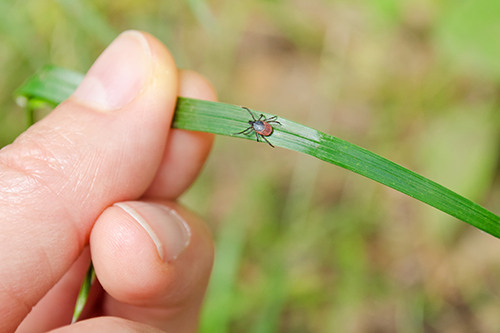
tick, deer tick, powassan virus, tick-borne disease

Prevalence of Borrelia infections and Powassan virus in Maine

Powassan virus in Maine is a growing concern. While the Powassan virus is considered rare, it can be dangerous and is fatal in 10% of the cases. In 2013, a Maine woman died from the disease and as of 2017, 10 residents had been infected. An increase in cases of Powassan virus is particularly alarming,

Prevalence of Borrelia infections and Powassan virus in Maine Read More »

fatal Lyme carditis

Relying on a negative Lyme disease test can prove deadly

A Fatal Case of Missed Lyme Disease In the summer of 2013, a young man from Poughkeepsie, NY, died suddenly from what was later confirmed to be fatal Lyme carditis, after suffering flu-like symptoms for nearly three weeks. Initial reports suggested he had died from complications due to the Powassan virus, a rare tick-borne illness

Relying on a negative Lyme disease test can prove deadly Read More »

Powassan virus polio

Powassan Virus Polio-Like Illness: First Case Report

Powassan virus can cause polio-like illness, as this case report demonstrates. While vacationing in rural Newfoundland, the man developed nausea, vomiting, abdominal pain, double vision (diplopia) and impaired coordination (ataxia). He was admitted to a hospital where his symptoms worsened. The man became febrile and experienced slurred and slow speech (dysarthria), weakness, and respiratory distress.

Powassan Virus Polio-Like Illness: First Case Report Read More »

The third rail of Lyme disease: how Borrelia bacteria persist

The working group, led by Dr. John Aucott of Johns Hopkins Lyme Disease Clinical Research Center, released its first report in 2018. The report included multiple suggestions to address the “serious and growing threat of tick-borne diseases.” Authors of the report called on the government to invest more funds in research, prevention and treatment of

The third rail of Lyme disease: how Borrelia bacteria persist Read More »

When Children Are Told They Don’t Have Lyme Disease: Medically Unexplained Symptoms

From the Archives (2019) This article reflects clinical observations from a period when families of children with persistent symptoms were frequently told no underlying illness could be identified. At the time, Lyme disease was often excluded early in the diagnostic process, leaving many pediatric cases labeled as medically unexplained.   In a 2014 interview, Dr.

When Children Are Told They Don’t Have Lyme Disease: Medically Unexplained Symptoms Read More »

Lyme disease consultations common in France

According to Haddad, more than 1,000 individuals consulted 1 of 3 centers in France about presumed Lyme borreliosis. However, the majority (90%) were not diagnosed with Lyme disease. “The most striking result is that approximately 10% of such patients have a final diagnosis of LB [Lyme borreliosis],” writes Haddad. Yet, in one of the studies

Lyme disease consultations common in France Read More »

babesia early lyme

Babesia Early Lyme: When Co-infection Appears During Treatment

Babesia early lyme co-infection is more common than many clinicians realize. In a study of 52 patients with early Lyme disease, 4 (7.7%) “had convincing evidence of Babesia microti co-infection,” writes Wormser. These patients, along with 2 additional suspected cases, highlight why Babesia should be on every clinician’s radar. Babesia Early Lyme: Six Cases Patient

Babesia Early Lyme: When Co-infection Appears During Treatment Read More »

lab, medical, blood vials

9 cases of children in France with Lyme neuroborreliosis

“The exact prevalence of Lyme neuroborreliosis in France is unknown because reporting is not required,” Guet-Revillet explains. “Nevertheless, the condition appears to be rare.” The outcome for the nine children described in this case series was favorable following a two- to three-week course of third-generation cephalosporin therapy. However, outcomes have not been uniformly positive in

9 cases of children in France with Lyme neuroborreliosis Read More »