
Contact us at 914-666-4665

Filter posts by category

Lyme Science Blog

STARI and Lyme disease

Are lone star ticks in your neighborhood?

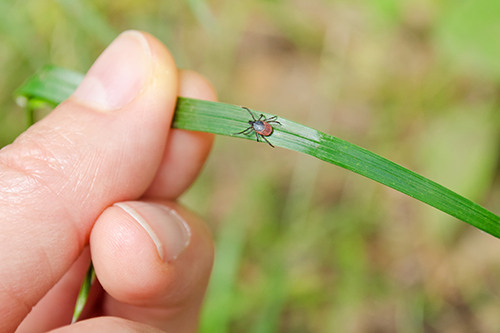
Are Lone Star Ticks in Your Neighborhood? Lone star ticks are expanding rapidly—and many encounters are happening closer to home than expected. Between 2006 and 2016, researchers received 8,608 ticks from 22 U.S. states. [1] Most were collected in Monmouth County, New Jersey, a region long recognized as endemic for Lyme disease. Surprisingly, lone star […]

Are lone star ticks in your neighborhood? Read More »

Autonomic dysfunction, small fiber neuropathy and Lyme disease

Small Fiber Neuropathy and Autonomic Dysfunction in Lyme Disease Objective findings may explain why patients with persistent Lyme symptoms experience pain, sensory changes, and dysautonomia. A retrospective study of 10 patients diagnosed with post-treatment Lyme disease syndrome found that all had small fiber neuropathy, autonomic dysfunction, and abnormal cerebral blood flow—providing measurable evidence for symptoms

Autonomic dysfunction, small fiber neuropathy and Lyme disease Read More »

Where are the ticks and what are the diseases they carry?

Northern ‘immigrant’ ticks causing concern in the South

Northern “Immigrant” Ticks Causing Concern in the South Changes in tick behavior may increase Lyme disease risk in regions previously considered lower risk. Ticks locate hosts through a behavior known as “questing.” According to the CDC, ticks hold onto leaves and grass with their hind legs while extending their front legs outward, waiting to latch

Northern ‘immigrant’ ticks causing concern in the South Read More »

antibiotics, pills, medication

Failure rates still too high for treatment of Lyme disease

Northern “Immigrant” Ticks Causing Concern in the South Changes in tick behavior may increase Lyme disease risk in regions previously considered lower risk. Ticks locate hosts through a behavior known as “questing.” According to the CDC, ticks hold onto leaves and grass with their hind legs while extending their front legs outward, waiting to latch

Failure rates still too high for treatment of Lyme disease Read More »

doctors reviewing x-rays

Is There Lyme Disease in Brazil? What a Lyme-Like Syndrome Suggests

Is There Lyme Disease in Brazil? What a Lyme-Like Syndrome Suggests Is Lyme disease present in Brazil? Patients develop Lyme-like symptoms. Testing now detects Borrelia DNA in some cases. Lyme disease in Brazil remains a subject of debate, but growing evidence suggests that a Lyme-like illness may represent a true borrelial infection. Key Question: Is

Is There Lyme Disease in Brazil? What a Lyme-Like Syndrome Suggests Read More »

Headaches in Lyme disease patient with acute transverse myelitis

Acute transverse myelitis in a 25-year-old man with Lyme disease

Acute Transverse Myelitis in a 25-Year-Old Man With Lyme Disease Acute transverse myelitis is a rare but serious neurologic complication of Lyme disease that can lead to significant disability if not recognized early. Acute transverse myelitis (ATM) is characterized by bilateral motor, sensory, and autonomic dysfunction. Symptoms may progress rapidly over hours to days, writes

Acute transverse myelitis in a 25-year-old man with Lyme disease Read More »

veterans with lyme disease

Is Lyme Disease Being Missed in Veterans?

Is Lyme Disease Being Missed in Veterans? Are symptoms being overlooked? Is testing missing cases? Lyme disease in veterans may be underrecognized. What if Lyme disease is being missed? In veterans, symptoms may be attributed to other conditions—while underlying Lyme disease and co-infections remain unrecognized. This pattern becomes more concerning when testing results are incomplete

Is Lyme Disease Being Missed in Veterans? Read More »

back pain, Lyme disease

Lyme Myelopathy: Acute Transverse Myelitis as a Treatable Cause

Lyme Myelopathy: Acute Transverse Myelitis as a Treatable Cause Lyme myelopathy is a rare but potentially reversible cause of acute transverse myelitis—especially when recognized early and treated appropriately. Quick Answer: Lyme myelopathy can cause acute transverse myelitis, a serious neurologic condition. Although rare, it is potentially reversible with prompt diagnosis and antibiotic treatment. Lyme myelopathy

Lyme Myelopathy: Acute Transverse Myelitis as a Treatable Cause Read More »

Borrelia Miyamotoi Blood Smear:

Can a Blood Smear Detect Lyme Disease or Borrelia? Why It Usually Fails

Can a Blood Smear Detect Lyme Disease or Borrelia? Why It Usually Fails A blood smear cannot reliably detect Lyme disease or Borrelia miyamotoi. Even confirmed infections are often missed under the microscope. Negative smear. Symptoms still present. Infection not ruled out. Many patients ask a simple question: “If I have Lyme disease, shouldn’t it

Can a Blood Smear Detect Lyme Disease or Borrelia? Why It Usually Fails Read More »

eyes, eye, vision

Erratic rapid eye jerks in a child with Lyme disease

Opsoclonus in Lyme Disease: Erratic Eye Movements in a Child Opsoclonus—rapid, uncontrolled eye movements—is a rare neurologic manifestation of Lyme disease. Opsoclonus is typically associated with infection or malignancy, particularly neuroblastoma. However, it has rarely been reported in Lyme disease, explain Gibaud and colleagues in a case report “Opsoclonus in a child with neuroborreliosis.” [1]

Erratic rapid eye jerks in a child with Lyme disease Read More »